

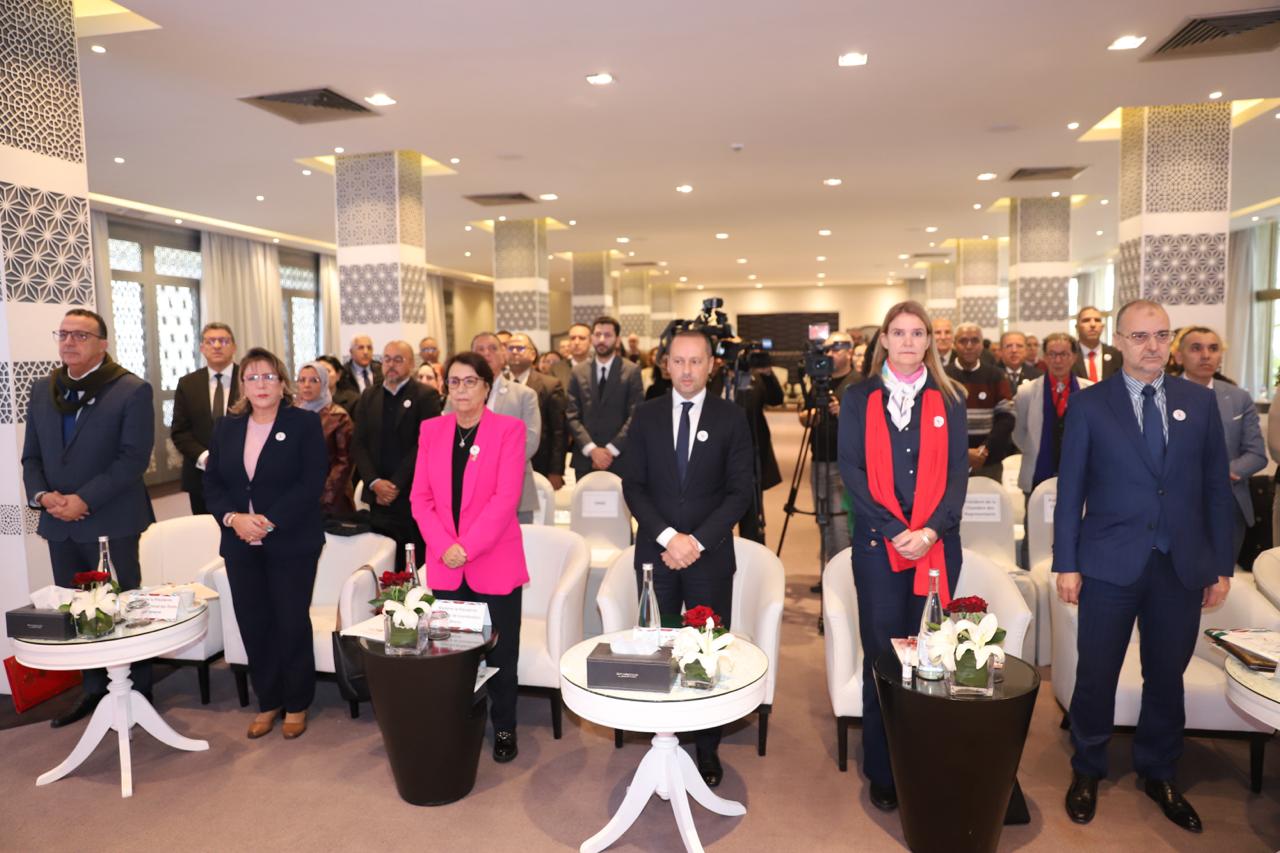
On this year’s World AIDS Day, marked annually on December 1, Morocco’s Ministry of Health and Social Protection hosted a national event in Rabat to highlight progress and reaffirm its commitment to fighting HIV. Under the theme “Risk Reduction, Methadone, and Psychosocial Support: A Winning Combination,” the gathering brought together a wide range of national institutions and international partners supporting the country’s HIV response. The event was chaired by Health Minister Amine Tehraoui.
The occasion served not only to honor past achievements but also to reinforce Morocco’s pledge to meet the World Health Organization’s “95-95-95” targets: ensuring that 95% of people living with HIV know their status, 95% of those diagnosed receive antiretroviral therapy, and 95% of those treated achieve viral suppression. These goals are part of a broader national strategy that runs through 2030 and also encompasses public health efforts against tuberculosis, viral hepatitis, and substance abuse.
In his address, Minister Tehraoui emphasized the need to treat World AIDS Day as a moment of both reflection and renewed momentum. He highlighted Morocco’s progress, including a 22% drop in new HIV infections between 2013 and 2024. Currently, 80% of people living with HIV are aware of their status, and 95% of those are receiving treatment. Mother-to-child transmission has also seen a significant decline.
Programs aimed at supporting people who inject drugs have made measurable impact. Between 2017 and 2023, HIV prevalence in this high-risk group dropped from 7.1% to 5.3%. Over the same period, access to methadone treatment expanded dramatically – from just a few hundred individuals to 1,836 patients receiving care at the start of 2025, more than a sixfold increase.
Looking ahead to 2030, the national roadmap sets ambitious goals: reaching 95% of key populations with prevention services, delivering 1.6 million HIV tests annually – including 600,000 for pregnant women – and expanding antiretroviral treatment coverage to 21,500 people.
Crucially, Morocco continues to offer free HIV testing and care across its public healthcare system. These efforts reflect the country’s ongoing commitment to human rights, health equity, and universal access to essential services.


