

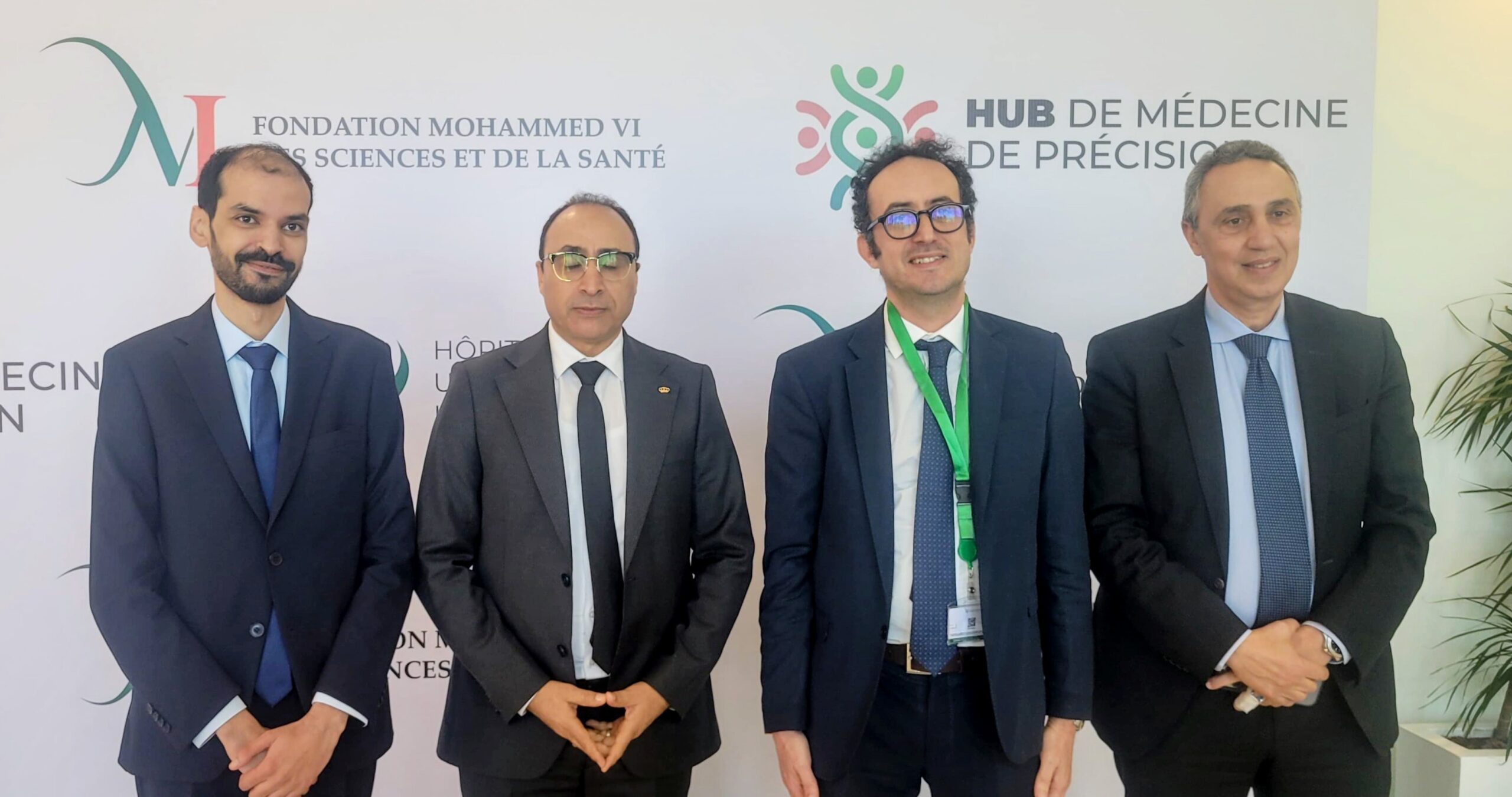
The Mohammed VI Foundation for Sciences and Health has opened a new Precision Medicine Hub in Rabat. The centre is based inside the Mohammed VI International University Hospital and aims to bring more personalised healthcare to Morocco and the region.
The goal is to move away from the same treatment for everyone and use genetics and data to tailor care to each patient.
The hub brings doctors, biologists and data experts together to speed up the journey from lab research to real treatment.
Professor Omar Askander, director of the hub, said: “This hub contains the entire value chain, from clinical consultation to precise clinical testing that will give us diagnostic, prognostic or therapeutic direction, all the way to targeted therapy and precision therapy.
“The idea is to bring all of this together on one floor, something innovative that does not exist anywhere in Morocco and that will facilitate the diagnostic path and the patient journey,” he added.
The hub is split into six units that cover the full process from testing to treatment. They include genome sequencing, chromosomal analysis, genetic counselling, cell culture research, and a biobank and data centre to store samples and research data.
The centre uses next-generation DNA sequencing to study a person’s entire genome rather than a small group of genes.
Professor Askander said: “Thanks to next-generation sequencing, we can move from sequencing a limited number of genes to complete genome sequencing, allowing us to identify actionable genomic variations for therapy, diagnosis, prognosis and prediction.”
Artificial intelligence is used throughout the process. It helps doctors read genetic results, predict how tumours may develop, adjust medicine doses and estimate a person’s risk of diseases such as cancer, diabetes and heart disease.
The hub also offers services such as nutrigenetics, which gives diet advice based on genetics, and high-precision testing to detect small chromosomal problems, especially in blood cancers.
Saber Boutayeb, director of the Mohammed VI Centre for Research and Innovation, said the centre already has strong support from doctors: “The precision medicine hub will play a role at the national level because today it is the first and only structure offering all panels linked to the international precision medicine hospital.
“A large number of doctors already trust the hub for their testing and not only for biological or genomic testing but also for expertise.”
Ahmed Benanna, director general of the FM6SS Rabat site, said the hub marks a shift in how diseases are treated. “This hub announces a break with traditional medicine to move towards personalised precision medicine.”
He said faster and more accurate tests will help treat serious diseases. “It will allow the management of very serious pathologies such as cancers and rare diseases in a highly specific and personalised way.”
The project includes a biobank and data centre aimed at strengthening Morocco’s health independence. “Addressing diseases that were not previously possible to treat in Morocco already provides national health sovereignty,” he said. “Making this hub available to a wider population at continental level will allow African sovereignty.”
The hub follows international standards and is open to partnerships with hospitals, universities and pharmaceutical companies.
Jaâfar Heikel from FM6SS said the project is part of a wider national strategy. “We place this precision medicine centre within the framework of health sovereignty.”
He added: “Each country must be resilient enough to meet the health needs of its population, even for the most sophisticated tests that allow prevention, prediction and adapted care.”
He said the project gives Morocco and Africa a stronger role in advanced healthcare. “It is about giving a new Moroccan and African dimension and fully positioning ourselves in diagnosis, prevention and prediction.”


