

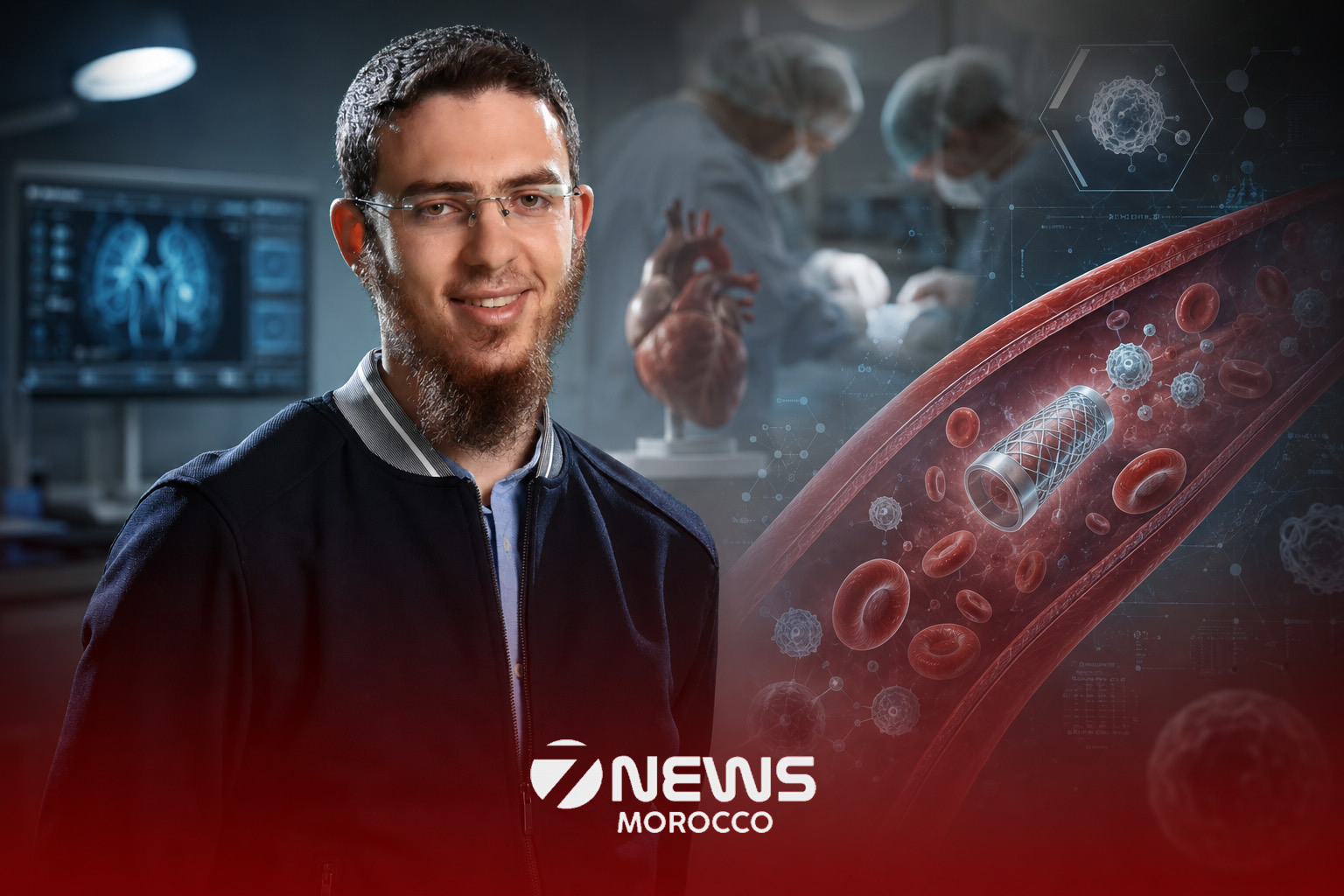
A Moroccan doctor has won a patent in Japan for a small medical implant designed to help stop the body from rejecting transplanted organs.
Japan’s patent office approved the device created by Dr Youssef El Azzouzi, a doctor and founder of the start-up Aorto Medical. The implant works inside a blood vessel and targets white blood cells, which are part of the immune system and play a key role in transplant rejection.
Dr El Azzouzi describes the device as a kind of smart stent that changes how blood flows through an artery. As immune cells pass through it, the implant aims to calm their activity so they are less likely to attack a new organ.
“In Morocco, nearly half of kidney transplants fail within ten years because the body slowly rejects the organ,” he said. “If human results match what we saw in animal tests, the impact could be huge.”
Doctors say the idea could reduce the need for large external machines that currently filter blood and often require long hospital stays.
Early tests look promising
The device has already been tested on animals at the global lab NAMSA. The tests showed almost no blood clotting and no sign of inflammation, according to the inventor.
Getting a patent in Japan is seen as an important step because the country has very strict technology standards. Patent applications are still being reviewed in the United States, China and the European Union.
Dr El Azzouzi was born in Rabat in 1991. He studied at boarding school in Oxford, then moved to the United States to study brain science before switching fully to medicine. He founded Aorto Medical in Tangier in 2019 after winning the Stars of Science innovation competition in Qatar, which awarded him $300,000.
The company has since carried out early testing in the United States and France while developing medical technology in Morocco.
The next stage is testing the implant in human patients. This is expected to cost about 500 million centimes, or around $500,000.


