
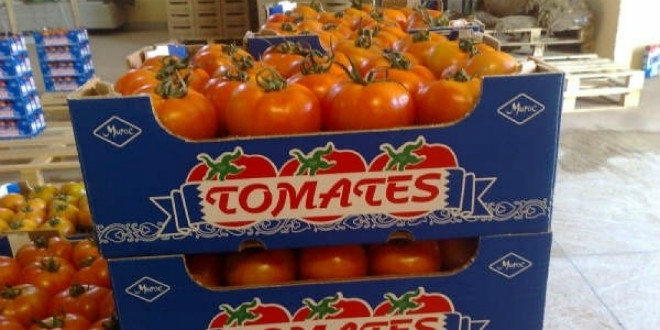
Morocco ranked as the European Union’s second-largest tomato exporter in 2025, overtaking Spain and placing behind the Netherlands, according to data published by the agricultural information site Horto Info.
Moroccan exports reached 526.58 million kilograms in 2025. This accounted for 18.34% of tomatoes traded within the EU, up from 11.87% in 2013. The country’s market share has grown by 43.99% over the past 12 years.
Only three countries increased their share of the EU tomato market over that period: Morocco, Turkey and Portugal. Spain and the Netherlands both recorded declines.
The Netherlands remained the largest supplier, exporting 846.63 million kilograms in 2025. That represents 29.49% of the EU market. However, Dutch volumes were down by 191.54 million kilograms compared with 2013, when the country held a 33.7% share.
Spain fell to third place. Its exports totalled 455.17 million kilograms in 2025, a drop of 405.87 million kilograms from 2013. At that time, Spain exported 861.04 million kilograms and held 27.95% of the market. Its share has since declined to 15.86%.
In terms of value, Morocco also posted strong growth. Revenue from tomato exports reached €1.045bn in 2025, compared with €283.22m in 2013. The average price per kilogram rose from €0.77 to €1.99 over the same period.
Spain’s average export price increased from €1.13 per kilogram in 2013 to €1.97 in 2025. Despite this, the total value of Spanish exports fell to €898.3m, €75.74m lower than a decade ago.
The figures point to a gradual shift in the supply of tomatoes to the EU market, with Morocco gaining ground while some traditional European producers lose share.
Morocco’s rise follows a long-term agricultural strategy. The government launched the Green Morocco Plan in 2008, followed by the Generation Green 2020–2030. Both programmes focused on modern irrigation and higher-value crops. Farmers increasingly moved towards cherry and plum tomatoes, which command higher prices.
A 2012 agricultural agreement with the European Union also improved market access by reducing customs duties and setting export quotas. The deal has been welcomed by Moroccan producers but has drawn criticism from some farmers in Spain and France, who face higher production and labour costs.
Industry analysts say rising energy costs have affected Dutch greenhouse production, while drought and heatwaves in southern Spain have reduced yields. At the same time, labour shortages and higher wages in the EU have made Moroccan produce more competitive.
Morocco has also invested in technology, particularly in the Souss-Massa region, where hydroponic systems and desalination plants support production despite growing climate pressures.
Together, the data reflect a changing balance in Europe’s tomato trade.