

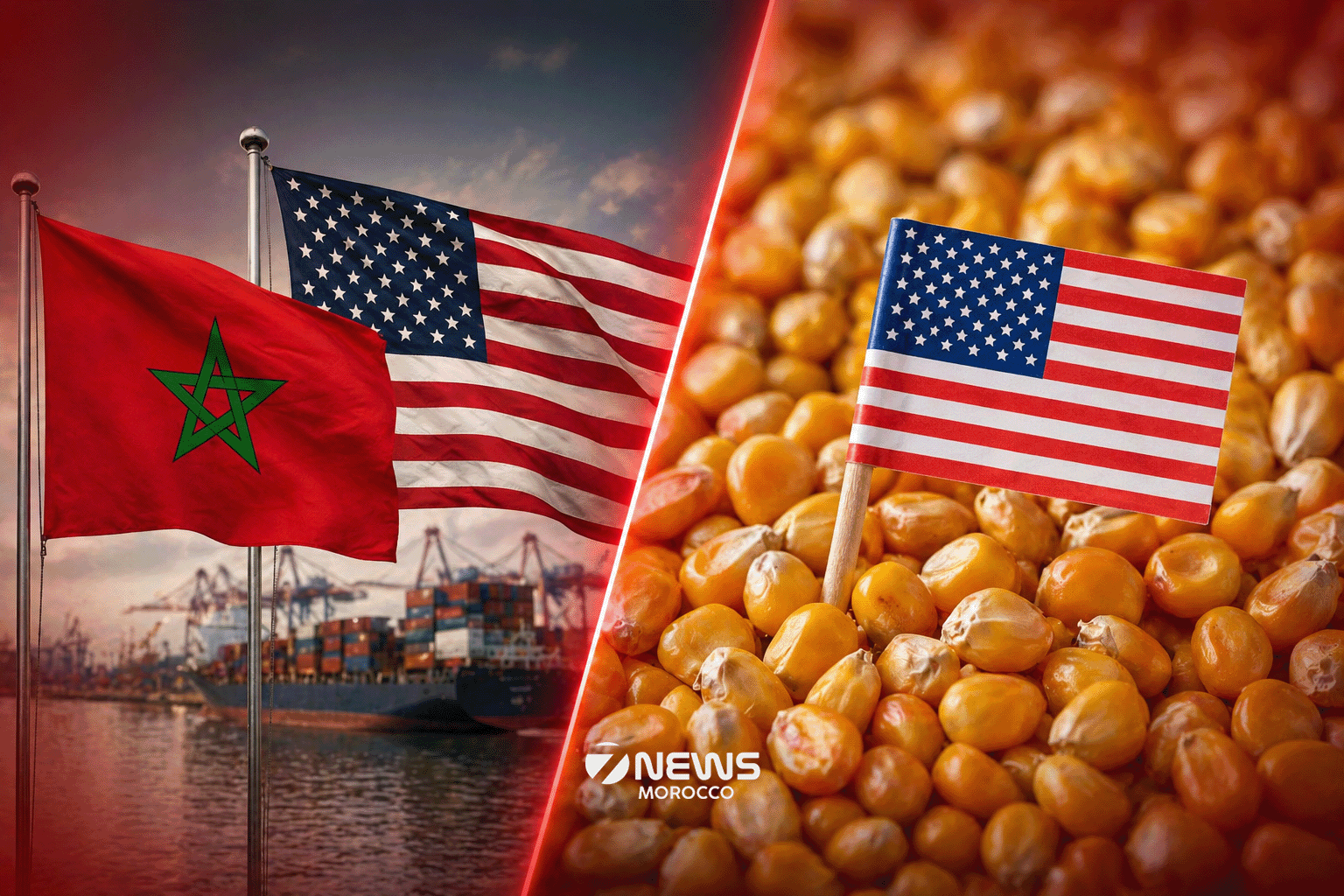
Morocco is buying more US corn through Atlantic ports as demand from its poultry industry grows, according to the latest US government figures.
In the week ending 23 April, Morocco imported about 29,800 tonnes of yellow corn from the United States, data from the US Department of Agriculture shows. That made it one of the top Atlantic destinations for US corn, ahead of countries like Jamaica and Malaysia.
Most US grain still goes out through the Gulf of Mexico, which handled more than 1.4 million tonnes in the same week. But Morocco’s regular purchases show a steady and growing trade route across the Atlantic.
The main reason for rising corn imports is Morocco’s fast-growing poultry sector. Yellow corn is a basic ingredient in animal feed.
The poultry market is expected to reach $4.27 billion in 2026, helped by rising city demand and more people eating protein. Imports from the US help Morocco keep supplies stable when local production is under pressure.
Its location also helps it act as a link between US suppliers and wider West African markets.
US grain exports last week totalled more than 2.8 million tonnes, with corn leading ahead of soybeans and wheat. At the same time, global supply forecasts have been cut slightly for the 2026–27 season to 1.3 billion tonnes, according to the International Grains Council.
World corn stocks are expected to fall by around 15 million tonnes by the end of 2026, which is likely to keep import demand strong.
The relationship is no longer just about food imports. The US is looking to buy more Moroccan phosphate fertilisers, while Morocco continues to import large volumes of American farm products.
This growing exchange is often described as a fertiliser-for-grain trade, built under the 2006 free trade agreement between the two countries.
A large share of Morocco’s US imports is soybean meal, used in animal feed. Morocco brings in more than 500,000 tonnes a year, as it does not have facilities to process soybeans locally.
It is also the biggest buyer of US soybean oil in North Africa and a major importer of US corn for animal feed.
A severe drought reduced Morocco’s livestock numbers by nearly 40%, pushing the government to act to stabilise meat prices.
Import taxes on livestock have been removed until September 2026, and cattle import limits have been increased to 300,000 head. The US remains an important supplier, especially for breeding and dairy animals.
Morocco has paused soft wheat imports during June and July 2026 to protect its local harvest, which is about 8.2 million tonnes. The US remains a backup supplier if needed.
Moroccan demand is also rising for US consumer foods such as almonds, pistachios, dairy products and processed ingredients used in food production.
In April 2026, Morocco was chosen for a $226 million US programme called Food for Progress. It aims to improve irrigation and farming methods over five years.
The growing exchange of fertiliser for grain could make Morocco more important in global food supply chains. It ties its farming system more closely to the US while strengthening its role as a trading hub between regions.


