
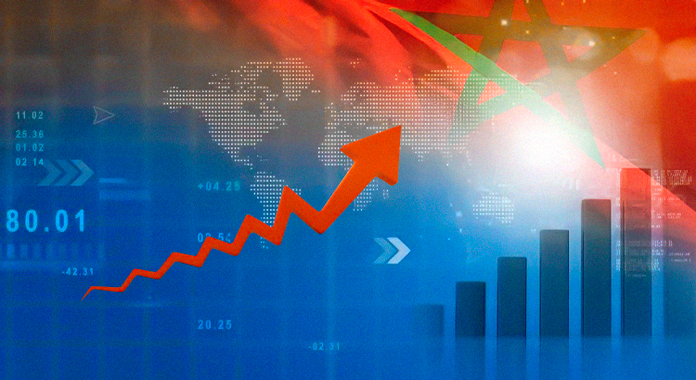
Morocco’s economy has been rated as “moderately free” in the Heritage Foundation’s 2026 Index of Economic Freedom. The country scored 61.8 out of 100, moving up 1.5 points from last year. Globally, it ranks 83rd and is seventh among 14 countries in the Middle East and North Africa. Its score is above the global and regional averages.
The improvement comes from efforts to grow the private sector, make businesses more competitive, and expand the types of products and services the country produces. It’s now easier to start a business in Morocco, but getting licenses is still expensive. Other challenges, like rigid labor rules and a large informal workforce, remain.
The index measures how much people and businesses can make economic decisions without government interference. It looks at how the government helps or blocks economic activity and considers things like legal rights, market rules, money policies, and how open the country is to global trade.
The index has four main areas. Rule of law looks at the strength of legal systems, courts, and government honesty. Government size examines taxes, spending, and how much the government is involved in the economy. Regulatory efficiency focuses on how easy it is to do business, how flexible the job market is, and how stable money is. Market openness checks trade policies, foreign investment, and the development of banks and finance.
Morocco’s rise in the ranking is linked to the New Investment Charter (Framework Law 03.22), which shifts investment from state-led projects to private businesses. The government wants private investment to grow from one-third to two-thirds of total investment by 2035.
The new rules give grants worth up to 30% of a project’s value for businesses that create stable jobs, hire women, or invest in future-focused sectors like green energy and digital tech. Regional Investment Centers have also made it faster to get permits, helping businesses move from an idea to opening a real company.
Morocco is working to reduce reliance on farming and phosphate exports by building high-tech industries. The country’s “Morocco Offer” for green hydrogen sets aside one million hectares for renewable energy projects, with $35 billion planned in investments. This aims to make Morocco an energy exporter to Europe.
The automotive and aerospace industries are now major exporters, helping European companies move production closer to home. The Morocco Digital 2030 plan trains 100,000 young people each year for jobs in AI, software, and other high-tech fields.
Despite improvements, Morocco faces big challenges. About 70% of workers are in the informal economy, without contracts or social security. The government’s Universal Social Protection program is trying to bring these workers into the formal system, but it’s slow and costly.
Unemployment, especially among women and young people, is still high. Female participation in the workforce is low, between 15% and 19%, and unemployment for 15–24-year-olds is around 37%. Many young people find their skills don’t match what modern businesses need.
Labor rules also make hiring and firing expensive and complicated. A 2025 law clarified strike rules, but formal employment is still costly compared to informal jobs.
Morocco has managed to keep its economy relatively stable. Inflation is low, around 1–2%, even as other countries in the region struggle with high prices. The government is on track to reduce the budget deficit to 3% of GDP by 2026. These steps have helped Morocco earn investment-grade ratings from international agencies and maintain flexible credit lines from the International Monetary Fund.


