

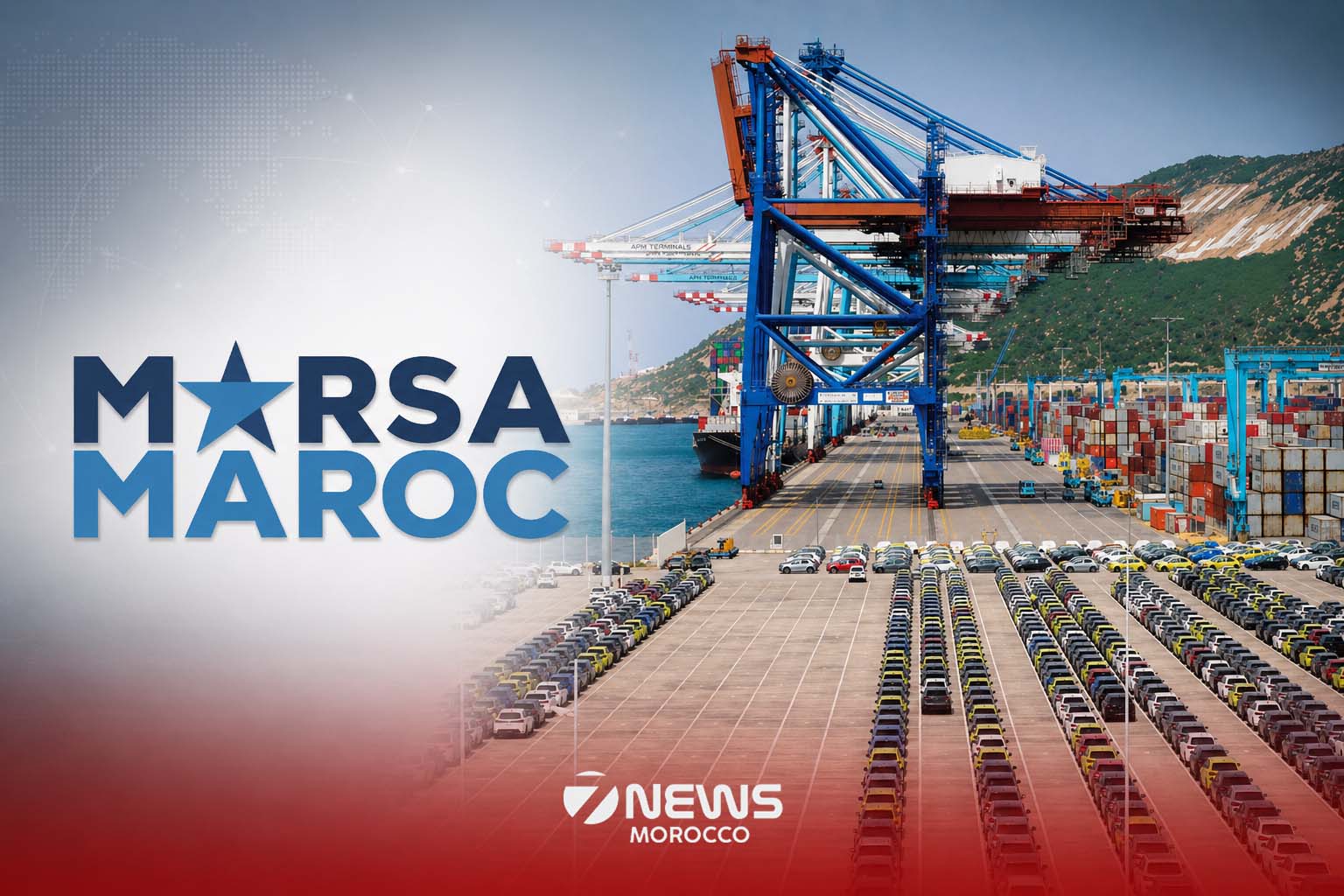
Morocco’s ports handled 63.3 million tonnes of goods by the end of March 2026, up from 60.7 million tonnes a year earlier. That is a 4.3% rise in the first three months of the year, according to the Ministry of Equipment and Water.
The increase came from both local traffic and transhipment. Local traffic reached 31.5 million tonnes, up 3.5%. Transhipment reached 31.8 million tonnes, up 5%. It remains the biggest part of port activity, making up 50.3% of total traffic.
Imports made up 31.3% of total traffic, exports 15.3%, cabotage 2.5%, and bunkering 0.6%.
Imports saw the strongest rise, increasing 10.7% to 19.8 million tonnes. Exports fell 1.9% to 9.7 million tonnes. Cabotage dropped 30% to 1.6 million tonnes. Bunkering rose 4.3% to 409,000 tonnes, helped by ships passing through the Strait of Gibraltar.
Some key goods moved in larger volumes. Cereal imports jumped 33.7% to 2.8 million tonnes. Hydrocarbon imports rose 16.9% to 3.7 million tonnes. Coal increased 17% to 2.8 million tonnes. Phosphates and related products rose 2.8% to 7.3 million tonnes.
New car traffic also went up. Ports handled 148,053 vehicles, an 8.2% increase. Container traffic fell 1.9% to 2.9 million TEUs. International road transport dropped 5.8% to 147,535 units.
Passenger numbers fell slightly by 0.8% to 718,720. Cruise passengers rose sharply by 44.1% to 80,209.
Fishing landings fell by 34.3% to 89,895 tonnes.
Transhipment remains the main driver of port activity, accounting for just over half of total traffic. It is linked mainly to large hubs such as Tanger Med. A second major port, Nador West Med, is set to open in the last quarter of 2026. Officials said: “Construction of the port’s core maritime infrastructure [at Nador West Med] has now been completed… [it] is on track to begin operations in the fourth quarter of 2026.”
The country is also continuing a long-term port investment plan to 2030. Marsa Maroc is investing $2.1bn to upgrade ports in Casablanca and Jorf Lasfar and prepare for new operations at Nador West Med.


