

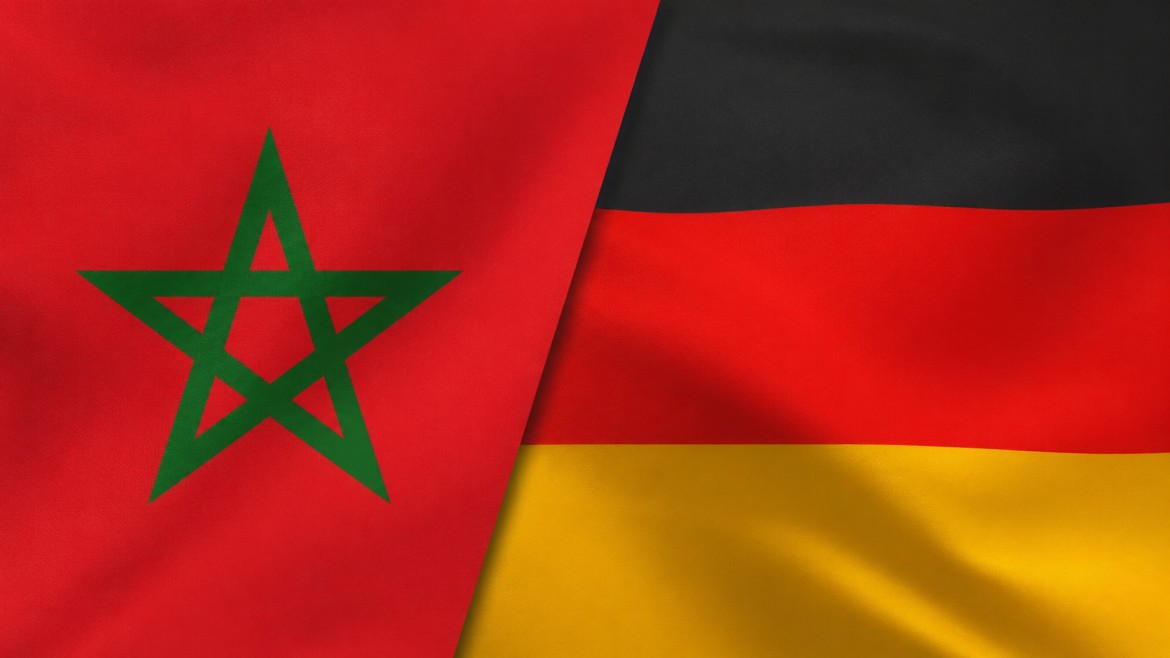
Morocco and Germany are closer than ever, Ambassador Zohour Alaoui during a reception in Berlin celebrating the 27th anniversary of King Mohammed VI’s accession to the throne.
The event was attended by German State Secretary for Foreign Affairs Géza Andreas von Geyr, senior German government, diplomatic and security officials, around 50 ambassadors based in Berlin, business and cultural figures, and members of the Moroccan community in Germany.
Alaoui said the relationship between the two countries is built on an “extremely solid” foundation and is moving in a “positive dynamic.” She said both sides have “the duty and the responsibility to be even more ambitious” as the world faces growing uncertainty. “Germany has confidence in Morocco’s future and Morocco has confidence in Germany’s future.”
This year’s Throne Day celebration also marks 70 years of diplomatic relations between Morocco and Germany.
Alaoui said the partnership goes back much further than that. German families settled in Safi in the 16th century. Germany later opened a legation in Tangier in 1872, and the two countries signed a trade treaty in Fez in 1890.
She described current ties as being in their “golden age.” Morocco and Germany have had a strategic partnership since 2022.
Trade between the two countries passed €7 billion in 2025. Morocco is now Germany’s second-largest trading partner in Africa.
All major German political foundations are active in Morocco. The two countries also signed an amendment to their cooperation agreement covering these foundations during the United Nations General Assembly in September 2025.
Alaoui said Throne Day celebrates more than 12 centuries of the Moroccan monarchy and the bond between the King and the Moroccan people. She also highlighted several major projects led by King Mohammed VI.
One of them is the Nigeria-Morocco Gas Pipeline, which will stretch more than 5,600 kilometres across 13 West African countries before reaching Europe through northern Morocco.
The pipeline is designed to carry about 30 billion cubic metres of natural gas each year, creating a new export route for West African gas and helping diversify energy supplies to Europe.
The project includes Nigeria, Benin, Togo, Ghana, Côte d’Ivoire, Liberia, Sierra Leone, Guinea, Guinea-Bissau, The Gambia, Senegal, Mauritania and Morocco.
All ECOWAS member states formally backed the project on July 19 by signing an intergovernmental agreement, marking a major step forward for the pipeline.


