
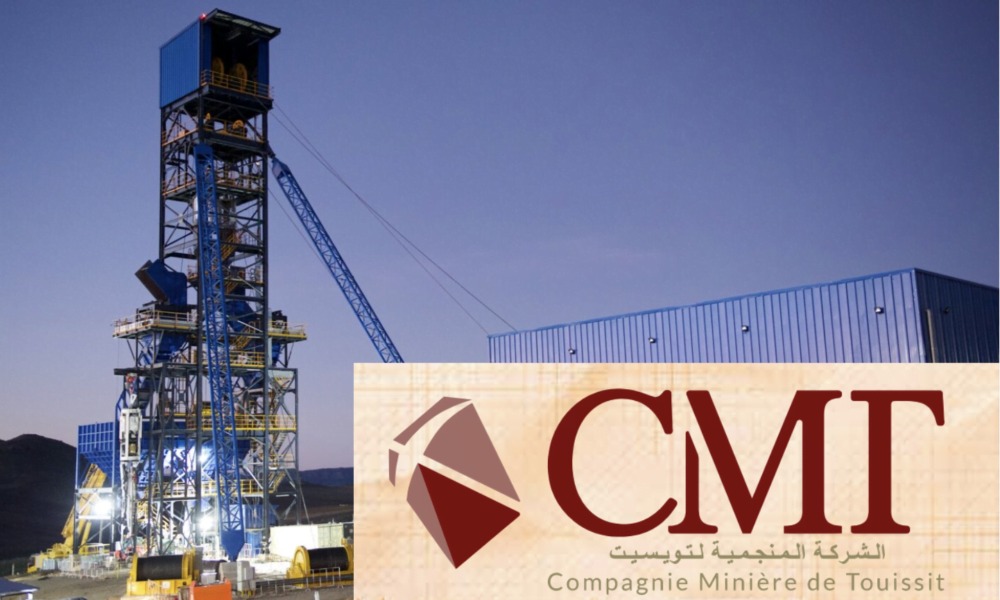
Morocco mining company Compagnie Minière de Touissit (CMT) has confirmed a major ownership change and the end of a 2.3bn dirham legal dispute, a shift expected to stabilise the Casablanca-listed miner and improve investor confidence.
The change began on 21 April when Ayrad Group Limited completed the acquisition of 100% of the OSEAD fund. The deal gives Ayrad indirect control of 37% of CMT’s capital through a Moroccan holding structure.
Ayrad is now partnering with the Caisse Interprofessionnelle Marocaine de Retraite (CIMR) to seek joint control of the miner. The proposal is awaiting approval from Morocco’s Competition Council. Analysts say the planned partnership signals a shift toward long-term institutional ownership.
Separately, Moroccan customs authorities have withdrawn a lawsuit brought on behalf of the Foreign Exchange Office. The decision cancels a November 2025 court ruling that had ordered CMT to pay more than 2.3bn dirhams.
The company has also secured $47m from separate settlement agreements with partners. Together, the legal resolution and new funding are expected to improve liquidity and reduce financial risk.
The involvement of CIMR, Morocco’s private sector pension fund, is seen as a strong vote of confidence. Market watchers say the move could reposition CMT as a stable national mining player backed by domestic institutional capital.
The resolution of the foreign exchange dispute removes a major obstacle for investors. Such cases are often complex and lengthy, and the settlement suggests a mediated solution between the company and state authorities.
CMT remains a major producer of lead and silver. Demand for silver has risen globally because of its use in solar panels and electronics, which could help the company attract financing for expansion at its Tighza and Touissit sites.
Approval from the Competition Council is the final regulatory step. The review is expected to focus on governance rather than market dominance given the fragmented nature of the global mining sector.