

Morocco is one of the best African countries for water access. About 95 out of every 100 communities have piped water, and only 3 out of every 100 people say they often run out of water, according to a recent Afrobarometer survey.
The country also does well on sanitation. Around 8 in 10 areas are connected to sewage systems – the highest number in the survey. At home, almost 9 out of 10 Moroccans get their water directly inside their houses, putting the country alongside Mauritius and Tunisia.
Across Africa, water access is much harder. More than half of households – roughly 6 in 10 – sometimes run out of water, especially in rural and low-income areas.
Morocco’s strong performance comes from decades of investment. Big dam projects from the 1960s helped provide irrigation and drinking water for a growing population. The current National Program for Drinking Water Supply and Irrigation 2020–2027 plans to spend around $11.5 billion building new dams and improving rural water access.
Central management through the National Office of Electricity and Drinking Water (ONEP) has allowed long-term planning, helping cities keep water flowing even during droughts.
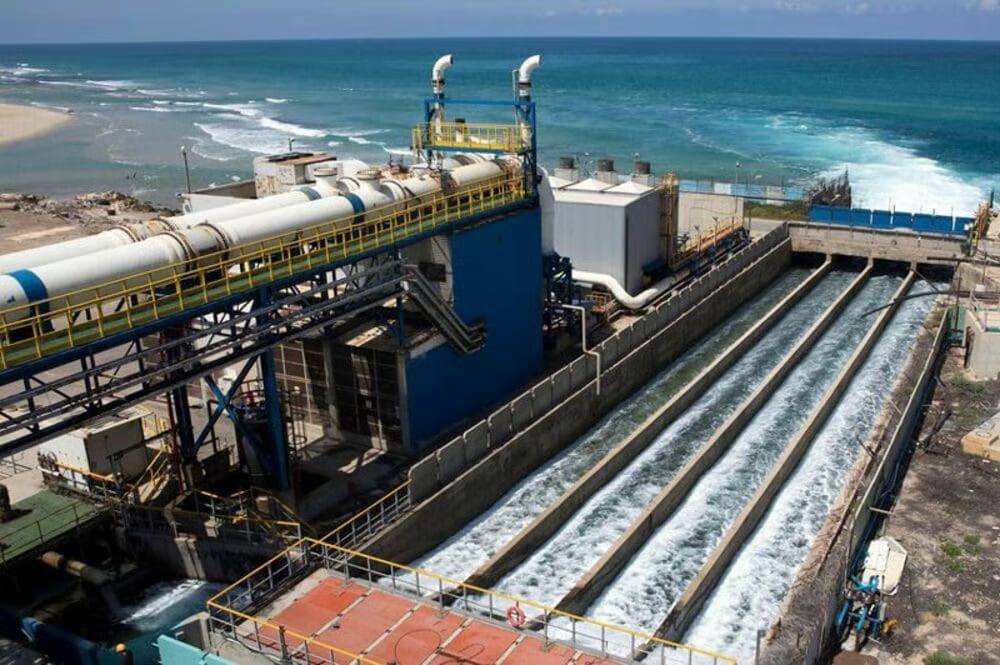
With Morocco now in its sixth year of drought, desalination – turning seawater into drinking water – has become central to the country’s water plan. The government wants 60% of drinking water to come from desalination by 2030, up from 25% in 2025. This will mean producing 1.7 billion cubic metres of desalinated water every year.
The Casablanca-Settat plant in Sidi Rahhal is the biggest project. Half-built in early 2026, it will provide water for about 2.5 million people in its first phase. By 2028, it will serve 7.5 million people, making it the largest desalination plant in Africa.
Other projects include Agadir, which will supply water for 2 million people and irrigate 13,600 hectares of farmland, and Dakhla, which will start in mid-2026 and will run partly on wind power. A new plant near Tiznit is also planned.
Most new desalination plants will run on solar and wind energy to cut costs and emissions. In southern regions, some plants will provide water for green hydrogen production, linking water and renewable energy.
Morocco’s 95% access rate is far above the African average, where fewer than 3 in 10 households have piped water. The country’s success comes from long-term planning, centralised management, and combining traditional water systems with new projects like desalination and the “Water Highway,” which moves water from wetter north regions to drier central areas.


