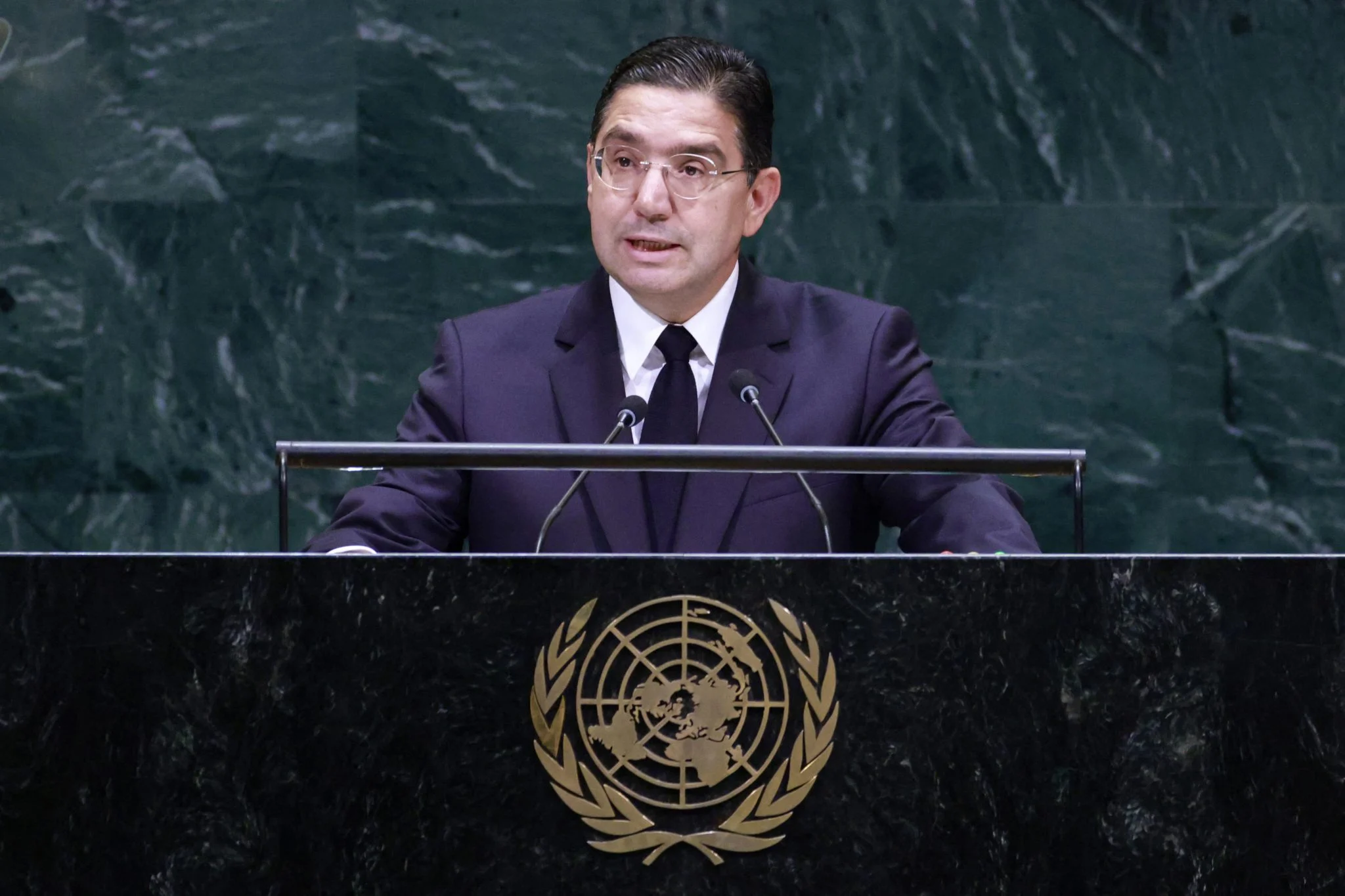
Morocco is seeking a seat on the United Nations Security Council for 2028-2029. Foreign Minister Nasser Bourita announced the bid on Wednesday during the general debate of the 81st UN General Assembly in New York. The bid would give Morocco a direct role in UN decisions on international peace and security if it wins one of the 10 non-permanent seats on the 15-member council.
Morocco has already served on the Security Council three times: in 1963-1964, 1992-1993 and 2012-2013.
The Security Council has five permanent members — China, France, Russia, the UK and the US — which have veto power. The other 10 members are elected by the UN General Assembly for two-year terms.
Seats are distributed among regional groups. Morocco’s bid falls under the African Group and will require regional backing before the General Assembly vote. A candidate needs a two-thirds majority of members present and voting to win a seat.
Morocco also has a long record of contributing troops to UN peacekeeping missions, including operations in the Democratic Republic of Congo and the Central African Republic.
The bid comes during a busy period of diplomatic activity in New York.
On 22 September, Morocco and Chile signed terms of reference to start negotiations on a free-trade agreement. Chile also expressed support for Morocco’s territorial sovereignty and backed the autonomy plan proposed by Rabat for Sahara.
Morocco also co-organised a conference at UN headquarters on 17 September focused on combating hate speech through interreligious dialogue. The event was held with the UN Office on Genocide Prevention.
These activities form part of the diplomatic campaign around the UN General Assembly, where Moroccan officials have held a series of bilateral meetings with foreign governments and international organisations.
Bourita said the Security Council bid builds on Morocco’s work on three areas: international peace and security, sustainable development and the rule of law.
“The Kingdom’s candidacy is underpinned by a realistic and solidarity-based vision of international cooperation, grounded in the strict respect for the rules of international law and the principles of national sovereignty and the territorial integrity of states.”
He added: “Morocco’s candidacy constitutes the culmination of the Kingdom’s tangible and continuous contributions to consolidating the triad upon which the international system rests, namely the maintenance of international peace and security, sustainable development, and the establishment of the primacy of law.”
If elected, Morocco would return to the Security Council for a fourth non-permanent term, after its previous mandates in 1963-1964, 1992-1993 and 2012-2013.