

Morocco’s air travel sector reached an all-time high in 2025, with more than 36.3 million passengers recorded over the year. This 11% increase compared to 2024 marks a major milestone for the country’s aviation industry, driven by the “Airport 2030” strategy and reflecting the combined impact of sustained public investment and Morocco’s growing global profile as a tourist and logistics hub.
A key catalyst behind this surge was the 2025 Africa Cup of Nations, which brought a wave of visitors from across the continent and beyond. The tournament amplified momentum already building across the aviation network, where both major international hubs and smaller regional airports saw steady, balanced growth. This broader distribution signals a more inclusive national expansion in air travel infrastructure.
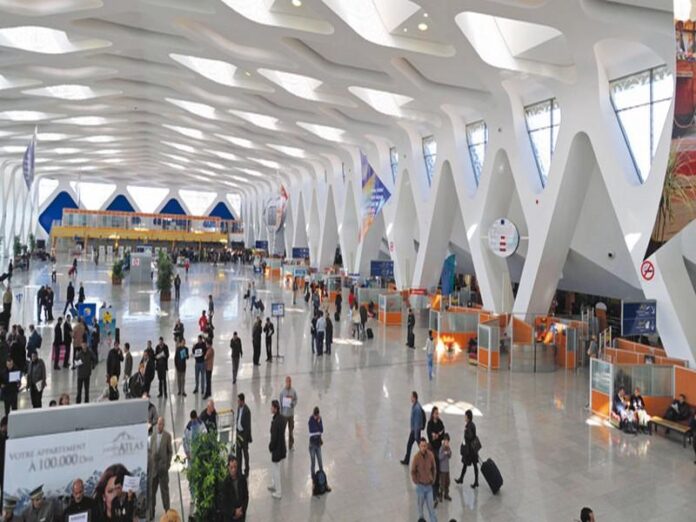
Casablanca’s Mohammed V Airport remained the country’s busiest gateway, handling over 11 million travelers and cementing its status as a regional transit hub. Marrakech set a personal best, crossing the 10 million passenger mark for the first time—a reflection of its enduring appeal as a global tourist magnet. Meanwhile, Rabat-Salé Airport posted the year’s highest growth rate at 26%, surpassing the two-million-passenger threshold.
Morocco’s top five airports now account for nearly 90% of total passenger traffic. Casablanca leads with 32%, followed by Marrakech at 28%, and Agadir with 10%. Tanger and Rabat also posted impressive gains, growing by 17% and 26%, respectively. Much of this growth can be linked to the strong performance of the tourism industry and rising numbers of international arrivals.
Beyond the primary hubs, regional airports experienced a marked revival. Airports in Essaouira, Béni Mellal, Errachidia, and Laâyoune all reported significant gains. New flight routes, infrastructure upgrades, and the rise of domestic tourism have breathed new life into these once-overlooked airports, reinforcing the goal of more balanced national development and stronger territorial connectivity.
These record-breaking numbers are the result of a coordinated effort led by Morocco’s Airports Authority (ONDA) and a network of institutional partners, including the Ministry of the Interior, the General Directorate of National Security (DGSN), the Royal Gendarmerie, the Customs Administration, and the Ministry of Transport. Together, they’re working toward a common vision: transforming Morocco’s airport network into a key driver of national competitiveness and regional development.


