

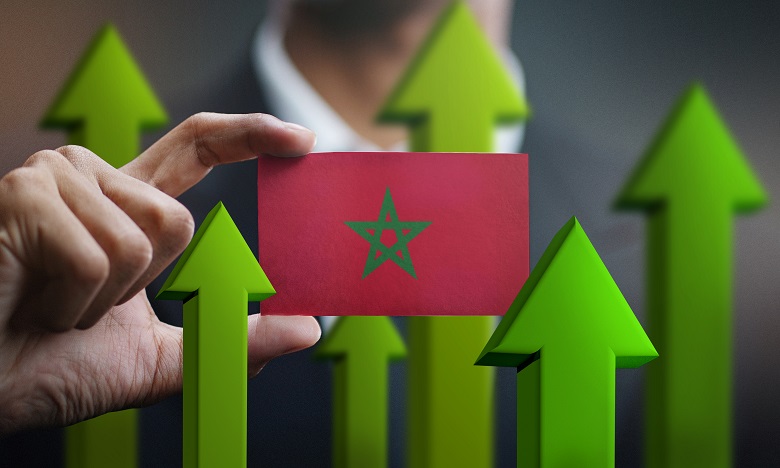
Morocco’s economy is on track for a notable rebound in 2025, with growth expected to reach 5%, according to the latest projections from Bank Al-Maghrib. However, this surge is likely to be followed by a more moderate pace, with the central bank forecasting average growth of 4.5% over the subsequent two years.
The primary driver of this momentum is a recovery in the agricultural sector, particularly in cereal production. Value-added in agriculture is projected to increase by 4% in 2026 and by 2% in 2027. These projections assume a return to average harvest volumes of around 5 million tonnes per year – roughly 50 million quintals – after recent years of weather-related disruptions.
Outside of agriculture, the broader economy is expected to maintain solid momentum, buoyed in large part by renewed investment. Growth in non-agricultural sectors is forecast at 5% in 2025, easing slightly to 4.8% in 2026 and 4.5% in 2027. This reflects a continued recovery in industries, services, and infrastructure spending.
In light of these dynamics, Bank Al-Maghrib has opted to keep its benchmark interest rate unchanged at 2.25%. The central bank emphasized its readiness to adapt monetary policy based on shifting economic conditions, relying on the most up-to-date data to guide its decisions.
On the inflation front, the outlook remains calm. After a period of volatility driven by global supply chain pressures and energy prices, inflation in Morocco is projected to remain contained over the next three years. The central bank expects consumer price inflation to hold at 0.8% in 2025, then rise gradually to 1.3% in 2026 and 1.9% in 2027.
These forecasts were published following the fourth and final quarterly meeting of Bank Al-Maghrib’s board this year. The report attributes the current disinflation trend to improved supply in several key food markets, including olive oil, along with declining prices for fuel and lubricants.
Core inflation – which strips out the most volatile items like food and energy – shows a similar trajectory. It is expected to hover around 0.7% in both 2025 and 2026, before increasing to 1.9% by 2027.
Expectations within the financial sector remain steady. In its quarterly survey of industry professionals, Bank Al-Maghrib notes that long-term inflation forecasts average 2% over an eight-quarter horizon and 2.2% over 12 quarters, signaling a broad consensus that inflation risks are currently under control.


