

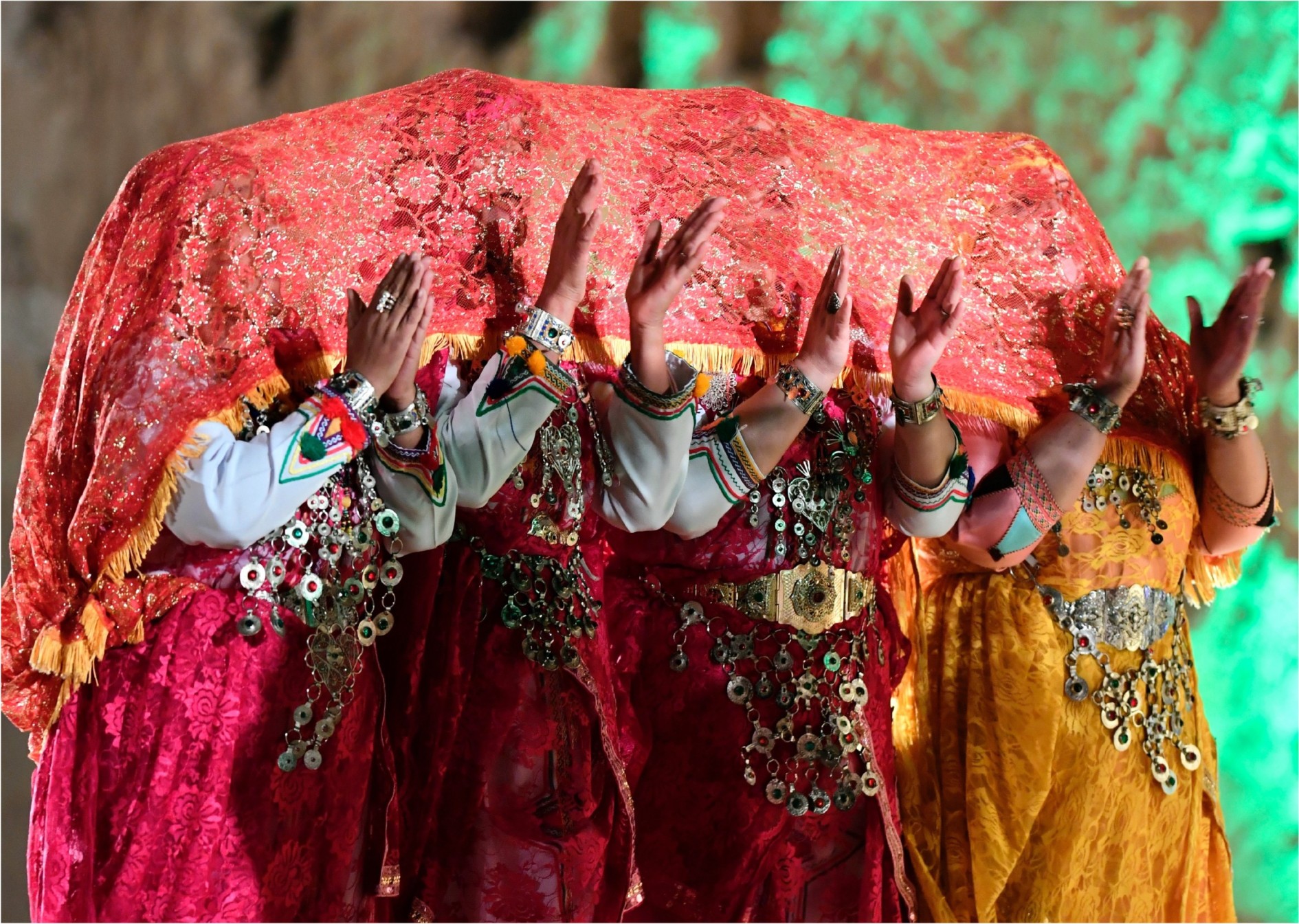
Thousands of people are expected in Marrakech this week as Morocco’s oldest cultural festival returns for its 55th edition. The National Festival of Popular Arts (FNAP) will run from July 2 to July 6 under the theme, “Popular arts, treasures of yesterday and today”.
Organised by the Grand Atlas Association and the Ministry of Youth, Culture, and Communication, the festival celebrates Morocco’s traditional music, dance and storytelling. It aims to preserve cultural traditions that have been passed from one generation to the next by word of mouth.
The festival was launched in 1960 at the initiative of King Mohammed V, just a few years after Morocco gained independence. It was created to bring together traditional performers from across the country and help protect local customs and performances.
The main performances will once again be held at the 16th-century El Badiâ Palace. It is only the second time the festival has returned to the historic site, which has long been linked to the event.
This year’s edition includes two new additions.
The festival will honour the Female Aïta tradition with a tribute to Moroccan singer Zina Daoudia.
Another first will see the Medersa Ben Youssef host festival performances for the first time. Moroccan singer Nabila Maan will perform at the former Islamic school.
In recent years, the festival has also invited performers from other countries while keeping its focus on Moroccan traditions. Organisers have updated the stage production and sound systems to attract younger audiences and visitors.
They also say the festival helps support traditional artists by giving them paid performances and encouraging younger people to learn the country’s folk arts.
Marrakech is home to Jemaâ El Fna, which UNESCO has recognised as a Masterpiece of the Oral and Intangible Heritage of Humanity.
Mohamed Knidiri, President of the Grand Atlas Association, said the festival has remained true to its purpose for more than six decades.
“Fifty-five editions is a loyalty that goes far beyond us,” he said.
He added that the festival sees Morocco’s popular arts not as “a static memory, but as a living movement”.


