

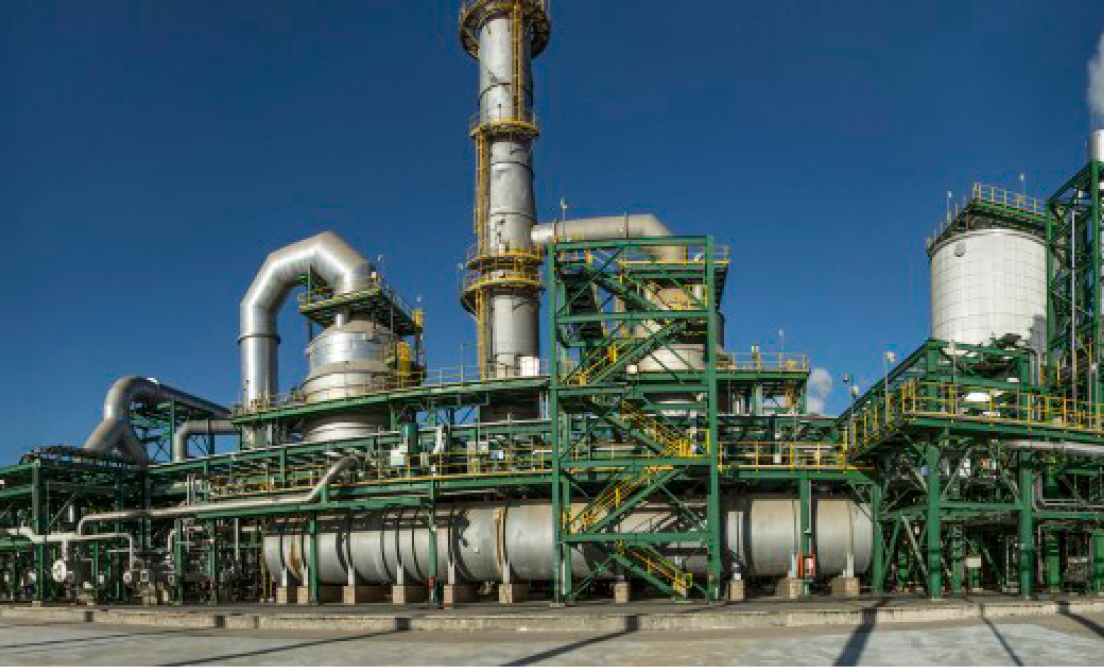
OCP Group and the International Finance Corporation are finalising a funding deal to improve how industrial waste is handled at one of the world’s biggest fertiliser sites.
The IFC, part of the World Bank Group, plans to provide a €95m loan for a new phosphogypsum storage and recovery facility at OCP’s Jorf Lasfar complex. The full project is worth €190m. The IFC board is expected to approve the loan on 11 May 2026.
The project will build a large land storage site able to hold 22 million tonnes of material, stacked up to 60 metres high. OCP says the aim is not just to store waste but to reuse it later in farming, road building and construction.
The agreement also includes expert support to help OCP find profitable ways to use this industrial by-product. The project is part of OCP’s $13bn Green Investment Plan for 2023 to 2027, which aims to make the company carbon neutral by 2040.
Phosphogypsum is created when phosphate rock is treated with sulphuric acid to make phosphoric acid, a key ingredient in fertiliser. For every tonne of phosphoric acid produced, about five tonnes of phosphogypsum are created. Because the volumes are so large, the material needs careful management to avoid environmental problems.
OCP is now treating the material as a useful resource instead of waste. Research with partners including Mohammed VI Polytechnic University focuses on using it to improve salty or alkaline soils, as a base layer for roads and as a material for plasterboard or bricks.
Jorf Lasfar, on Morocco’s Atlantic coast, is the world’s largest integrated fertiliser production site. Managing by-products is seen as essential for OCP to keep expanding worldwide.
In March 2026, OCP received approval to launch new OCP Nutricrops subsidiaries in France and India to supply fertilisers tailored to local soils. The company has also moved several mining sites to 100% renewable energy, backed by a €100m green loan from the IFC used to build four solar plants in Benguerir and Khouribga. By April 2026, OCP reached its target of using nearly 560 million cubic metres of desalinated water each year, helping preserve freshwater for local communities.


