

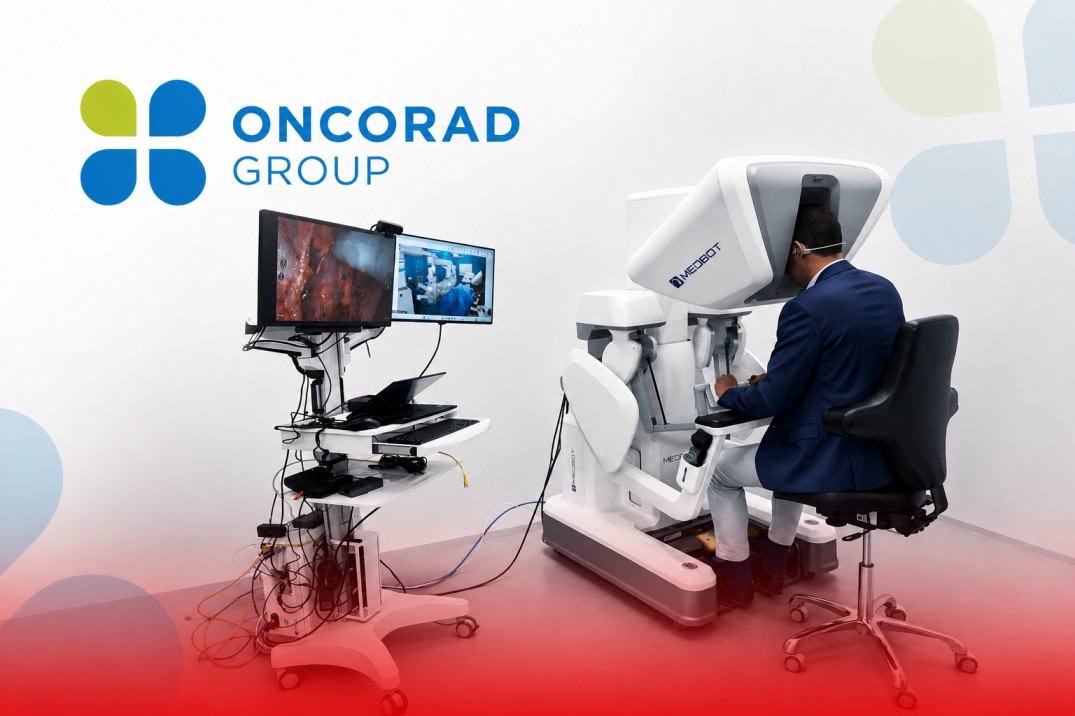
A patient in Morocco was operated on by a surgeon in Belgium. At the same time, a patient in Belgium was treated by a surgeon in Morocco. The two operations marked what Morocco’s Oncorad Group and Belgium’s ORSI Academy say is the world’s first bidirectional intercontinental robotic telesurgery, powered by Orange Maroc.
The procedures took place at the Littoral Clinic Ain Diab in Casablanca and ORSI Academy in Melle, Belgium. Surgeons controlled robotic systems on the other continent using a dedicated high-speed network.
Professor Youness Ahallal, a robotic surgery professor at ORSI Academy and urologist at Oncorad Group, performed surgery from Belgium on a patient in Casablanca. At the same time, another surgeon in Morocco operated on a patient in Belgium.
The network, built with Orange Maroc and its technology partners, allowed surgeons to control the robots in real time with almost no delay.
Studies show that delays below 200 milliseconds are barely noticeable during robotic surgery. Procedures can also be safely carried out with delays of up to 300 milliseconds. Longer delays make surgery slower and increase the risk of mistakes.
Modern robotic surgery systems also need stable internet connections with between 15 and 40 Mbps of bandwidth. Even small amounts of data loss can affect the movement of the robotic instruments.
Unlike previous remote surgery projects, which usually involved one surgeon operating on one patient in another country, this operation involved two surgeries happening at the same time in opposite directions. That meant the network had to handle two live surgical data streams without interruption.
The milestone follows several years of investment by Oncorad in robotic surgery.
The group has carried out more than 400 robot-assisted operations at the Littoral Clinic Ain Diab in Casablanca. In 2025, it completed Morocco’s first remote surgery between Casablanca and Tangier. Earlier this year, it introduced dual console robotic systems at the Tangier Oncology Clinic.
Oncorad and ORSI Academy also announced a partnership to make Morocco a regional training centre for robotic surgery in Africa.
The programme will combine ORSI Academy’s training methods with Oncorad’s hospitals to provide simulation, mentoring and scientific exchanges for African surgeons.
“Our ambition goes far beyond acquiring cutting-edge technologies,” said Professor Redouane Samlali, chief executive of Oncorad Group. “We want to actively contribute to the training of African surgeons, the sharing of knowledge, and the emergence of an ecosystem of excellence capable of sustainably advancing robotic surgery across the continent.”
The latest achievement adds to a series of recent milestones by the group.
In February, Oncorad launched Tangier’s first robotic surgery platform. In March, it received international recognition at WHX Dubai after completing its 400th robotic surgery. The same month, it carried out what it described as Africa’s first procedure combining cryotherapy with PET imaging to treat a tumour.
In June, doctors from the group published a case in the medical journal Cureus describing how they used a custom-made 3D printed device to deliver targeted treatment for a rare form of penile cancer while preserving the patient’s organ.
The group has also expanded the use of artificial intelligence and digital technologies across its radiology, radiotherapy and nuclear medicine services.


