

The Authenticity and Modernity Party has won Morocco’s 2026 legislative election. Its next challenge is turning 97 seats into a functioning government, while facing a weak turnout, a resurgent PJD and a budget that leaves little room for expensive promises.
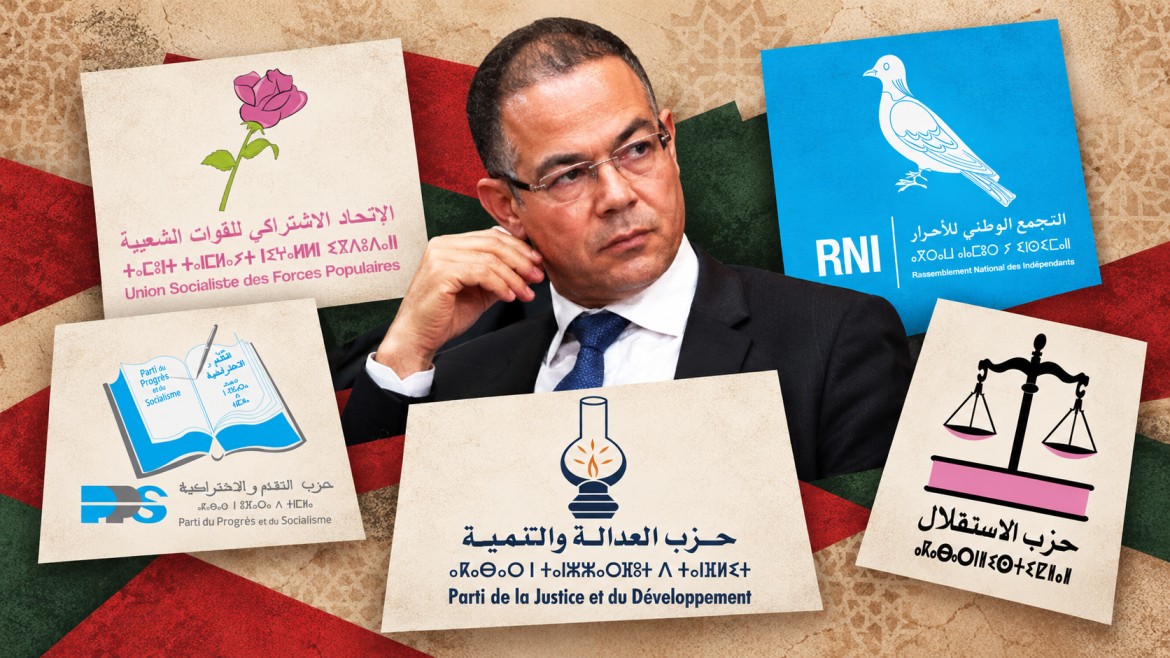
Preliminary results announced by Interior Minister Abdelouafi Laftit put PAM first with 97 of the 395 seats in the House of Representatives. The RNI follows with 66, Istiqlal with 65 and the PJD with 54. Turnout fell to 38.02%-38.08%, depending on the official reporting point, from about 51% in 2021.
The result gives PAM the political initiative. It does not give it a government.
The immediate next step is constitutional. Under Article 47, the King appoints the head of government from the party that comes first in the parliamentary election. The official election timetable says government formation comes after validation of the results and the appointment of the head of government.
That makes the first question deceptively simple: who will lead the government?
Fouzi Lekjaa is now an obvious name in that discussion. He formally joined PAM in July and was appointed to its Political Bureau. His combination of budget experience, senior public-sector experience and leadership of the Royal Moroccan Football Federation gives him a profile closely connected to two of the next government’s biggest files: public finances and the 2030 World Cup.
Fatima Ezzahra El Mansouri remains another important figure in the party’s leadership. The final decision, however, is not simply an internal PAM election. The constitutional process places the appointment with the King.
That means the political story has moved from the campaign to the palace, and then to Parliament.
PAM needs partners — and quickly
The arithmetic is unforgiving.
PAM has 97 seats. A majority requires 198. It therefore needs at least 101 additional MPs to build a majority.
On paper, the easiest route would be to reproduce the outgoing PAM-RNI-Istiqlal alliance. Together those three parties have 228 seats. But politics is not an Excel spreadsheet.
The three parties entered the election as members of the same government but increasingly as competitors. PAM and RNI fought openly during the campaign, while the RNI suffered a major electoral setback, falling from 102 seats in 2021 to 66 in the preliminary 2026 results.
A return to the old coalition would therefore create an awkward contradiction. PAM would have to build a new government with a party whose electoral defeat helped create the political opening it now occupies.
The more interesting numbers sit elsewhere.
PAM and Istiqlal together have 162 seats. Adding the USFP’s 26 would take the bloc to 188. Adding the PPS’s 19 would bring it to 207 — nine seats above the majority threshold.
That creates a plausible parliamentary route built around PAM, Istiqlal, USFP and PPS.
But “plausible” is not the same as inevitable. Coalition negotiations will involve ministries, parliamentary posts, policy concessions and competing claims over the government’s record.
The smaller centrist parties also matter. The Popular Movement has 29 seats and the Constitutional Union 17. They could provide alternative routes if negotiations with the left become difficult.
The PJD, meanwhile, has a different role.
Its return from 13 seats in 2021 to 54 in 2026 makes it the most significant opposition force among the major parties.
That changes the atmosphere inside Parliament. PAM will not simply have to assemble 198 votes. It will have to govern while facing a much stronger parliamentary opponent.
The real test may be the 2027 budget
Coalition negotiations could consume the political oxygen. But the first serious test of the new government will probably be economic.
The Ministry of Economy and Finance has already published the framework for the 2027 Finance Bill and the three-year budget programme for 2027-2029.
The official macroeconomic framework puts 2027 growth at 4.1%, with agricultural value added expected to rise by 1.2% and non-agricultural activity by 4.3%.
Those numbers matter because PAM’s campaign ambitions are more demanding.
The party has promised one million net jobs between 2027 and 2031, alongside measures aimed at household purchasing power and tax incentives for companies.
That creates the central economic question of the new government: how much can PAM spend, cut or give away without undermining the fiscal consolidation that is already under way?
The government is targeting a budget deficit around 3% of GDP. International rating agencies have also noted the importance of continued fiscal consolidation, even as Morocco faces pressure from public investment and social spending.
In other words, the new government inherits a paradox.
It has been elected on the promise of changing the economic trajectory. Yet much of the economic framework it inherits was designed before it arrived.
PAM will therefore have to distinguish between what it can change immediately and what it can only change gradually.
The private sector is where the jobs battle will be won
This is where PAM’s economic programme becomes particularly important.
The party cannot realistically create one million jobs through the public sector while simultaneously operating under fiscal constraints. The private sector has to do much of the work.
That makes investment reform more than an administrative issue.
PAM has promoted a shift away from a system based on prior administrative authorisations towards clearer specifications and stronger ex-post controls. It has also argued for greater regional decision-making over investment projects.
The logic is straightforward: reduce the time between an investor deciding to build a factory and the factory actually opening.
The challenge will be implementation.
Morocco does not lack investment ambitions. The harder problem is converting investment into enough productive, private-sector employment, particularly for young people.
That is where PAM’s promise of one million jobs will eventually be judged.
The biggest problem is not inside Parliament
The election’s most consequential number may not be 97.
It may be 38.02%.
Official results put turnout at roughly 38%, down sharply from 2021. About 15.8m voters were registered, while only around six million participated.
This creates a political paradox for PAM.
It has a clear legal route to government. It has the largest parliamentary group. But the election also exposed a large gap between formal political institutions and the population they represent.
The problem is especially visible among younger Moroccans. AP reported before the election that youth unemployment stood at 37% for 15-24-year-olds in 2025, while only 4% of registered voters were aged 18-24, despite that group representing roughly 12% of the population.
That gives PAM a difficult political equation.
The party can win the machinery of government without automatically winning public confidence.
And confidence cannot be legislated into existence.
It will have to be built through jobs, wages, public services, investment and visible improvements in everyday life.
The World Cup makes the timing even tighter
The next government will also inherit one of Morocco’s largest long-term investment programmes: preparations for the 2030 World Cup.
The government has described the tournament as a strategic national project, with Morocco co-hosting alongside Spain and Portugal. Fouzi Lekjaa has been deeply involved in its preparation through his role at the football federation.
This creates another balancing act.
The World Cup can accelerate infrastructure, tourism, transport and private investment. But it also requires major public commitments at a time when the government is trying to preserve fiscal discipline.
The new government will therefore have to answer a question that goes beyond football:
How much of the 2030 investment boom can be converted into lasting economic capacity rather than simply a five-year construction cycle?
That will depend on what happens to infrastructure after the tournament, whether private investment follows public spending, and whether new projects generate productive employment.
PAM’s first 100 days will matter more than its election night
The sequence from here is relatively clear.
First comes the validation of the election results. Then the appointment of the head of government from PAM. Then coalition negotiations. Then the formation of the cabinet and parliamentary majority. The government’s first major institutional test will be the 2027 Finance Bill. The official election timetable confirms that government formation follows validation of the results and appointment of the head of government.
The harder part is what happens afterwards.
PAM has spent years trying to move from being a major force within government to becoming the central force in government. The 2026 election gives it that opportunity.
But 97 seats are not enough to govern alone. A coalition must be constructed. The budget must be reconciled with campaign promises. Private investment must generate jobs. The 2030 World Cup must be financed without derailing fiscal consolidation. And a younger population that largely stayed away from the ballot box must be given reasons to believe that politics can change something tangible.
The next five years will answer whether coming first was enough.


