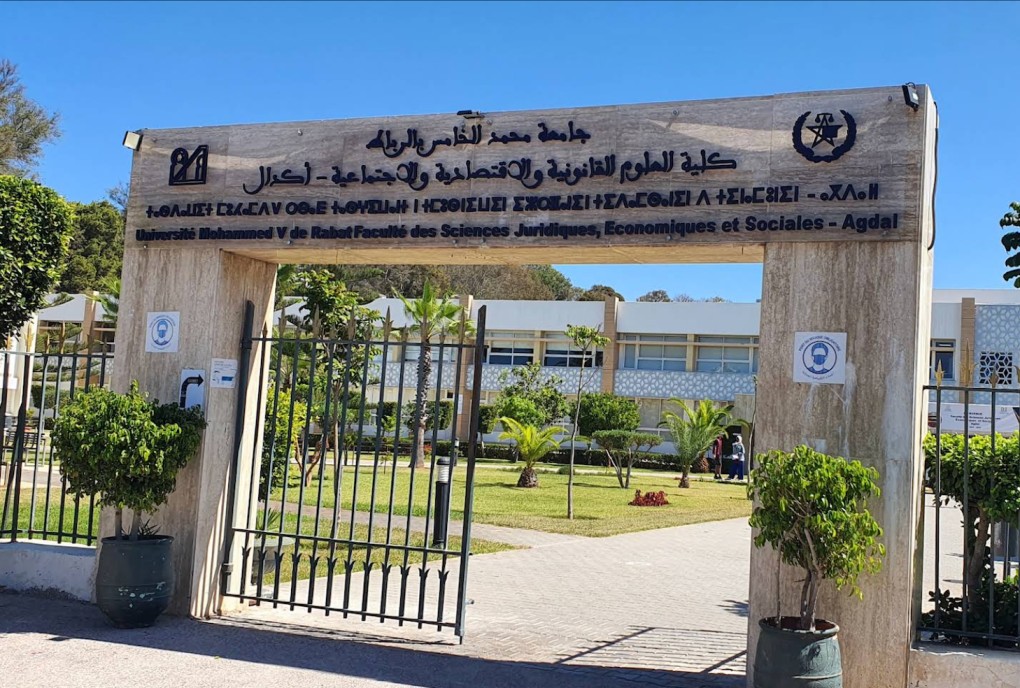
Working people hoping to earn a PhD at a public university in Rabat will pay less if they earn lower salaries, under a new fee system introduced after protests over the cost of higher education. The Faculty of Legal, Economic and Social Sciences Souissi (FSJES Souissi), part of Mohammed V University, has set annual fees of 10,000 to 20,000 Moroccan dirhams (MAD) for students taking doctoral programmes alongside their jobs in the 2026/2027 academic year.
The new system replaces the proposed flat annual fee of 20,000 dirhams for all working PhD students. Those in the lowest salary group will pay half that amount, while middle earners will receive a 25% reduction.
Registration for new PhD candidates runs from 15 to 20 October at the faculty’s Centre for Doctoral Studies. Applicants must submit the required documents and proof that they have paid their fees.
Under the new rates, students earning less than 120,000 dirhams a year — equivalent to less than 10,000 dirhams a month — will pay 10,000 dirhams annually.
Those earning between 120,000 and less than 240,000 dirhams a year will pay 15,000 dirhams. Students earning 240,000 dirhams or more a year, equivalent to at least 20,000 dirhams a month, will continue to pay 20,000 dirhams.
The changes apply to students on flexible-schedule programmes, known as temps aménagé, which allow civil servants, private-sector employees and self-employed people to study while working.
Full-time doctoral students who are not employed pay a registration fee of 400 dirhams a year, provided they submit a recent certificate of non-employment issued by local administrative authorities.
The decision follows months of protests and criticism over plans to charge students on flexible-schedule programmes at public universities.
In mid-2026, universities moved towards a standard annual fee structure of 5,000 dirhams for bachelor’s degrees, 15,000 dirhams for master’s degrees and 20,000 dirhams for PhDs.
The proposed doctoral fee meant that a student completing a four-year programme could pay as much as 80,000 dirhams in total.
Civil servants, student groups and other workers opposed the charges, arguing that they made it harder for people on low and middle incomes to continue their education while covering everyday living costs. The dispute also led to strikes and legal challenges.
Critics questioned whether the fees were compatible with Article 45 of Framework Law 51.17, which sets out the principle of free public education.
Higher Education Minister Azzedine El Midaoui and university presidents defended the charges, arguing that flexible-schedule programmes involve additional services and teaching outside universities’ normal operating hours. They have treated the programmes as a form of continuing education, which they say gives universities grounds to collect fees.
Under the funding model for these programmes, 60% of the money raised goes towards scientific research and payments for academic supervisors and trainers. The remaining 40% covers university administration and the maintenance of facilities.
In August 2026, the Conference of University Presidents acknowledged the need to take students’ financial circumstances into account. That opened the way for individual faculties to adjust their fees.
The new policy revives an approach previously used by Mohammed V University, which charged employed doctoral students between 3,000 and 10,000 dirhams a year, depending on their net income.
The revised system reduces costs for two of the three salary groups, but it does not remove fees for working students.
Those earning less than 120,000 dirhams a year will all pay the same 10,000-dirham fee, even though the group includes people with very different salaries and living expenses.
The faculty’s announcement also leaves several questions unanswered. It does not say whether the new rates will apply to students who began their PhDs in previous academic years, or whether fee waivers, social assistance or instalment payments will be available.
Applicants taking the flexible-schedule route must provide a recent salary certificate, a signed and legally authenticated formal commitment, and proof of payment. Full-time applicants must provide the required certificate showing that they are not employed.