
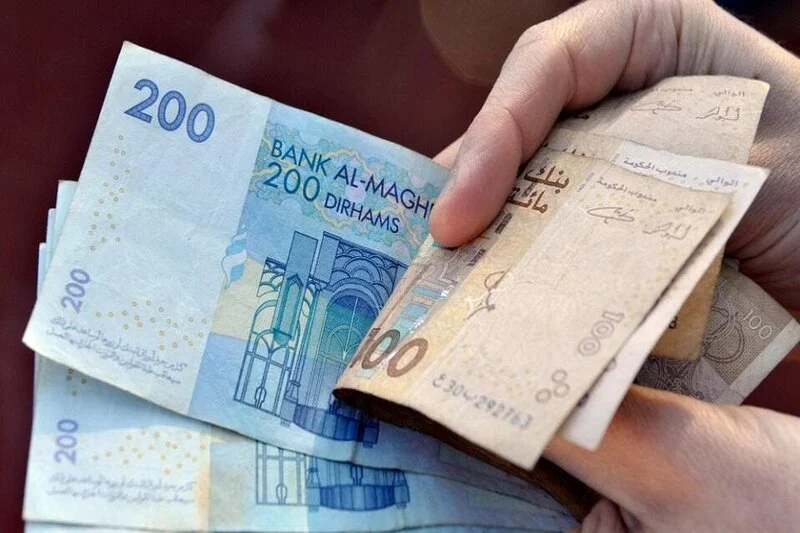
For many families in Morocco, money sent from relatives abroad is not an abstract economic figure but a monthly reality that pays bills, funds education and helps cover daily costs. That steady flow has grown again at the start of 2026.
Data from the Office des Changes shows remittances from Moroccans living abroad reached more than 29.7 billion dirhams by the end of March 2026.
That is an 11.7% rise compared with 26.62 billion dirhams during the same period in 2025, confirming continued growth in transfers from the diaspora.
These inflows remain one of the most important supports for the economy, helping households, saving levels and overall spending across the country.
Tourism has also been on the rise. The tourism balance surplus reached nearly 23.7 billion dirhams, up 31.4% year on year.
This came as travel income climbed to 31 billion dirhams, while spending by Moroccans travelling abroad increased by a smaller 3.4%.
Investment trends were more mixed. Net foreign direct investment stood at 8.45 billion dirhams, down 8.3% compared with last year.
The decline was linked to lower inflows and higher outflows in investment income.
At the same time, Moroccan investment abroad grew strongly. Net outward investment rose to more than 2.8 billion dirhams, a jump of 57.3%.
Even with weaker corporate investment figures, remittances continue to stand out as one of the most stable sources of money entering the country.
In 2025, total transfers from Moroccans abroad hit a record 122 billion dirhams, and the current trend points towards another strong year in 2026.
These funds are a key source of foreign currency reserves for the Bank Al-Maghrib, helping it cover essential imports such as fuel and wheat.
They also act as a kind of private safety net. Around two-thirds of the money is estimated to go directly to households, supporting day-to-day spending and easing pressure from rising prices.
A large share is also kept in local bank accounts, adding liquidity that supports loans for homes and small businesses.
Traditionally, most of this money has been used for consumption and family support, with only a small portion going into investment.
Authorities under King Mohammed VI have been trying to change that pattern, encouraging more investment into sectors like technology, renewable energy and industry.
Recent reforms, including new foreign exchange rules introduced in January 2026 under IGOC 2026, are designed to make it easier for diaspora investors to move money and manage returns, with the aim of attracting more long-term investment from Morocco’s estimated five million citizens living abroad.


