

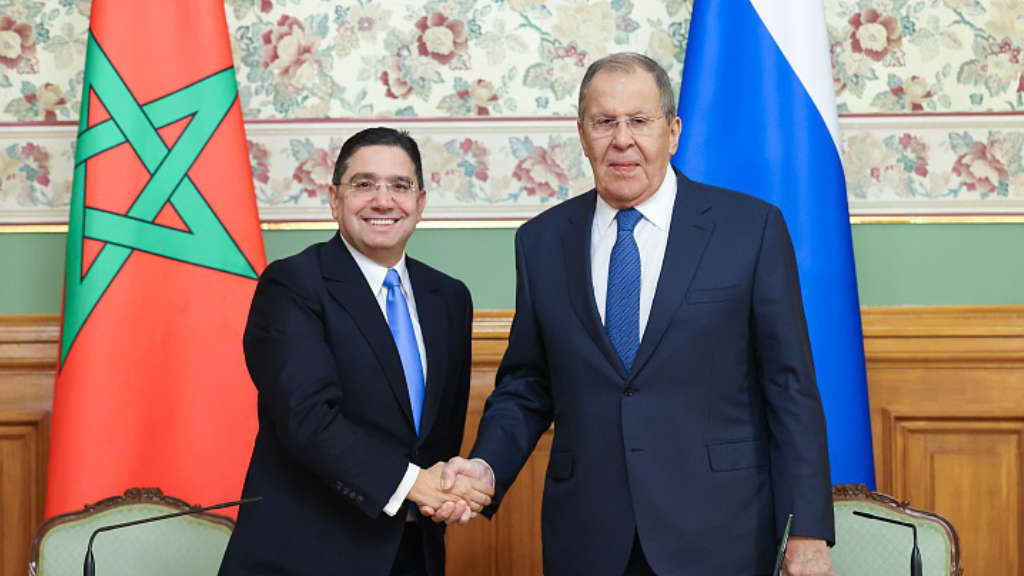
Russia is sending a major trade delegation to Morocco in mid-June, showing that economic ties between the two countries are growing.
Natalia Orlova, an economics expert at Russia’s Financial University, told the business site Capital Strani that the mission “is not a one-off event; it is part of a natural process to deepen economic relations.” She said Russian-Moroccan trade “has been stable and practical” in recent years.
Trade between the two countries is around $2 billion a year, even with global economic changes and tough sanctions on Russia. Orlova said this shows that businesses in both countries want to keep and grow their relationship.
Russia supplies Morocco with important goods like farm products, fertilizers, animal feed, medicines, and IT equipment. Morocco exports fruits, fish, and seafood to Russia. But the relationship is now moving beyond just buying and selling goods.
A big reason Russian businesses are interested in Morocco is that the country acts as a bridge to the rest of Africa. Morocco has spent years building its ports, roads, and business-friendly zones. Tangier Med has become one of Africa’s largest and most advanced ports, and Morocco has free trade agreements with 55 countries, helping goods made there reach many markets.
Russian companies are looking to set up factories and logistics centers in Morocco. Orlova said this gives them access not only to Morocco’s 37 million people but also to markets across West Africa.
Russian Ambassador to Morocco, Vladimir Papiakov, told RIA Novosti that trade continues at steady levels despite Western sanctions. “Russian businesses are interested in Morocco, and Moroccan businesses are interested in Russian technology and investments, especially in energy, infrastructure, and agriculture,” he said.
The June mission will focus on medicines, digital tech, farming and food industries, and industrial equipment. Some expected participants include Russian state-backed exporters, IT company NIX-T, electric vehicle charger maker Intermobility Eva, and big pharmaceutical firms like Biocad and Geropharm.
The delegation aims to sign agreements to protect Russian investments, make it easier to send profits back home, and speed up customs and payments. This helps Russian companies work safely in Morocco and use it as a base for Africa.
Russian firms are targeting several industrial zones. Tangier Med and Tangier Tech are focused on metals and industrial equipment. Casablanca and Nouaceur are aimed at medicines and aerospace, producing vaccines, insulin, and cancer drugs. Kenitra Atlantic Free Zone will host automotive and smart city technology projects.
In southern Morocco, Agadir and Dakhla are attracting agro-tech and logistics investments, including water management and cold storage for food.


