

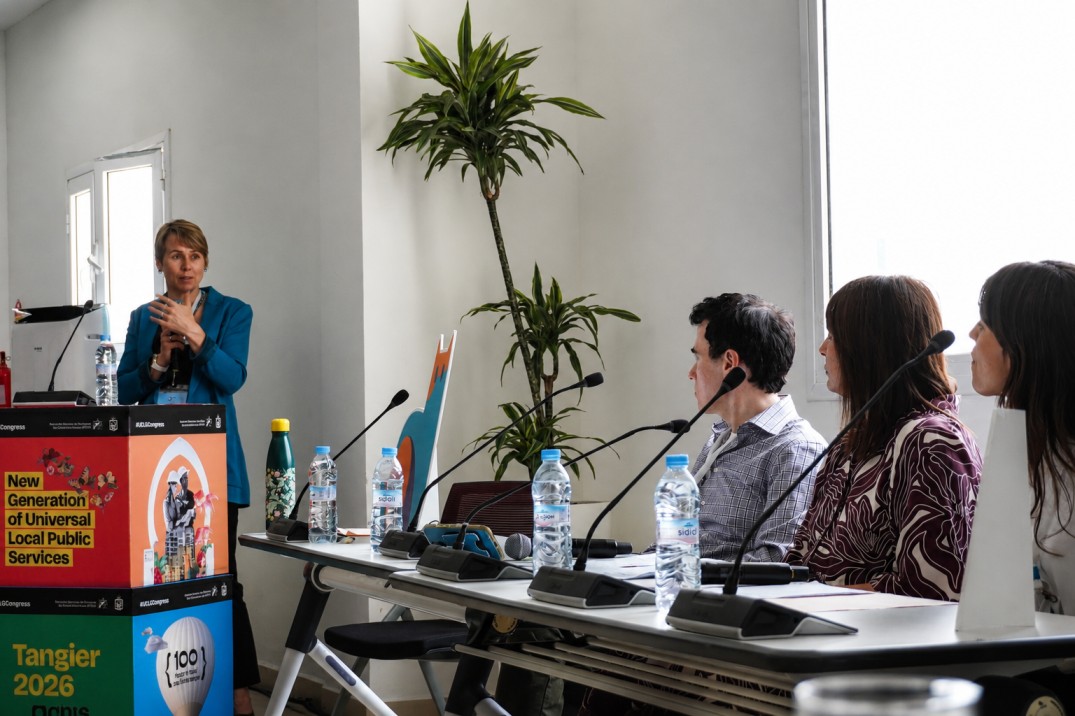
Stray dogs and cats are part of everyday life in many cities. The question is no longer whether they should be managed, but how. That was the main message from experts and city officials who met in Tangier during a panel at the UCLG summit for a discussion on how cities can deal with free-roaming animals in a way that protects both people and animals.
The event, called The Shared City: Caring for Stray Dogs and Cats as an Integral Part of Urban Life, brought together speakers from Morocco, Palestine, Thailand, Colombia and Canada. They shared examples of cities that have replaced culling with sterilisation, vaccination, education and community partnerships.
The discussion also marked the launch of the Positive Cities Network, led by the International Companion Animal Management (ICAM) Coalition.
ICAM says around 400 million dogs live in cities around the world, while three out of every four cats also live in urban areas. Without proper planning, growing stray populations can increase the risk of disease, traffic accidents and animal suffering.
“This is a question that’s relevant for anybody who has a responsibility for a city and the people that live within it,” said Dr Elly Hiby, Director of the ICAM Coalition.


She praised Tangier’s approach after visiting the city earlier this week.
“What we saw were healthy animals and citizens who were welcoming of these free-roaming animals on their streets.”
She pointed to dogs wearing ear tags, which means they had been caught, sterilised, vaccinated and returned to their neighbourhoods. She also said local volunteers who care for the animals and education programmes for children.
“This is a very positive start in Morocco. It’s not the approach that’s used across this country. It could be.”
One of the strongest examples came from Ramallah, where officials stopped using poisoning and shooting to control stray dogs and switched to a Trap, Neuter, Vaccinate and Return programme in 2022.
“When Ramallah City decided to act… we were receiving more than 60 complaints per month,” said Malvina Al Jamal, Director of Health, Environment and Climate Change at Ramallah Municipality.
Ramallah has about 85,000 people, but at the time it had no animal management centre and little information about the number of stray dogs.
“These approaches have serious concerns for animal welfare, for wildlife, for people’s safety, and public health, and most of all, it did not solve the problem.”


Since opening its sterilisation centre, the city has sterilised hundreds of dogs and cut public complaints by around 40%.
“We used the TNVR approach… and this approach created a system that improved public safety, community health, and protects animal welfare at the same time.”
But Al Jamal said the work is far from over because of limited funding, a shortage of trained staff and the lack of a national strategy.
“Sustainable change requires continuity, requires passion, requires commitment, and partnerships among all the stakeholders.”
Simona Zito, Global Programmes Manager at Battersea Dogs & Cats Home, said there is no single solution.
“Cities that make progress are not the ones that have a single solution, but they treat dog and cat population management as a city system rather than a single activity.”
She said sterilisation programmes only work if they are backed by public education, affordable veterinary care and stronger action against pet abandonment.
“If you sterilise and vaccinate a dog but then you don’t address the source of new dogs… the problem will continue to regenerate.”
ICAM also shared survey results from Mexico, Türkiye and the Philippines, showing strong public support for humane solutions.
Nearly three in four people said their local government should catch, sterilise, vaccinate and return stray animals instead of killing them. Only 2% supported culling.
More than eight in ten people rejected culling altogether, while almost everyone supported using public money to pay for vaccination, sterilisation and education programmes.


The surveys also showed that almost nine in ten people feel sad when they see sick or injured stray dogs or cats, suggesting people are worried about animal welfare as well as public safety.
Another finding showed that eight in ten people would feel more comfortable with stray dogs in their neighbourhood if they had been sterilised and vaccinated.
The Positive Cities Network encourages cities to treat stray animal management as part of public health, community safety and urban planning, rather than simply an animal welfare issue.
As Bogotá’s mayor said in a recorded message: “We are convinced that dogs and cats are part of our families and our communities.”
“Because when a city takes care of its animals, it is also taking care of its people.”


