Renault Group has reported higher revenue in the first quarter of 2026, despite disruption at its Morocco production hub caused by bad weather and a temporary shipping shutdown in the Strait of Gibraltar.
The company said revenue rose 7.3% to 12.53bn euros. But operations at its Tangier industrial site were hit after storms forced the Strait of Gibraltar to close for ten days, delaying car shipments and parts deliveries.
The disruption created a backlog that affected global sales. Total sales fell 3.3% to 546,183 vehicles. Dacia, which relies heavily on Moroccan manufacturing, saw sales drop 16.3% due to delayed deliveries. Chief financial officer Duncan Minto said the group expects to recover the lost production in the first half of the year.
Even with lower volumes, revenue increased as Renault focused on higher-value models. Sales of Renault-branded cars rose 2.2%, helped by the launch of the new Clio 6 and a shift towards more expensive vehicles. The group also benefited from industrial programmes for Nissan, including the Micra, and growing partnerships with Geely in markets such as Brazil.
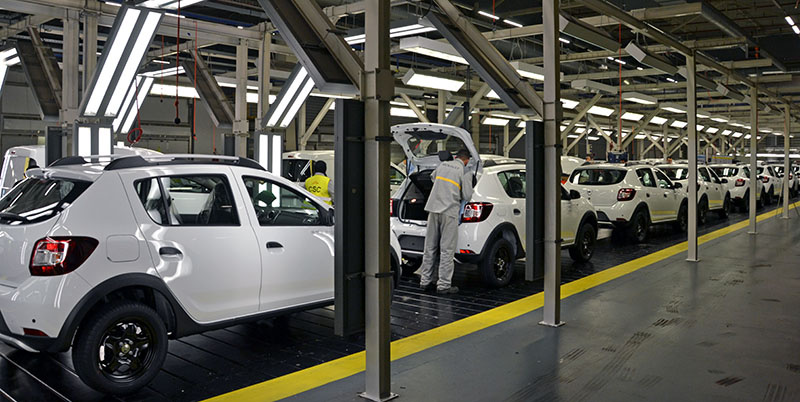
Morocco’s role in Renault’s supply chain has become increasingly important. In February, the company merged its Tangier and Casablanca plants into its Iberian industrial hub alongside factories in Spain. The aim is to make parts flow more smoothly between Spanish battery facilities and Moroccan assembly lines.
Renault is aiming for 80% local sourcing of parts for vehicles made in Morocco by 2030. The strategy is designed to reduce exposure to shipping disruptions like those seen this quarter.
The country is also becoming central to Renault’s electric vehicle plans. The Tangier plant has now built more than 2,000 Mobilize Duo electric vehicles. Across Europe, electrified models made up 52.3% of sales in the quarter, with Moroccan factories being adapted for more hybrid production, including the Dacia Jogger Hybrid.
Renault says Morocco is now its second-largest production base. The company is betting that a more integrated Mediterranean supply chain will help it handle future pressure from raw material and energy costs.