
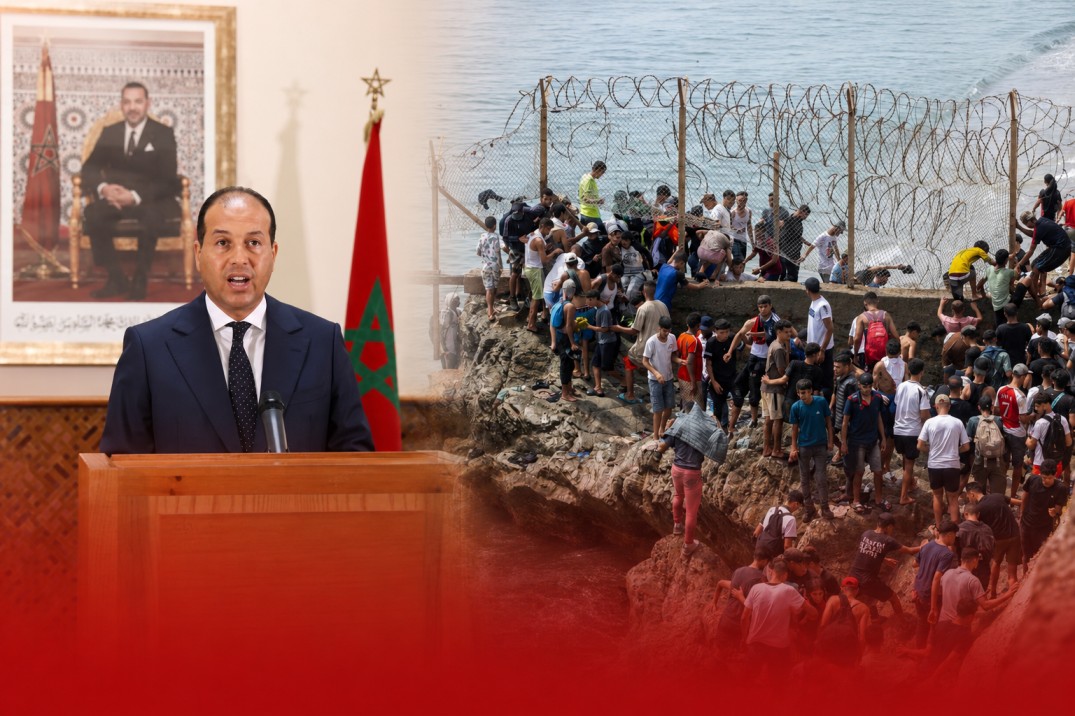
Thousands of people recently tried to reach the Spanish enclaves of Ceuta and Melilla after false information spread online made many believe they could enter Europe without being sent back, the Interior Ministry says.
The ministry says the crossings were planned and not spontaneous. It blames misleading posts on social media, human trafficking networks and false claims about Spanish migration rules.
Authorities say they increased security on land and at sea as soon as they spotted signs that large numbers of people were preparing to cross. They say the measures helped protect lives, keep public order and secure the border.
Interior Ministry spokesperson Rachid El Khalf said: “We acted early by raising security levels, increasing surveillance on land and at sea, and mobilising all services. This helped us control the situation, protect lives, maintain public order and secure the borders while respecting the law.”
The ministry says about 40,000 people headed towards Ceuta and around 1,135 towards Melilla. It says everyone who managed to enter Melilla was immediately returned.
Officials say these figures come from surveillance and field monitoring systems and are the only official numbers. They say other figures shared online are not based on reliable evidence.
The ministry also says recent Spanish court rulings were wrongly explained on social media. According to officials, many people were led to believe that anyone who reached Spanish waters by swimming could avoid being immediately returned.
It says this false belief encouraged many people to try to swim across the border.
The ministry says one person died after falling from rocks near Ceuta and 10 others drowned.
Officials say the crossing looks easier than it is. In some places, the distance is less than 70 metres and the water is only about two metres deep, giving many people a false sense of safety.
Authorities are also checking reports of more deaths in Ceuta with their Spanish counterparts. They say they are working to confirm the number of victims as well as their identities and nationalities before completing legal and humanitarian procedures.
The ministry says border crossings were opened for people who wanted to return voluntarily, helping the situation gradually return to normal.
Prosecutors have also opened investigations into the incidents to establish what happened and whether anyone should face legal action.
Mr El Khalf said: “Managing migration requires shared responsibility, solidarity and cooperation. Morocco will remain a reliable partner in fighting irregular migration and human trafficking while continuing to protect public order, border security, and the safety of people and property.”
Ceuta and Melilla are Spanish cities on the North African coast that share land borders with Morocco. They are the European Union’s only land borders with Africa and have long been key routes for people trying to reach Europe.
People usually try to enter by climbing the border fences, swimming around coastal barriers or using small boats. The ministry says trafficking networks used social media and messaging apps to spread false information, making the journey appear easier and safer than it really was.