

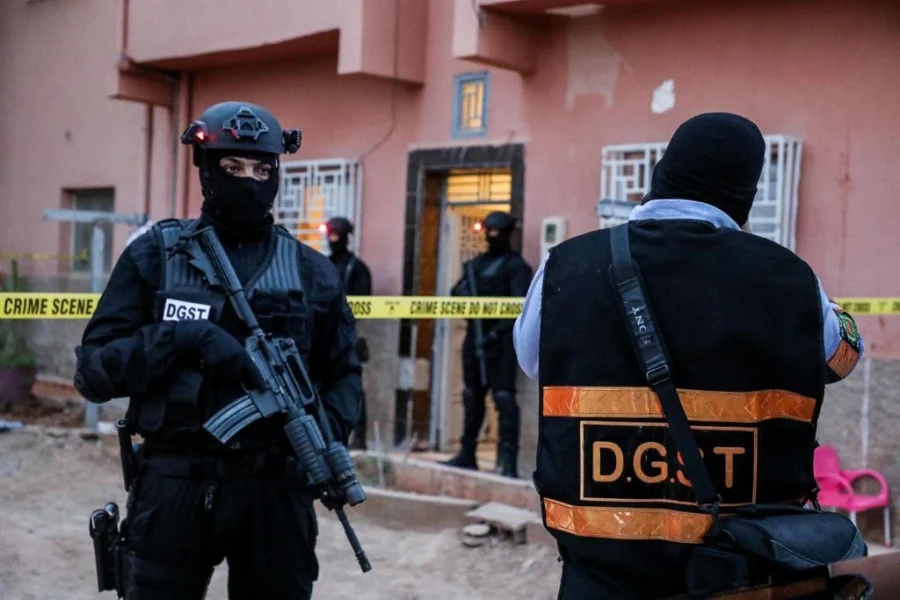
The United Nations has launched a procurement process to provide Morocco with an artificial intelligence and virtual reality platform for training law enforcement officers in counter-terrorism investigative interviews. The UN Procurement Division is inviting expressions of interest until 4 September. Morocco is listed as the beneficiary country. The platform would use AI-powered virtual characters to simulate investigative interviews, allowing trainees to practise conversations in realistic scenarios.
According to the procurement notice, the system would be hosted remotely and accessible through web browsers and virtual reality equipment. Trainers would be able to create scenarios, adjust their parameters and assess trainees’ performance through built-in analytical tools.
The UN has not identified which Moroccan institution will use the system. It has also not disclosed the number of expected users or the estimated value of the contract.
The planned contract would run for three years, with a licence covering an unlimited number of individual learners.
The platform would need to support multiple UN languages and integrate with learning-management and digital-identity systems. It would also have to meet international standards on cybersecurity, accessibility and data protection.
The procurement covers more than software. It includes AI-based conversations, virtual characters and environments, scenario development, trainee assessment, deployment, technical support and training for users.
A second procurement notice, EOIUNPD24612, covers the hardware needed for the programme. It includes standalone virtual-reality headsets, device-management systems, instructor workstations, protective cases and charging and hygiene stations.
The equipment is to be delivered to Rabat under DAP terms.
The software and equipment are intended to support the UN Office of Counter-Terrorism’s Programme Office and Training Centre for Africa in Rabat.
The centre, established in 2021, provides specialised training for countries in North and sub-Saharan Africa. Its programmes include counter-terrorism investigations, intelligence sharing, maritime and aviation security, cybersecurity and border management.
The use of AI avatars would allow investigators to practise interviews repeatedly and in controlled conditions, including how to manage difficult conversations and respond to changes in a suspect’s behaviour.
The procurement comes as Morocco continues to maintain a strong focus on preventing jihadist attacks.
In July, the Central Bureau of Judicial Investigations, known as the BCIJ, arrested 10 suspected members of an alleged Islamic State-linked cell in seven Moroccan cities.
Investigators said the group had received logistical support and operational guidance from members of the Islamic State’s Sahel branch.
Authorities said they seized an SUV allegedly modified to run on butane gas, along with weapons, military-style clothing, bomb-making material and digital files containing pledges of allegiance to Islamic State and threats against targets in Morocco.
The BCIJ says it has dismantled more than 210 terrorist cells since 2002, while working with international partners on cross-border security threats.


