
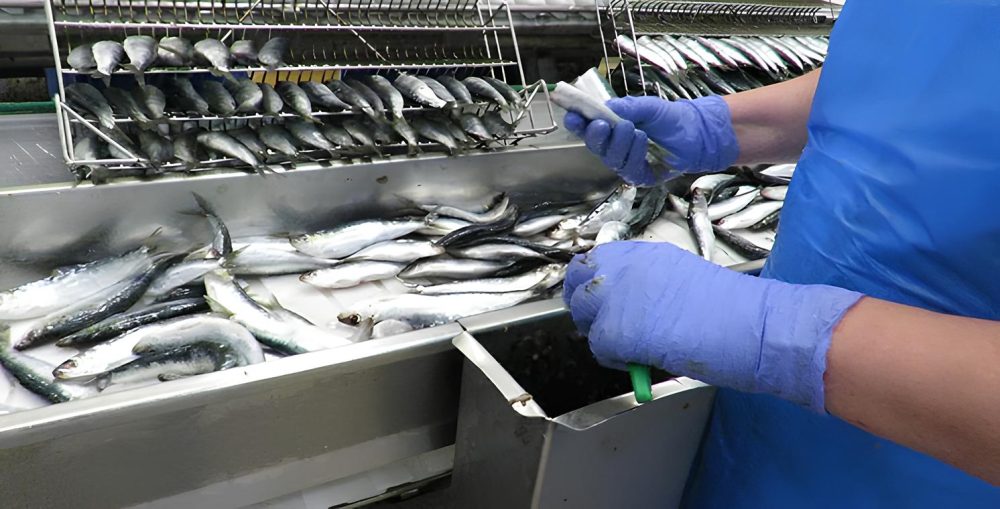
Spain’s seafood canning industry says it faces supply problems after Morocco introduced a one-year ban on sardine exports to protect domestic supply and stabilise prices.
The restriction began on 1 February and covers frozen, fresh and chilled sardines. Moroccan authorities say the measure is aimed at ensuring enough fish is available in the local market at a time of falling stocks and rising prices.
Industry groups in Spain warn that the move could disrupt production within weeks, particularly in the north-western region of Galicia, which depends heavily on Moroccan imports.
Heavy reliance on Moroccan imports
Data from Spain’s seafood industry body ANFACO-CYTMA shows Spain imported about 27,400 tonnes of frozen sardines from Morocco between January and October 2025.
That represented about 94% of Spain’s imports of the product from outside the European Union.
Factories in Galicia are continuing to operate but are relying on existing stock while monitoring supply levels. Spanish media outlets, including La Voz de Galicia and La Razón, have warned that a longer disruption could affect production and employment in the sector.
Limited alternatives for Spanish fleets
Spain cannot easily replace the missing supply with domestic catches.
Official figures show Spanish catches of Iberian sardines in 2025 reached 17,332.2 tonnes, with about 10,132 tonnes allocated to fleets operating in the Cantabrian Sea and north-western waters.
Scientific advice also suggests tighter limits ahead. The International Council for the Exploration of the Sea recommended that total sardine catches in Iberian waters should not exceed 38,978 tonnes in 2026.
That is lower than the 51,738 tonnes allocated to Spain and Portugal in 2025.
Ramadan market pressures in Morocco
Moroccan authorities say the export ban is aimed at protecting domestic supply, especially during the Muslim holy month of Ramadan, which began around 1 March.
Sardines are one of the country’s most widely consumed and affordable sources of protein.
Prices were highly volatile in the weeks before Ramadan, reaching peaks of about 50 Moroccan dirhams per kilogram in some cities due to poor weather and the annual biological rest period for fishing, which ended on 15 February.
Since fleets returned to sea in late February, prices have fallen and now range between about 12 and 25 dirhams per kilogram in most markets.
The government has also launched a programme called “Fish at a Reasonable Price”, releasing about 5,000 tonnes of frozen fish onto the market. Frozen sardines are being sold at a fixed price of 13 dirhams per kilogram through about 1,100 sales points in 47 cities.
Measures to control prices
Authorities have also introduced new measures aimed at improving price transparency.
The Competition Council has launched a digital platform that publishes daily wholesale fish prices from Moroccan ports, allowing consumers to compare them with retail prices.
A national consumer hotline, 5757, has also been reactivated so people can report suspected price manipulation or hoarding.
Declining stocks
The export ban comes as sardine catches have dropped sharply.
Figures from Morocco’s National Fisheries Office show landings fell from about 965,000 tonnes in 2022 to 525,000 tonnes in 2024, a drop of about 46%.
Fishing professionals say recent catches are increasingly made up of juvenile fish. Reports from the port of Laayoune suggest adult sardine populations may have shifted due to changes in Atlantic water temperatures.
Authorities say the ban will remain in place for one year as they try to balance domestic demand, environmental pressures and the long-term sustainability of the fishery.
Competition concerns in Spain
Spanish industry groups also warn the policy could strengthen Morocco’s seafood processing sector.
Morocco has invested heavily in domestic canning and freezing plants in recent years under its Halieutis fisheries strategy, which aims to increase exports of finished seafood products rather than raw fish.
European Union data shows the bloc imported 17,538 tonnes of prepared or canned sardines from Morocco between January and October 2025, representing about 89% of non-EU imports in that category.
Spain produced about 13,503 tonnes of canned sardines in 2024.
Roberto Alonso, secretary general of ANFACO-CYTMA, said the restriction could threaten jobs in Spain if supply shortages continue. The industry, he said, had long relied on a steady flow of sardines from Morocco.