

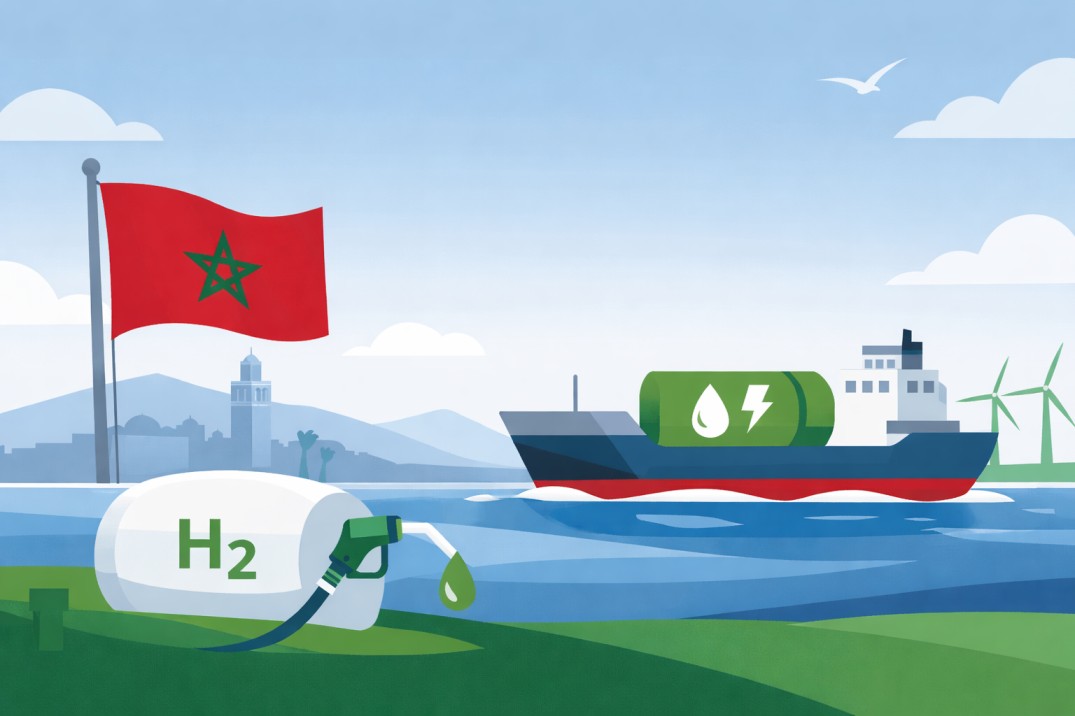
The World Bank says Morocco could become a big supplier of clean fuel for ships as the world moves away from oil and gas.
In a new report, it says green hydrogen, and fuels made from it like ammonia and methanol, could replace the heavy fuel ships use today. By 2030, ships stopping at Moroccan ports may need around 200,000 tonnes of this type of fuel. By 2050, that could rise to almost 2.83 million tonnes if demand grows steadily.
This hydrogen would be turned into cleaner fuels for ships, such as green ammonia and green methanol.
The World Bank says Morocco is in a strong position because of where it sits on the map, its large solar and wind energy projects, and its ability to produce green hydrogen at a low cost. It says this gives Morocco a real chance to benefit from a fast-growing new industry.
Ports will play a key role. The bank points to Tanger Med, Port of Mohammedia, Port of Jorf Lasfar and Port of Tan-Tan as important locations.
Tanger Med, one of the world’s biggest container ports, already handles about 1.5 million tonnes of regular ship fuel every year. The report says it could become a main centre for supplying clean fuel to ships passing through one of the busiest sea routes in the world.
The Port of Jorf Lasfar already deals with about two million tonnes of ammonia each year. The bank says this makes it a good place to start using green ammonia in existing industries. For example, using green ammonia to make fertiliser could help cut pollution from Morocco’s fertiliser sector.
Beyond shipping, Morocco’s strong wind and solar power could support large-scale, low-cost green hydrogen production. Growing global demand for cleaner energy is pushing interest in this area.
Under the European Union’s REPowerEU plan, the EU is expected to import more than 10 million tonnes of green hydrogen a year by 2030. The World Bank says Morocco’s closeness to Europe makes it a natural partner.
Busy shipping routes through the Strait of Gibraltar also strengthen Morocco’s chances of becoming a global hub for green hydrogen, the bank says.


