The 2025 Africa Cup of Nations final will be remembered not just for the football, but for the spectacle that unfolded around it-an intricate performance wrapped in chaos, carefully managed from behind the scenes. While official narratives quickly framed the night as a dramatic but ultimately rational return to order, complete with heroes like Sadio Mané calming his teammates and an unexpected intervention from Claude Le Roy, the truth appears far more calculated than chaotic.
What took place at Moulay Abdellah Stadium in Rabat didn’t resemble a spontaneous meltdown. Everything about the final’s unraveling suggests it was less an accident and more a strategy-one designed not to destroy the match, but to steer its outcome in a specific direction.
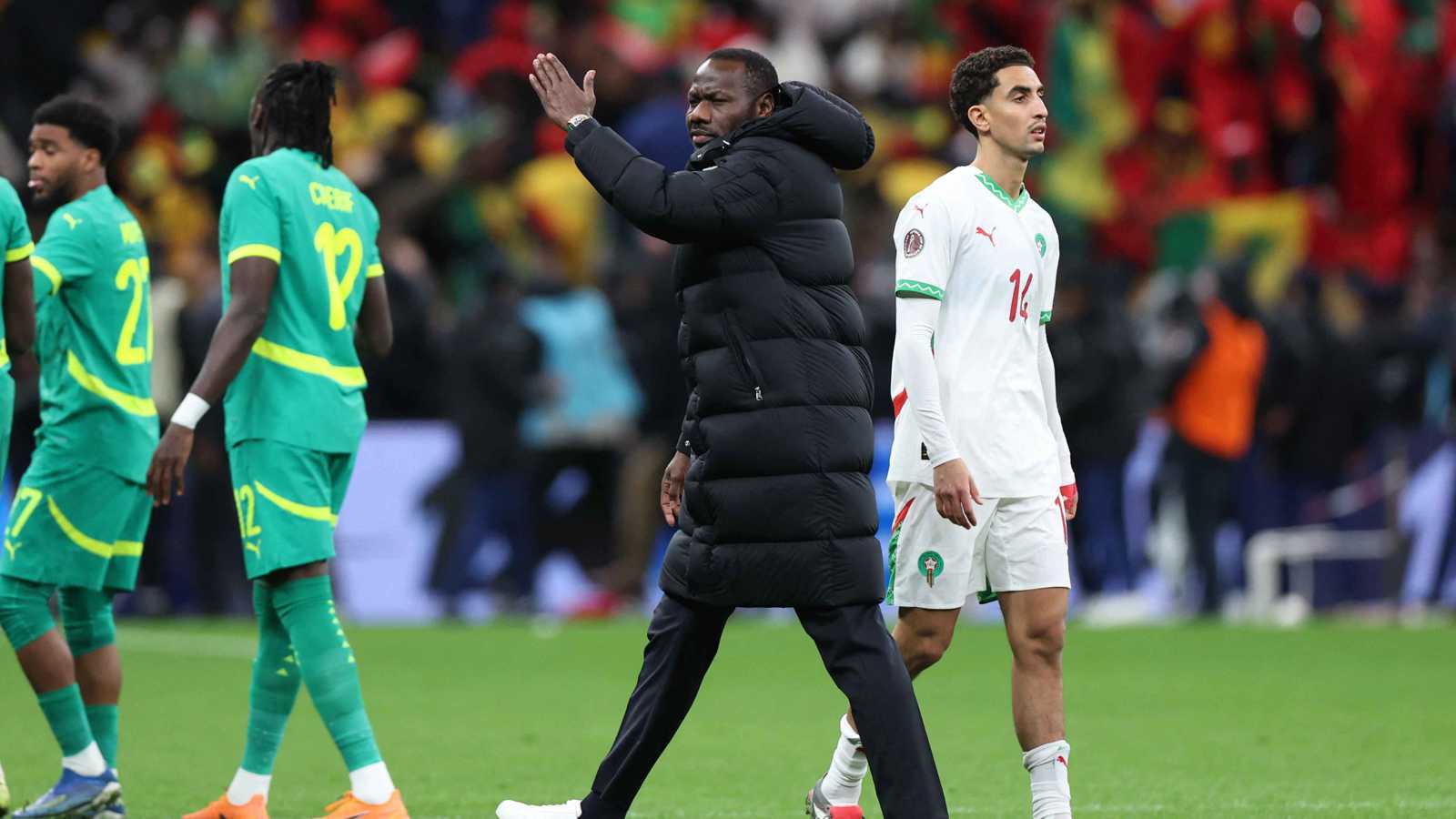
The turning point came after a penalty was awarded to Morocco. Senegal’s coach, Pape Thiaw, didn’t merely argue the call-he took decisive action, ordering his players to leave the pitch. For a continental final, it was a shocking move. But it also looked highly choreographed: halt the game, raise the stakes, blur the rules, and exert pressure on officials already under immense scrutiny.
As the Senegalese players headed for the tunnel, one figure remained alone on the field: Sadio Mané. That single image-of Mané standing still on the pitch-raises important questions. In elite football, the rule is clear: a team must have at least seven players on the field to keep the match going. If that number drops below, the game is halted. Mané’s presence wasn’t an accident. He wasn’t lost or indecisive-he was maintaining just enough of a presence to keep the match alive, holding the line between disruption and disqualification.
Mané’s next move was even more revealing. He turned and made his way toward a specific section of the stands, where El-Hadji Diouf, a former Senegal international, was deep in a phone call. The two exchanged a few words. Then, Mané returned to the field, motioned urgently toward the tunnel—and one by one, his teammates re-emerged. Coach Thiaw, still on the sidelines the entire time, didn’t object. He didn’t protest. He simply watched.
The timeline is now well-documented. A controversial penalty sparks fury. The coach reacts. The crowd spills onto the field. Security personnel are attacked. Equipment is damaged. Mané heads for Diouf. They talk. The players return. The match resumes.
It’s difficult to dismiss the possibility that this was all part of a carefully designed plan, with each figure playing a precise role. Thiaw triggered the interruption, Diouf operated as the strategic coordinator, and Mané delivered the calming gesture that allowed the match to resume, preserving Senegal’s public image while applying maximum pressure on the match officials.
And the seeds of this scenario were planted well before kickoff. The day before the final, the Senegalese Football Federation released a scathing statement: citing security failures at Rabat’s Agdal train station, unacceptable accommodations, poor training conditions, and a lack of available tickets for Senegalese supporters. Each complaint appeared deliberate, as if intended to build a pretext-to frame the final within an atmosphere of grievance and doubt.
In this confusing and contentious sequence of events, Morocco seemed focused solely on the football. Senegal, by contrast, appeared to be playing a different kind of game altogether-one in which the rules had been subtly rewritten long before the first whistle blew.