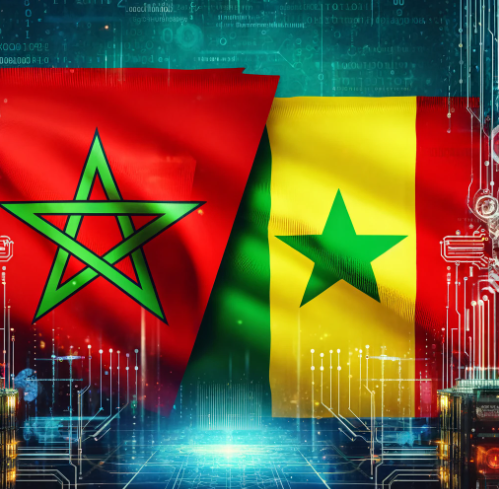
King Mohammed VI hosted a formal lunch in Rabat on Monday in honor of Senegalese Prime Minister Ousmane Sonko and his accompanying delegation. The event took place on the sidelines of the 15th session of the Morocco-Senegal High Joint Commission, reflecting the deepening partnership between the two nations.
The high-level meeting focused on strengthening ties between Rabat and Dakar through a series of strategic agreements. Both countries signed multiple deals across key sectors including economic development, infrastructure, higher education, energy, agriculture, and food security. It marked a renewed push for stronger collaboration on a wide range of national and regional priorities.
Foreign Ministers Nasser Bourita of Morocco and Cheikh Niang of Senegal signed a joint statement, along with several other agreements covering transportation, road safety, vocational training, digital development, scholarships, infrastructure projects, and consular affairs. Sector-specific protocols were also signed in agriculture, industry, maritime economy, and fisheries, reflecting the diverse scope of this cooperation.
A key highlight was the agreement between Morocco’s National Ports Agency and the Port of Dakar, signaling a new chapter in logistical coordination between Senegalese ports and Morocco’s major hubs, including Tanger Med and Dakhla. This move is set to strengthen trade corridors and improve regional port connectivity.
The two governments also emphasized the need for closer collaboration on large-scale strategic initiatives. These include the Atlantic gas pipeline, renewable energy development, mining resource optimization, and improved access for Sahel countries to Atlantic trade routes—all aligning with a broader initiative launched by King Mohammed VI to reinforce South-South cooperation.
In the field of education, ministers of higher education from both countries signed a 2026–2028 implementation program. Additional agreements targeted areas such as industrial standards, animal health, and sanitary inspection of seafood products—demonstrating a focus on quality control and compliance in trade and public health sectors.
The economic dimension of the visit was further reinforced by the Senegal-Morocco Business Forum, co-chaired by Prime Ministers Aziz Akhannouch and Ousmane Sonko. The forum brought together private sector leaders from both nations with the goal of boosting bilateral investment and building integrated value chains.
Progress on the Atlantic Africa Gas Pipeline was also acknowledged, with the project hailed as a symbol of South-South cooperation. Senegal is expected to play a central role in the first phase of this ambitious infrastructure plan, which aims to enhance regional energy security.
Both parties concluded the session by agreeing that the next meeting of the High Joint Commission would take place in Dakar, with the exact date to be decided through diplomatic channels.