French officials have held talks in Dakar as Senegal struggles with a major debt crisis.
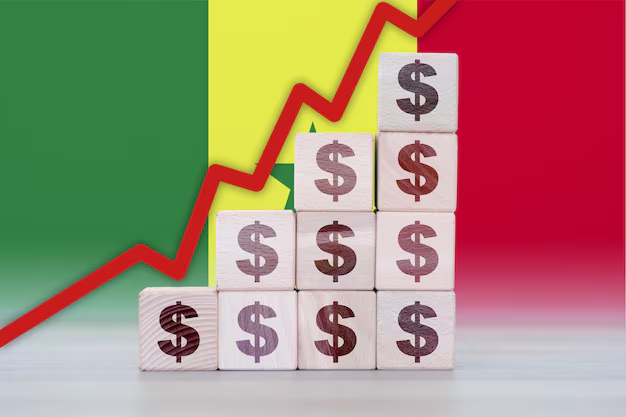
The problem began in late 2024 when the new government of President Bassirou Diomaye Faye and Prime Minister Ousmane Sonko carried out an audit. They found about $7bn in debt that had not been disclosed by the previous administration.
That discovery pushed the country’s debt from about 74% of its economic output to over 100%. The International Monetary Fund now estimates it could be as high as 132%. As a result, the IMF froze its $1.8bn support programme.
Senegal faces almost $10bn in debt repayments in 2026, more than double earlier estimates. A major payment of $485m on a Eurobond was due in March 2026.
The government says it has secured the money for that payment through strong tax income in the first months of the year and by borrowing on the regional market. This has helped it avoid default for now and reassured investors.
But much of the recent borrowing is short term and comes with high interest rates, which could create more pressure later.
The main debate now is how to manage the debt without formally defaulting.
Prime Minister Sonko has ruled out restructuring the debt, which would mean reducing the amount owed to creditors. He says that would damage Senegal’s reputation and cut it off from global markets.
Instead, the government wants what it calls “reprofiling”. That means asking lenders to extend repayment deadlines and replace expensive loans with cheaper ones from countries such as France and China.
France is a key creditor, holding around 30% of Senegal’s official bilateral debt. Senegal needs support from France and others to convince the IMF that its debt plan is credible.
A new IMF mission chief arrived in January to restart talks. The IMF wants strong budget cuts after the deficit widened from about 4.9% to more than 12% following the audit.
The government has warned of two to three years of hardship. It is introducing new taxes on gambling, mobile money transfers and land. It is also cutting energy subsidies, a move that has been unpopular in the past.
Despite the crisis, the economy is expected to grow by nearly 8% in 2026, helped by the first full year of production from the Sangomar oil field and the Greater Tortue Ahmeyim gas project.