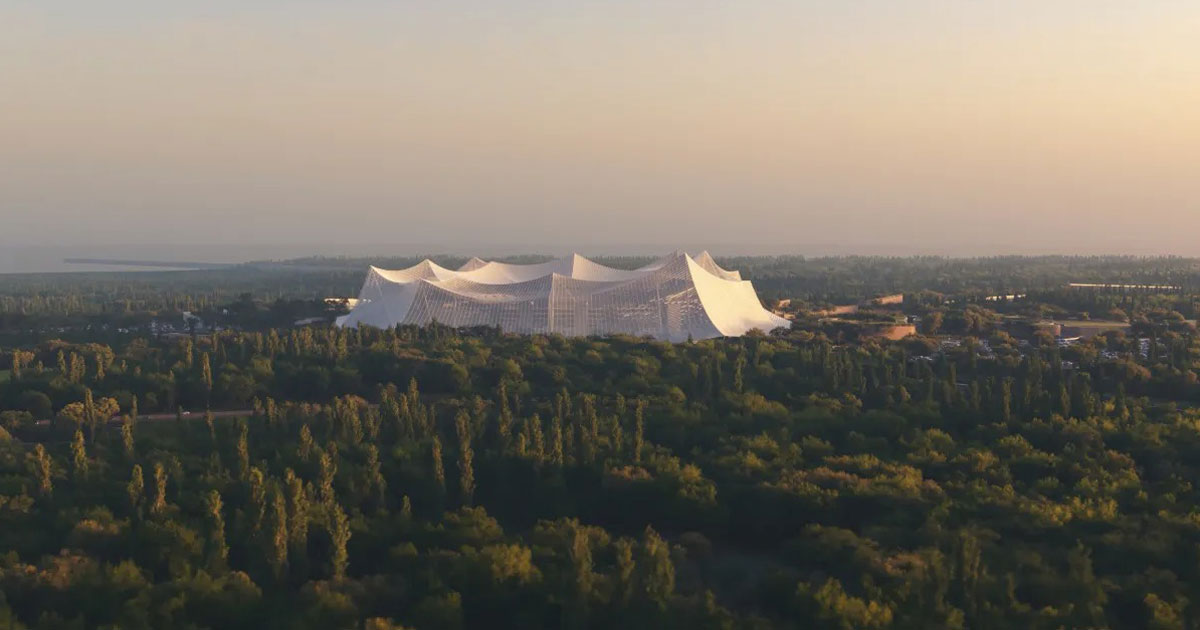
Work continues on the Grand Stade Hassan II, the flagship venue planned for the FIFA World Cup in 2030.
The Agence nationale des équipements publics (ANEP) has launched a tender for the stadium’s fourth construction package. The contract covers electrical works, including both high and low current systems.
The estimated cost of the contract is more than 2.2 billion dirhams ($220m). According to the tender documents, the selected company will deliver specialist lighting, fire detection and automatic fire suppression systems, computer and telephone pre-cabling, wired and wireless networks, telephony, access control systems, perimeter LED screens and related installations.
The deadline for completing the work is 24 months. Bid opening is scheduled for Friday, 10 April.
The stadium is being built on a 100-hectare site in Mansouria, near Benslimane. It will have a planned capacity of around 115,000 spectators, making it one of the largest stadiums in the world.
If completed as designed, it would become the largest association football stadium globally, overtaking the Rungrado 1st of May Stadium.
The main construction contract was awarded in June 2025 to the Moroccan consortium SGTM-TGCC for 3.4 billion dirhams.
The stadium is a central element of Morocco’s joint bid with Spain and Portugal to host the 2030 World Cup. The design was created by the British firm Populous, working with the architecture studio OUALALOU + CHOI.
The project draws inspiration from the traditional Moroccan Moussem gathering, with a large tent-style roof designed to blend into the surrounding landscape.
The venue is seen as a leading candidate to host the 2030 World Cup final. It would compete with Spain’s Santiago Bernabéu Stadium for that role.
The stadium forms part of a broader national investment plan worth more than 14 billion dirhams to upgrade stadiums in cities including Tangier, Casablanca and Rabat.
Authorities say the project will also support regional development between Casablanca and Rabat, with planned improvements to road links and possible extensions of the high-speed rail service Al Boraq to improve access for fans.
The total cost of the Grand Stade Hassan II project is expected to exceed 5 billion dirhams. It is one of Morocco’s most significant infrastructure projects ahead of the 2030 tournament.