Airports in Morocco handled more than 3.13 million passengers in January 2026, a 14.7% increase compared with the same month last year, according to the Office National des Aéroports (ONDA).
In total, 3,133,378 travellers passed through the country’s airports.
The busiest airport was Mohammed V International Airport, which handled 1,062,683 passengers. That is about a third of all travellers and nearly 21% more than in January 2025.
Several other airports also saw strong growth. Passenger numbers rose by 46.6% at Beni Mellal Airport, 19.1% at Tangier Ibn Battouta Airport, 19% at Rabat–Salé Airport and 16% at Nador El Aroui Airport.
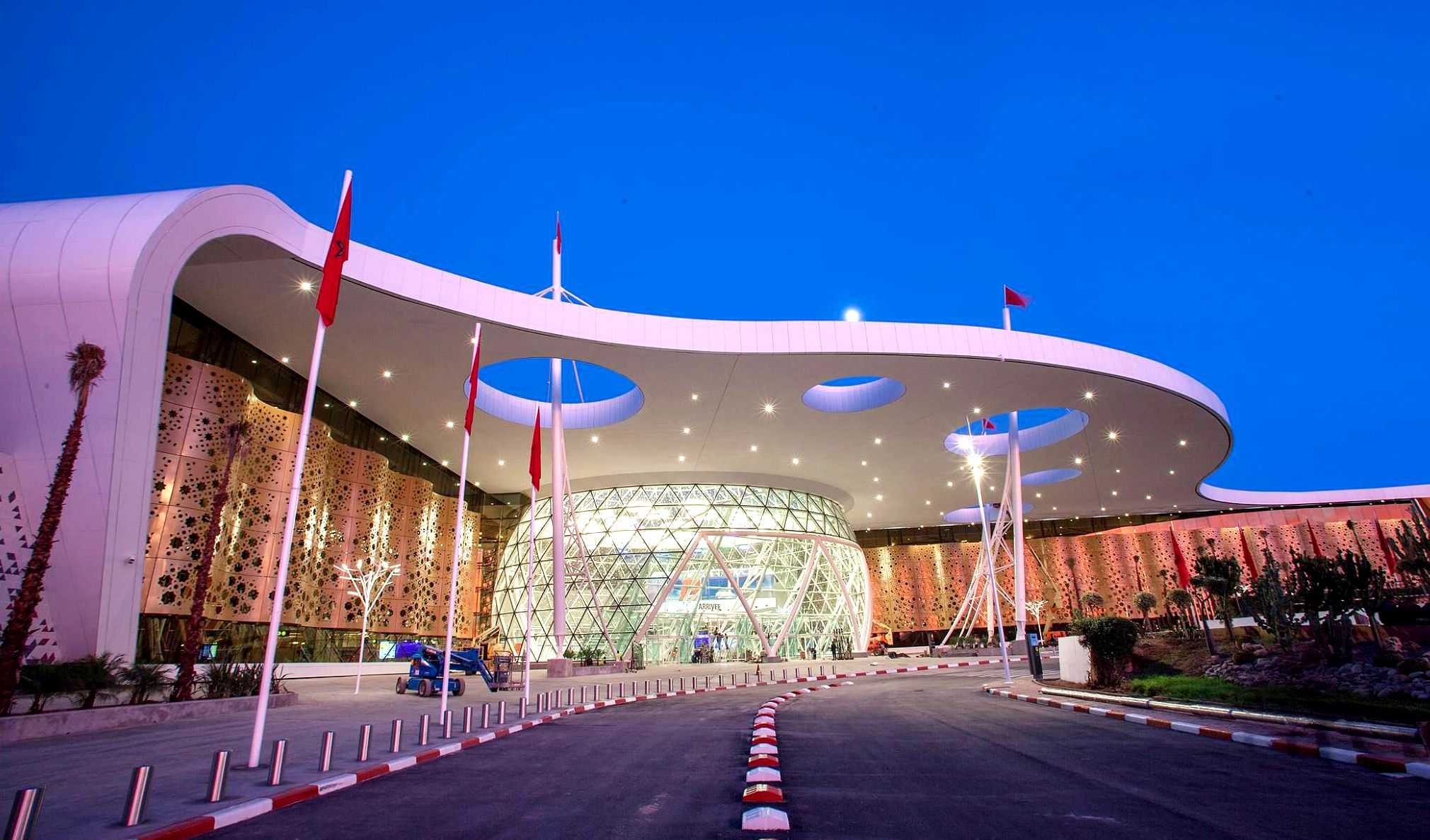
Major tourist airports also recorded double-digit growth. Traffic increased by 13.6% at Marrakesh Menara Airport and 11.2% at Agadir–Al Massira Airport.
Most of the increase came from international travel. Moroccan airports welcomed 2,801,501 passengers on international flights in January, up 14.9%. Domestic flights carried 331,877 passengers, an increase of 13.1%.
Europe remained the biggest market, making up more than 80% of international traffic. Passenger numbers on routes to Europe rose by 13.2%.
Traffic also increased on routes to other regions. Passenger numbers grew by 28.9% with Africa, 15.9% with the Middle and Far East, 28.7% with North America, 13.7% with the Maghreb and 50% with South America.
Aircraft movements also went up. Airports across Morocco recorded 23,348 take-offs and landings in January, a 13.6% increase compared with the same month last year.
Air cargo also grew. Freight volumes reached more than 9,327 tonnes in January, up 7.4% from 8,685 tonnes a year earlier.
Experts say the rise in air travel is linked to long-term plans to boost tourism and improve airport infrastructure.
The government launched a $600m tourism plan covering 2023 to 2026, aiming to attract 17.5 million visitors a year by the end of 2026. The strategy focuses on different types of tourism, including beach holidays, cultural trips and business travel.
Another key factor is Morocco’s “Open Skies” deal with the European Union. The agreement allows more airlines to fly between Morocco and Europe, which has helped lower ticket prices.
Low-cost airlines such as Ryanair and EasyJet have expanded routes and opened bases in several Moroccan cities. Ryanair has also started more domestic flights inside Morocco, helping boost travel between Moroccan cities.
At the same time, several airport expansion projects are underway. Capacity at Marrakesh Menara Airport has been increased to more than nine million passengers a year, while a new terminal at Rabat–Salé Airport is expected to triple the airport’s capacity.
Modernisation work is also continuing at Mohammed V International Airport, the country’s main gateway and a key hub for Royal Air Maroc flights connecting Europe and the Americas with West Africa.
Further airport upgrades are expected as Morocco prepares to co-host the 2030 FIFA World Cup with Spain and Portugal.
The rise in air cargo also reflects Morocco’s growing industrial sector. Expanding car and aerospace industries in Casablanca and Kenitra, along with logistics activity around Tanger Med Port, are increasing the amount of high-value goods shipped by air.