
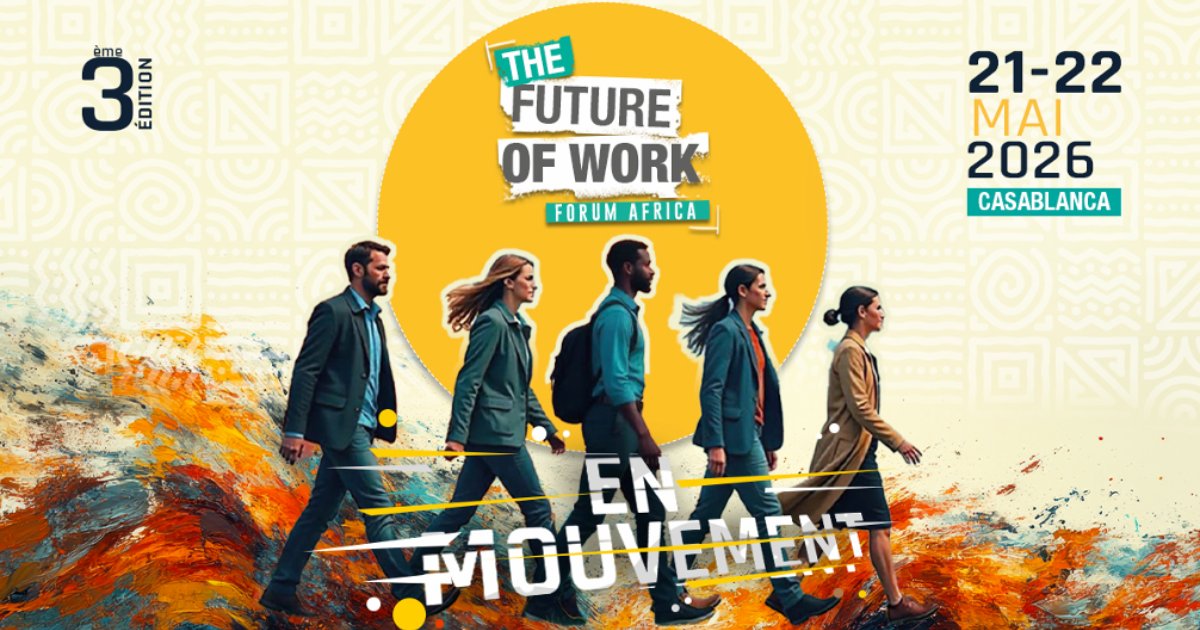
Casablanca will host the third Future of Work Forum Africa on 21 and 22 May, bringing together business leaders, policymakers, experts and entrepreneurs to discuss how jobs and skills are changing.
The event, known as Future of Work Forum Africa (FOWFA), aims to make Casablanca a key meeting point for conversations about employment trends and the impact of new technologies across Africa.
Co-founder Wassila Kara said Casablanca has become a “talent crossroads”, connecting local job market realities with wider global changes. Co-founder Amal L. Alami said the forum is focused on building ideas about the future of work that reflect African needs while also showing Morocco as a place of innovation.
Key topics at the forum will include artificial intelligence and how it is changing work, new ways of managing teams in digital workplaces, how companies can better include Generation Z employees, and the skills workers will need over the next ten years. The programme will include talks, workshops and networking sessions.
A key partner is the Casablanca Finance City Authority, which plans to launch the Africa Finance & Sustainability Institute (AFSI) by the end of 2026. The institute will focus on sustainable and impact finance, and aims to support skills development linked to environmental and social standards.
The event also works with ESCA Ecole de Management, a leading business school in Morocco and Francophone Africa. Its president, Thami Ghorfi, has called for new ways of measuring performance and engaging young workers in a changing job market.
The forum is also linked to the Digital Morocco 2030 plan, which aims to train 100,000 digital workers each year by 2030, support 3,000 start-ups, and grow Morocco’s digital economy.
Globally, experts say about 39% of workers will see their main skills change by 2030 because of artificial intelligence and automation. They say future workers will need both technical skills and human skills such as creativity and resilience.
In North Africa, groups such as EFE-Maroc work to improve job opportunities for young people. It says it has trained about 90,000 young people so far, with around 83% finding jobs in sectors including water, sanitation and digital services through partnerships with more than 500 companies.
At a wider level, the Nairobi International Financial Centre and Casablanca Finance City Authority signed an agreement in April 2026 to strengthen links between financial centres in Africa. The deal is aimed at improving investment flows and creating more cross-border job opportunities.