
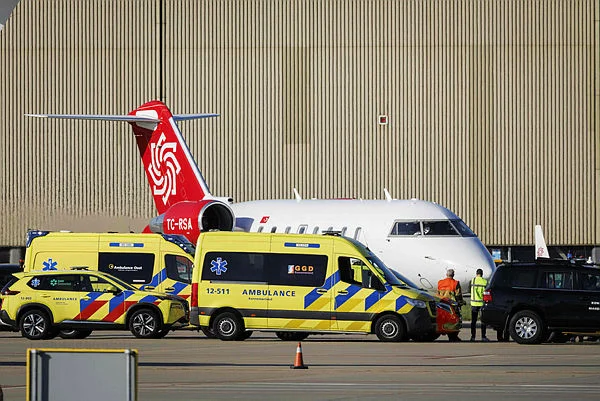
A medical evacuation flight carrying two patients suspected of having Hantavirus was forced to divert to the Canary Islands after its onboard isolation system failed and Morocco refused an emergency landing request.
The aircraft left Praia International Airport in Cape Verde, heading for Amsterdam. It was part of an emergency operation linked to the cruise ship MV Hondius, which is currently under a global health alert.
The flight was scheduled to stop in Marrakech for refuelling. During the journey, the aircraft’s medical isolation system broke down. The crew asked for an emergency landing in Marrakech to fix it, but Moroccan authorities refused. The plane then diverted to Gran Canaria, the nearest suitable airport.
Spanish authorities in the Canary Islands allowed the landing but under strict conditions. The plane was kept away from terminals and no contact was allowed with people on the ground.
“The authorization was granted under strict conditions, including the prohibition of any person entering or leaving the aircraft. These measures were fully respected throughout the technical stop.”
Officials said the flight is expected to continue to Amsterdam after repairs, possibly with another stop in Malaga.
The evacuation is linked to the MV Hondius, a cruise ship carrying 146 people. The ship has been under monitoring since April 2026 after several serious respiratory illnesses were reported during a trip from Argentina.
So far, there have been eight suspected or confirmed cases and three deaths linked to the ship.
Experts have identified the virus as the Andes strain of Hantavirus. Most types of hantavirus spread from rodents to humans, but this strain can also spread between people in rare cases through close contact.
Investigators believe the first cases may involve a Dutch couple who fell ill after a birdwatching trip in Chile and Argentina before boarding the ship in Ushuaia.
Hantavirus causes a serious lung illness. Early signs include fever, tiredness and muscle pain. Later it can lead to severe breathing problems and fluid in the lungs. It has a death rate of around 38%, according to US health officials.
There is no vaccine or specific treatment. Care is limited to hospital support such as oxygen and ventilation.
The MV Hondius is expected to arrive in Tenerife in the coming days. Spanish health authorities have prepared isolation units at the Nuestra Señora de Candelaria hospital to treat patients if needed.