
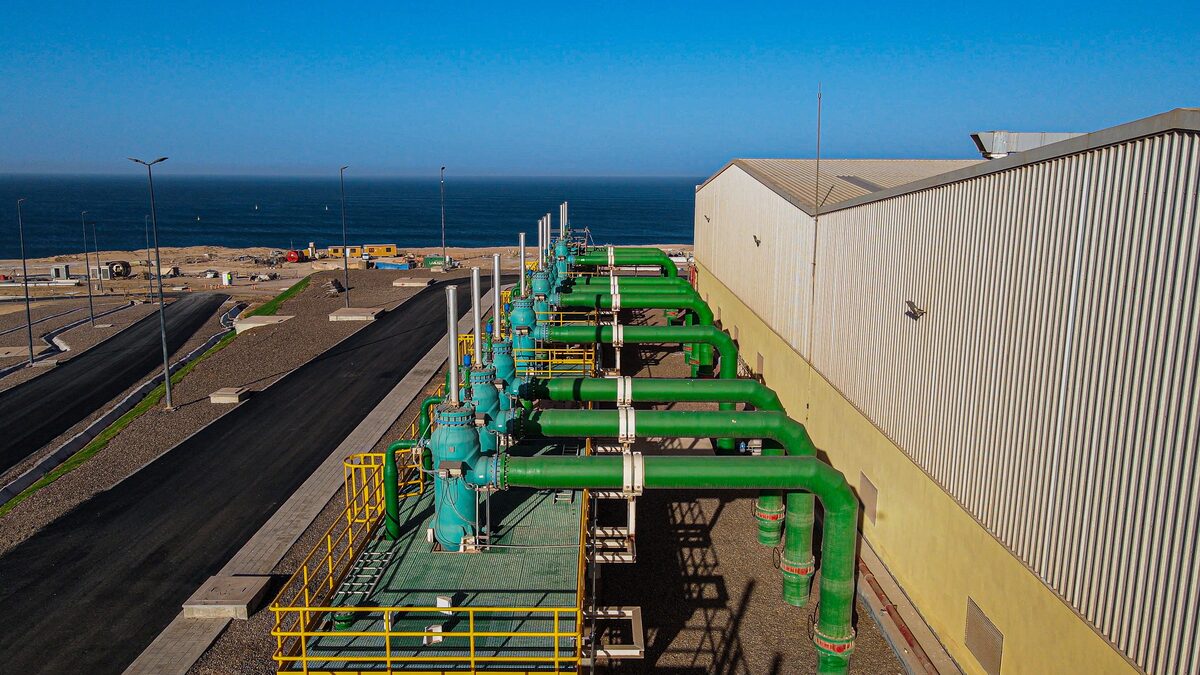
Morocco has signed a national agreement to build a full seawater desalination industry. The plan is to raise the local share of equipment and services from about 30–35% today to 70% by 2030 and make desalination a major source of water.
Morocco already has the skills to grow a competitive sector that can serve the local market and export expertise. The government plans to rely on research, innovation and technology transfer to cut dependence on imports.
The country wants desalinated water production to reach 1.7 billion cubic metres per year by 2030, up from 320 million today. Desalination should provide 60% of drinking water by the end of the decade, compared with 25% now. Plants in Nador, Tangier, Rabat and Casablanca are under way and should add 540 million cubic metres of capacity before 2027.
Future plants will run on renewable energy. The policy links to projects such as the Tan-Tan port for green hydrogen and ammonia exports. Authorities are also tightening control of groundwater use, cracking down on illegal wells and speeding up water transfers between river basins, including the Sebou–Bouregreg link.
Dam levels fell to 28.5% in 2024, pushing the country to rely more on non-traditional water sources. Morocco also plans to reuse 300 million cubic metres of treated wastewater each year by 2030. Desalinated water currently costs between $0.45 and $1.00 per cubic metre and uses about 3.7 to 4.5 kWh of electricity per cubic metre. Renewables should make up 52% of the energy mix by 2030. The National Water Plan for 2020–2050 carries nearly $38bn in investment.
Key projects include the Casablanca plant, expected to produce 548,000 cubic metres per day by 2026 or 2027. The Agadir Chtouka plant has expanded to 400,000 cubic metres per day. Plants in Nador and Tangier are being built, while Dakhla already runs on renewable energy.
International and Moroccan companies are working together through public-private partnerships. Acciona leads the Casablanca project with Green of Africa and Afriquia Gaz. OCP Group is building plants in Safi and El Jadida to supply industry and nearby cities. Abengoa built the Agadir plant. ACWA Power continues to bid on solar-powered projects. Veolia is involved in future plants in northern cities, including the Rabat area.
The Cluster Marocain des Métiers de l’Eau is helping build a local supply chain and support Moroccan manufacturers. ONEE manages tenders and buys the water, MASEN connects plants to renewable energy, and the Ministry of Equipment and Water sets national targets.
By 2030 Morocco plans to have 20 desalination plants, up from 12 today, and 50 by 2050. By 2035 the country expects two billion cubic metres of desalinated water each year. The long-term plan is for desalination to supply about half of national drinking water.
The strategy also links desalination to the future green hydrogen industry. Research is exploring mineral extraction from desalination waste and better systems to protect marine ecosystems. A national water transfer network is planned to move water to dry regions and protect southern oasis areas.
Long-term plans include shifting 80% of rain-fed farmland to managed irrigation, creating specialised jobs and using renewable energy instead of imported fossil fuels. The goal is to secure water supply regardless of future climate conditions.