Morocco has launched a new programme to help 193 cooperatives recover from the Al Haouz earthquake that struck the High Atlas region in September 2023. The Office for the Development of Cooperation (ODCO) will spend MAD 4.93 million, or about $490,000, on the project, which will run for 10 months. Sigma 3A has been chosen to carry out the programme.
The cooperatives are based in Al Haouz, Taroudant, Chichaoua, Ouarzazate and Marrakech. They were selected from around 420 cooperatives that were inspected after the earthquake. They had already qualified for government funding to rebuild their buildings and replace damaged equipment.
The programme aims to help them get back to work and improve how they are managed, produce goods and sell their products.
Each cooperative will first go through a full review of its governance, production and finances. ODCO will then decide whether it needs restructuring or is ready to grow.
The cooperatives will receive training in governance, digital marketing, e-commerce and exports. They will also get support to prepare business plans, improve packaging, storage and transport, and build simple business models.
Fifty cooperatives with the strongest growth potential will receive extra support. This includes field coaching, help securing sanitary approvals such as ONSSA certification, quality labels, branding and better packaging.
The programme also includes an online directory of cooperative products. The cooperatives will be added to ODCO’s digital platform to help them reach more customers in Morocco and abroad.
The Al Haouz earthquake killed nearly 3,000 people and caused major damage across Morocco’s High Atlas region. It also badly affected the local economy, where many families rely on cooperatives for their income.
Many workshops, warehouses and shops were destroyed or damaged. Machinery, tools and raw materials were also lost, while blocked roads made it difficult for cooperatives to buy supplies and sell their products.
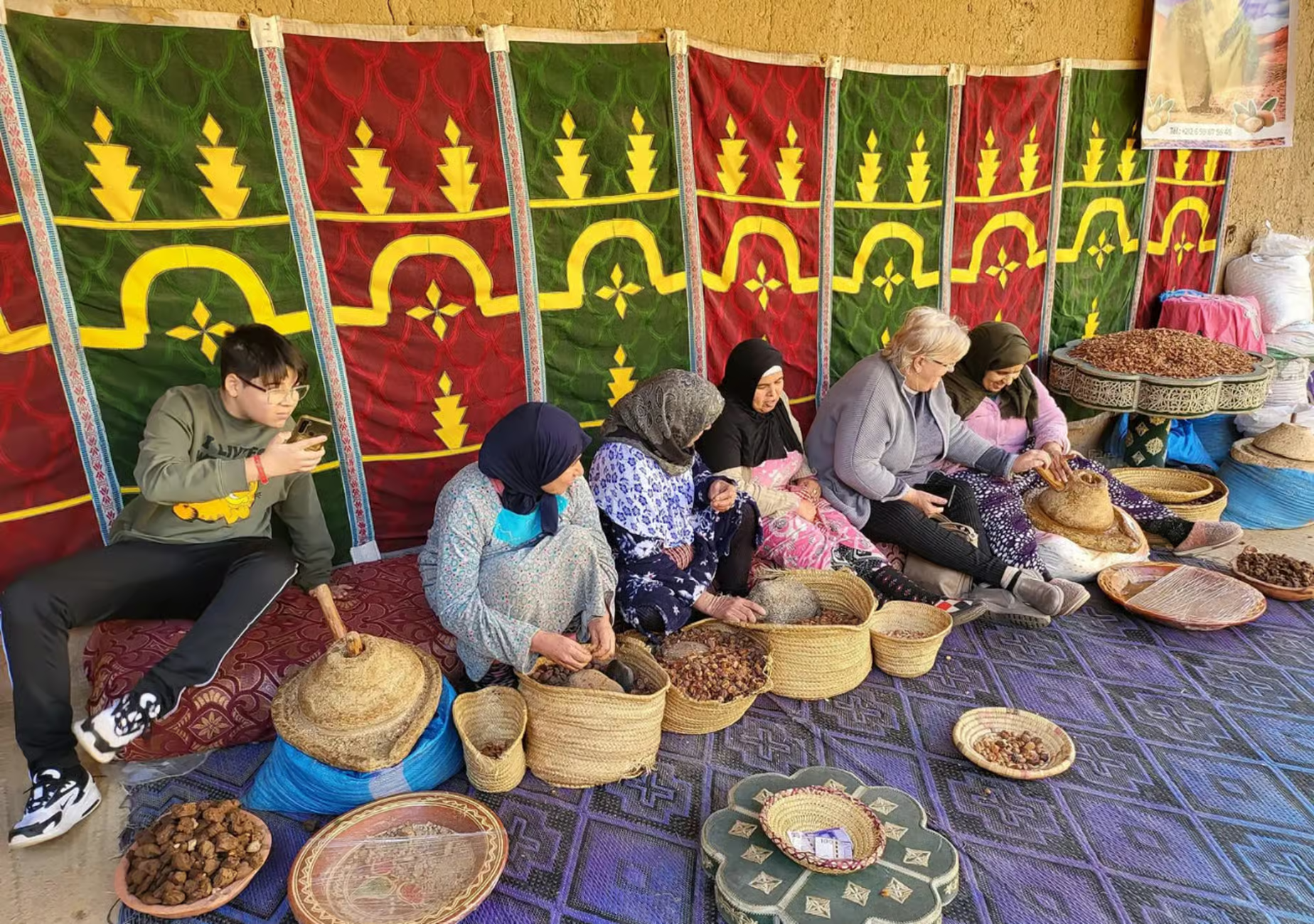
Many of the affected cooperatives are run by women. They produce argan oil, saffron, honey, walnuts, almonds, rugs, textiles, pottery, traditional clothing, herbal cosmetics, essential oils, floral waters and ghassoul clay products.
In provinces such as Al Haouz, more than 80% of rural residents depend directly or indirectly on farming, livestock and artisanal cooperatives for their main source of income.
The programme is part of Morocco’s wider MAD 120 billion, or about $12 billion, five-year reconstruction plan. Alongside rebuilding homes and infrastructure, the government says it wants to help local businesses recover and create stronger, more resilient rural economies.