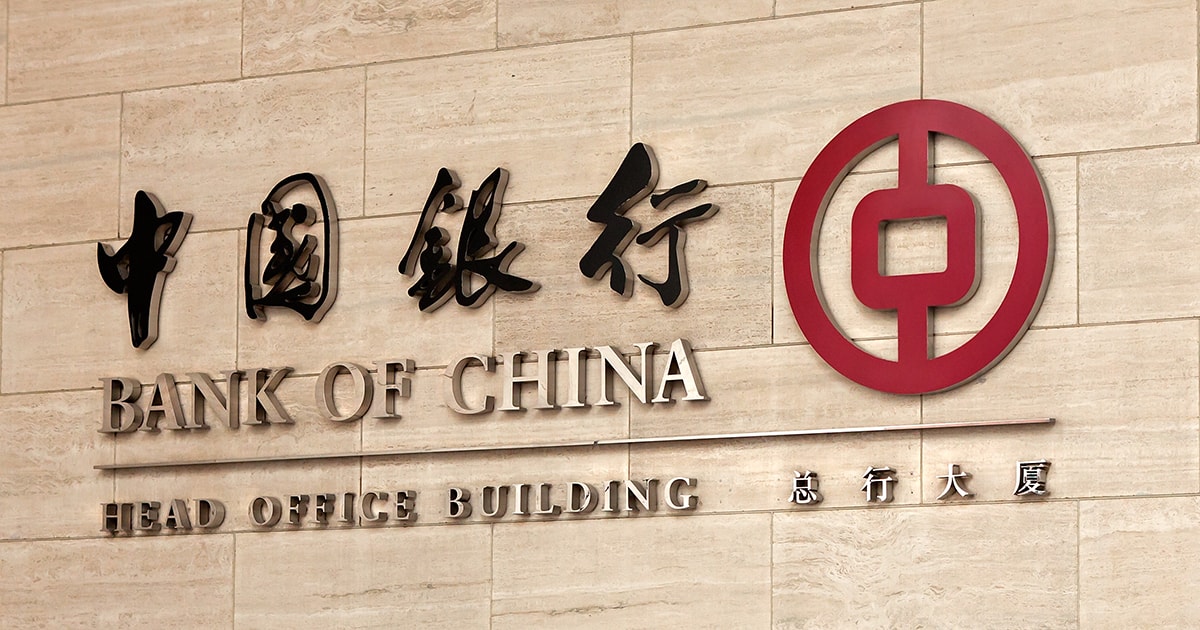
Bank of China wants to do more business in Morocco as more Chinese companies set up factories in the country. Bank of China chairman Ge Haijiao discussed the plans with Economy and Finance Minister Nadia Fettah in Casablanca on 14 September.
The talks covered industrial projects, the energy transition, investment and links between the Chinese and Moroccan capital markets.
No new loans, investments or project-financing deals were announced after the meeting.
Bank of China said it wants to support Chinese companies investing in Morocco and help finance industrial projects and other strategic investments.
The bank has had a representative office in Casablanca since 2016. It now sees a bigger role for the office as Chinese companies move from selling products and equipment to building factories in Morocco.
The biggest projects are linked to the electric-vehicle battery industry.
Gotion High-Tech agreed with the Moroccan government in June 2024 to invest an initial 12.8bn dirhams in a battery plant in Kenitra.
The first phase will have an annual production capacity of 20GWh. Production is expected to start gradually from October 2026.
The factory will make lithium-iron-phosphate battery cells and cathode materials. Gotion could eventually increase capacity to 100GWh. Full expansion would take total investment to about 65bn dirhams.
Several other Chinese companies are building battery-related factories.
BTR New Material Group is developing two projects at Mohammed VI Tanger Tech City. The projects will make cathode and anode materials and represent about 6bn dirhams in investment.
Hailiang plans to invest $450m, about 4.16bn dirhams, in a copper-related factory covering 30 hectares.
Shinzoom, part of Hunan Zhongke, plans to invest another $460m, about 4.26bn dirhams, in an anode-material factory covering 20 hectares.
The three companies are expected to create thousands of jobs.
COBCO is also developing a large battery-materials complex at Jorf Lasfar.
The joint venture between Chinese company CNGR Advanced Material and Moroccan group Al Mada has a 20bn-dirham investment programme.
The first nickel-manganese-cobalt precursor production lines started operating in 2025.
The wider project is planned to produce 120,000 tonnes of NMC precursors, 60,000 tonnes of lithium-iron-phosphate cathode materials and 30,000 tonnes of recycled battery material each year.
COBCO has a long-term supply deal with Belgian company Umicore.
Chinese investment in Morocco’s car industry started before the recent battery boom.
Citic Dicastal operates three factories in Kenitra making aluminium wheels and automotive parts.
The first two factories cost about €350m and can produce six million wheels a year.
A third factory cost about €180m and can produce five million cast automotive parts each year.
About 90% of its production is exported, mainly to Europe and the US.
Other Chinese manufacturers are also expanding.
Wind-turbine blade maker Aeolon opened its first factory outside China in Nador in May 2025.
The company announced an investment of €220m, about 2.38bn dirhams. The project is expected to create 3,300 jobs.
Chinese textile company Sunrise agreed in March 2025 to build two factories in Skhirat and Fez.
The projects are worth 2.3bn dirhams and are expected to create 7,000 direct jobs and more than 1,500 indirect jobs.
Production is scheduled to start in 2026.
The Chinese industrial presence is also growing through infrastructure projects.
China Railway Material Group Hong Kong & Macao has supplied high-speed rail tracks for the Kenitra-Marrakesh railway project. An initial shipment included 12,999 tonnes of tracks.
PowerChina has worked on the Noor II and Noor III solar power plants.
China CEC Engineering is also involved in projects linked to cobalt processing and desalination for mining company Managem.
The large industrial projects already announced add up to more than 57bn dirhams, excluding many infrastructure contracts, equipment orders and smaller projects.
Bank of China has not yet linked its name to any of these major industrial investments.
Its latest talks with the government could open the door to a bigger role in future projects.
That could include services such as project finance, trade finance, working capital, foreign-exchange services and support for companies moving money between China and Morocco.
The change reflects how Chinese companies are expanding their role in the country.
They are no longer coming only to sell equipment or build infrastructure. More companies are now building factories and using Morocco as a base to produce goods for European and North American customers.