Car sales in Morocco are helping Stellantis weather a downturn across the Middle East and Africa, where the carmaker delivered 75,000 vehicles in the third quarter of 2026, down 21% from a year earlier. The multinational group said on Tuesday, 13 October, that deliveries across the region fell from 95,000 vehicles in the same period of 2025. Shipments increased in Morocco and Algeria, helping offset lower volumes in Gulf countries affected by regional conflict.
Stellantis did not disclose how many vehicles it delivered in Morocco between July and September or the rate of growth in the country.
The biggest drop came in Turkey, where the group recorded about 21,000 fewer vehicles than in the third quarter of last year. Stellantis blamed a weaker market and a reduction in imported vehicles ahead of the planned launch of local production of small commercial vehicles in October.
The latest figures follow a similar trend in the second quarter, when deliveries across the Middle East and Africa fell by 3%, or about 4,000 vehicles. Deliveries in Algeria rose by roughly 8,000 units during that period as production of the Fiat Doblò increased.
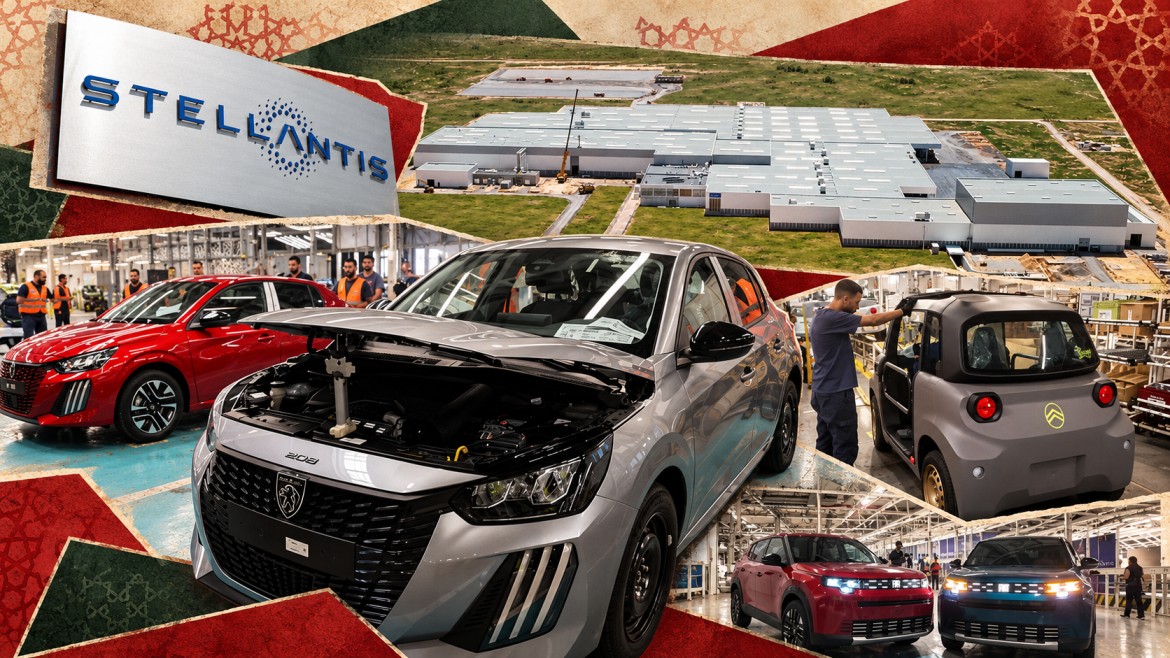
Stellantis operates three main production hubs in the region: Morocco, Algeria and Turkey. The plant in Kenitra, northern Morocco, makes passenger cars and small mobility vehicles for the domestic market and export.
The company announced a €300m investment in late 2022 to double the Kenitra plant’s annual production capacity from 200,000 to 400,000 vehicles by 2025-26. It also planned to increase annual output of small mobility vehicles, including the Citroën Ami, Opel Rocks-e and Fiat Topolino, to 50,000 units.
The plant produces models on the Smart Car and CMP platforms, including the Peugeot 208, as well as small electric vehicles. Local suppliers account for more than 68% of the plant’s integration, according to the figures provided, with a long-term target of 80%.
The delivery figures do not show how many vehicles were made in Morocco or exported from Kenitra. Stellantis counts vehicles invoiced to dealers, distributors and retail or commercial customers. These figures differ from final vehicle registrations and total factory production.
Stellantis estimated that it delivered 1.286 million vehicles worldwide in the third quarter, down 1% from 1.3 million in the same period of 2025. The difference amounts to about 14,000 vehicles.
Lower deliveries in North America and the Middle East and Africa were partly offset by growth in Europe.
Enlarged Europe recorded the strongest performance among the group’s main regions. Deliveries rose 10% to 588,000 vehicles, up by 54,000 from a year earlier. The company attributed the increase mainly to electric vehicles and new small models.
Chinese brand Leapmotor accounted for 44,000 of those deliveries, an increase of about 34,000 vehicles year on year. Stellantis sells the brand’s vehicles through a joint venture that it controls.
North American deliveries fell 12%, from 404,000 to 357,000 vehicles. The group linked much of the decline to planned summer production stoppages at selected factories, particularly those affecting the Jeep Grand Cherokee and Compass.
South America remained broadly stable, with 251,000 deliveries compared with 252,000 a year earlier, a decline of about 0.4%.
Asia-Pacific deliveries fell 6% to 15,000 vehicles, from approximately 16,000 in the third quarter of 2025.
Stellantis is expanding production in North Africa as it seeks to serve local customers and supply other markets. The group opened its Tafraoui plant near Oran, Algeria, in late 2023 to assemble Fiat models, including the Fiat 500 and Fiat Doblò.
In Turkey, the company is preparing to move towards local production of compact commercial vehicles through its Tofaş joint venture in Bursa. The planned shift is reducing the need for imported vehicles ahead of the launch of locally made models.
Regional conflict and shipping disruption have also affected automotive activity in the Gulf, contributing to lower deliveries and putting pressure on supply chains and transport costs.
In Europe, Stellantis is relying partly on its partnership with Chinese electric-vehicle maker Leapmotor to expand its range of more affordable models.
The group bought a 20% stake in Leapmotor for $1.6bn in 2023 and set up Leapmotor International, in which Stellantis holds a 51% controlling stake. Models include the T03 electric car and C10 sport utility vehicle. Some production and assembly takes place in Europe, including at Tychy in Poland, helping the partnership serve European customers while navigating European Union tariffs on vehicles imported directly from China.