A Moroccan company looking to sell its products abroad needs money to pay workers, buy materials and deliver orders before customers pay. For many exporters, getting that money from banks remains a challenge. State-owned financing institution TAMWILCOM has met a delegation from the Moroccan Association of Exporters (ASMEX) to discuss how to improve access to finance and help businesses expand into international markets.
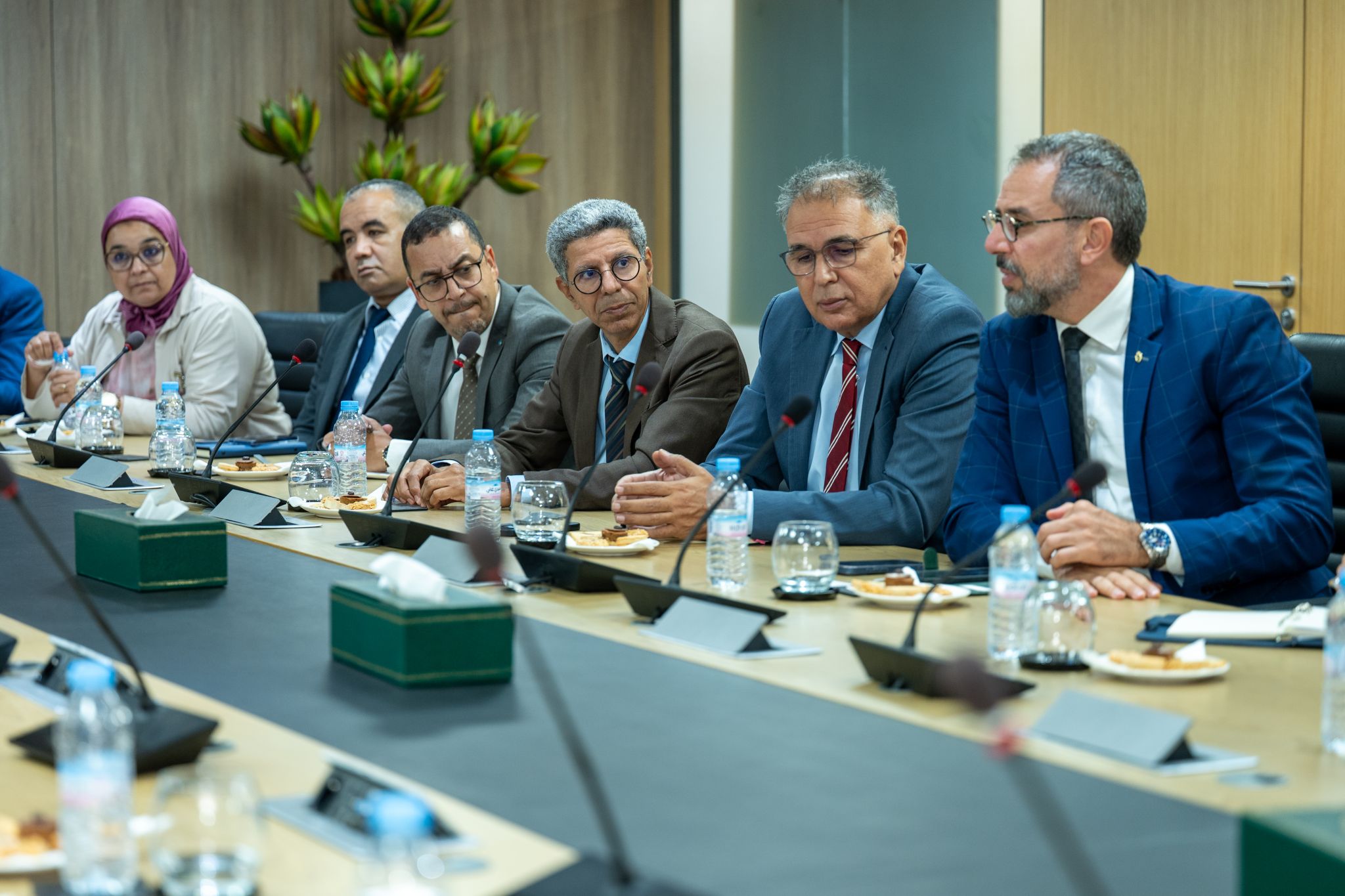
The meeting took place at TAMWILCOM’s headquarters. ASMEX president Sonia Mezzour led the delegation, which included members of the association’s board of directors. TAMWILCOM chief executive Said Jabrani and members of his team also attended.
The talks focused on financing challenges facing exporting companies and ways for the two institutions to work together more closely.
The meeting is part of JOSSOUR 2030, TAMWILCOM’s strategic plan for 2026-2030. The plan aims to make financing more accessible, support business growth and help companies increase exports.
By 2030, TAMWILCOM aims to mobilise 300bn Moroccan dirhams (about $30bn) in financing, build a portfolio of guarantees worth 170bn dirhams and attract more than 60bn dirhams in private investment.
The strategy also aims to reach 435,000 businesses and project promoters and help create 45,000 gross jobs a year.
TAMWILCOM plans to cover up to 75% of the credit risk on loans to micro and very small enterprises. The higher guarantee is intended to make banks more willing to lend to smaller businesses, including start-ups, rural entrepreneurs and informal businesses moving into the formal economy.
The plan also extends credit guarantees to medium-sized and large companies, giving growing businesses more support as they expand production and pursue export contracts.
Targeted co-financing programmes will offer preferential interest rates to selected businesses and projects. These include investments in solar energy, lower carbon emissions, water efficiency and the circular economy.
Women-led businesses and Moroccans living abroad who invest in the country are also among the groups targeted for dedicated funding.
Exporters often need to pay production and shipping costs long before overseas customers settle their bills. Smaller firms can struggle to cover these expenses, while banks may demand collateral that they cannot provide.
JOSSOUR 2030 plans to address these problems through working-capital guarantees, trade-finance support and financing before goods are shipped. The measures are intended to help companies fulfil orders, manage payment delays and reduce the risk of losing business because of cash shortages.
The strategy also seeks to help companies diversify their markets, including by expanding into sub-Saharan Africa and North America, rather than relying heavily on European demand.
Businesses may also need funding to upgrade technology and meet international environmental standards, including requirements linked to carbon emissions. The plan aims to support these investments alongside efforts to manage foreign-exchange risks and the possibility that overseas buyers will fail to pay.
TAMWILCOM also plans to support smaller suppliers that provide goods and services to major industrial companies. The focus includes automotive, aerospace, agri-food and renewable energy.
Financing local subcontractors and second- and third-tier suppliers is intended to increase domestic sourcing and reduce reliance on imported inputs.
The strategy also includes measures to spread financing beyond major economic centres such as Casablanca and Rabat. TAMWILCOM has signed agreements with the Association of Regions of Morocco to develop local guarantee funds tailored to regional economic needs.
An agreement with the Professional Group of Moroccan Banks (GPBM) is intended to simplify loan-guarantee procedures and bring greater consistency to the criteria used by commercial banks.
The institution also plans to use its historical credit data to publish information on the impact of its programmes. Its governance framework includes the international ISO 37001 anti-bribery management standard.
TAMWILCOM, formerly known as the Central Guarantee Fund (CCG), is a state-owned institution that helps businesses obtain bank loans by sharing part of the risk with lenders. Its role is particularly important for micro, small and medium-sized enterprises that struggle to secure financing on commercial terms.
ASMEX represents exporters across industries including manufacturing, agriculture, technology, textiles and services. Its priorities include improving access to trade finance, reducing transport costs and helping smaller businesses enter foreign markets, including through the African Continental Free Trade Area (AfCFTA).
The JOSSOUR 2030 plan was unveiled by Economy and Finance Minister Nadia Fettah and TAMWILCOM chief executive Said Jabrani. It marks an expansion of the institution’s role, from providing credit guarantees to supporting exports, industrial supply chains, regional development and job creation. Its success will depend on whether the planned guarantees and financing reach businesses that need them and help turn export orders into sustained growth.