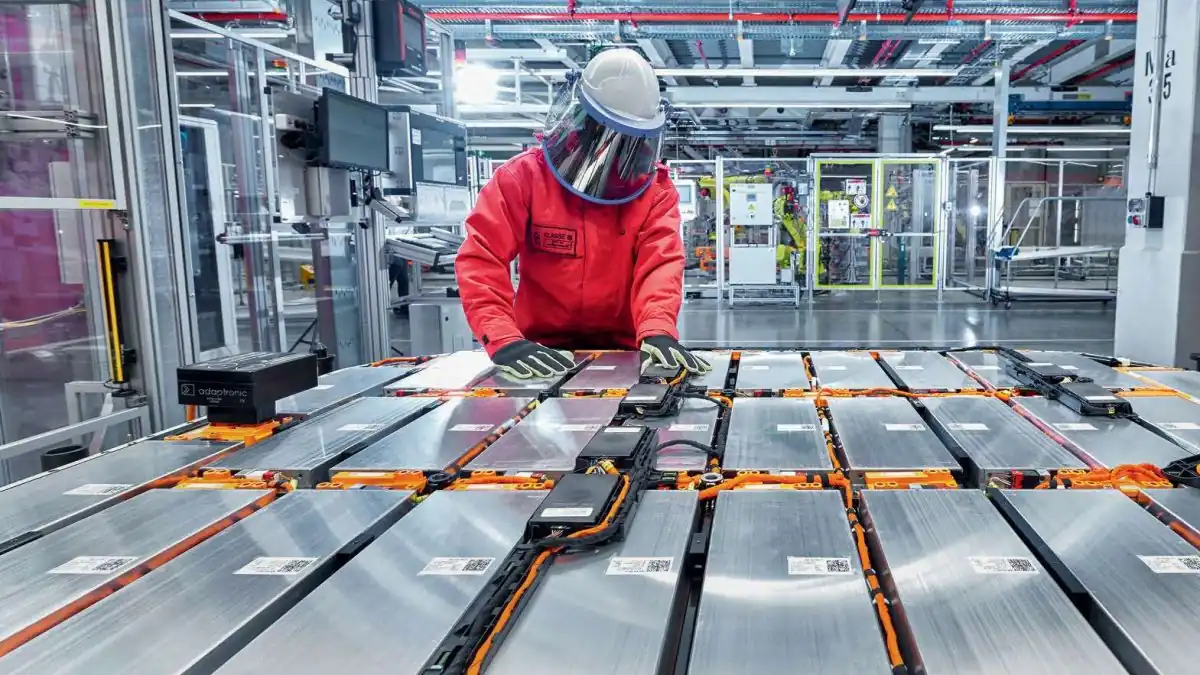
A new battery factory in Kenitra is preparing to switch on its production equipment, bringing Morocco a step closer to manufacturing batteries for electric cars and energy storage. Gotion Power Morocco, a subsidiary of Chinese battery maker Gotion High-Tech, plans to begin commissioning equipment at its factory in the Atlantic Free Zone during the week of 20 October 2026. Production lines are expected to come online in October and November.
The first phase is designed to produce lithium iron phosphate (LFP) battery cells, with an annual capacity of up to 20 gigawatt-hours (GWh). That is enough electricity storage capacity to represent a major industrial supply for electric vehicles and energy storage systems, although the number of batteries produced will depend on their size and design.
The project is intended to serve customers in Morocco, elsewhere in Africa, Europe, the Middle East and the United States. It aims to turn Kenitra into a manufacturing and export hub, using the country’s location and trade agreements with major markets.
The first phase requires an investment of 12.8 billion dirhams, about $1.3bn. Investment across the planned expansion phases could reach 65 billion dirhams, or roughly $6.5bn, as the factory expands towards a long-term annual capacity of 100GWh.
Gotion said preparations for the start-up involved shipping thousands of containers carrying industrial machinery and advanced equipment from China. The company described the logistics operation as unprecedented in scale for an industrial project in Morocco.
Moroccan port and customs authorities worked with the company to help equipment arrive on schedule and speed up installation and technical preparations.
The factory’s main infrastructure was completed in 13 months. Site preparation and civil engineering work in the Atlantic Free Zone took place in 2025, following an investment agreement signed between Gotion High-Tech and the Moroccan government on 5 June 2024.
More than 400 Moroccan employees have been recruited for the initial phase. They include engineers, technicians, production-line workers, administrative staff and support teams.
Most of the recruits received specialised training at Gotion factories in China, where they worked with the group’s experts. The training is intended to transfer technical knowledge and help build local skills in battery manufacturing, maintenance and quality control.
The wider project aims to create up to 17,000 jobs, including direct, indirect and induced employment. The plan also includes 2,300 highly skilled positions.
The factory’s planned start-up follows a separate announcement on 28 September 2026 by Germany’s Volkswagen Group, its battery subsidiary PowerCo and Gotion High-Tech.
The three companies announced a joint venture in Kenitra to produce 100,000 tonnes of lithium iron phosphate cathode active materials a year. Cathode materials are a key component of battery cells, and local production could help reduce reliance on supplies shipped from abroad.
The wider battery project targets a local industrial integration rate of 70%, meaning the aim is for a substantial share of its production chain and inputs to be based in the country.
Volkswagen is a major shareholder in Gotion High-Tech, holding about 24.7% of the Chinese company’s shares, according to the project background.
The planned investment comes as manufacturers seek to expand electric-vehicle supply chains and secure access to battery materials. Kenitra already hosts major automotive manufacturing operations, including a Stellantis plant, giving battery makers a base near established vehicle production.
The country’s trade agreements with the European Union and the United States could also help qualifying products reach those markets on favourable terms. Eligibility depends on the relevant rules of origin and trade requirements.
The next steps for the factory are technical testing, validation of battery cells and a gradual increase in output. The timing and scale of commercial deliveries will depend on the results of those tests and the pace at which production ramps up.
Gotion High-Tech ranked fifth worldwide for electric-vehicle battery installations during the first seven months of 2026, with 34GWh installed, a rise of 44.2% from the same period a year earlier, according to figures provided in the project background.
The factory’s first phase is expected to begin with capacity of up to 20GWh a year, while the longer-term plan allows for expansion to 100GWh across several phases.
A July 2026 financing development also supported the project: the African Development Bank approved structured debt financing for the integrated battery manufacturing base in Kenitra.