Millions of people in Morocco depend on a reliable supply of drinking water, but years of drought and rising demand are putting pressure on the country’s water resources. A new European loan could help improve supplies while cutting the energy needed to deliver water to homes. The European Investment Bank (EIB) plans to lend €130 million to the National Office of Electricity and Drinking Water (ONEE) as part of a €262 million investment programme to improve drinking water production, modernise facilities and reduce energy use.
The proposed loan would cover almost half the programme’s total cost, with ONEE and other funding sources expected to cover the rest. The financing is set to benefit from a European Union guarantee, although the announcement does not mean all approval procedures have been completed.
The programme aims to increase the volume of treated water, improve its quality and make production and transmission more efficient. It also includes upgrading pumping equipment, reducing leaks and water losses across distribution networks, and cutting the utility’s carbon footprint.
The work is expected to benefit rural communities and small and medium-sized towns, particularly in areas exposed to drought. More efficient equipment could also reduce the electricity needed to move water over long distances, helping ONEE manage operating costs.
Morocco has faced repeated droughts, higher temperatures and growing water consumption. The country has been expanding its water infrastructure while trying to make better use of existing supplies.
The proposed EIB loan follows a €70 million financing agreement signed with ONEE in May 2025. That funding was intended to modernise and protect drinking water production and transmission systems, with a focus on smaller towns and rural areas.
In July 2025, the European Bank for Reconstruction and Development (EBRD) agreed to provide ONEE with a €250 million loan and a €5 million investment grant. The package supports a national programme to improve the efficiency and climate resilience of drinking water production facilities, alongside technical assistance.
The latest investment also supports the goals of the National Climate Plan for 2030, which includes a target of cutting greenhouse gas emissions by 45.5% by that year.
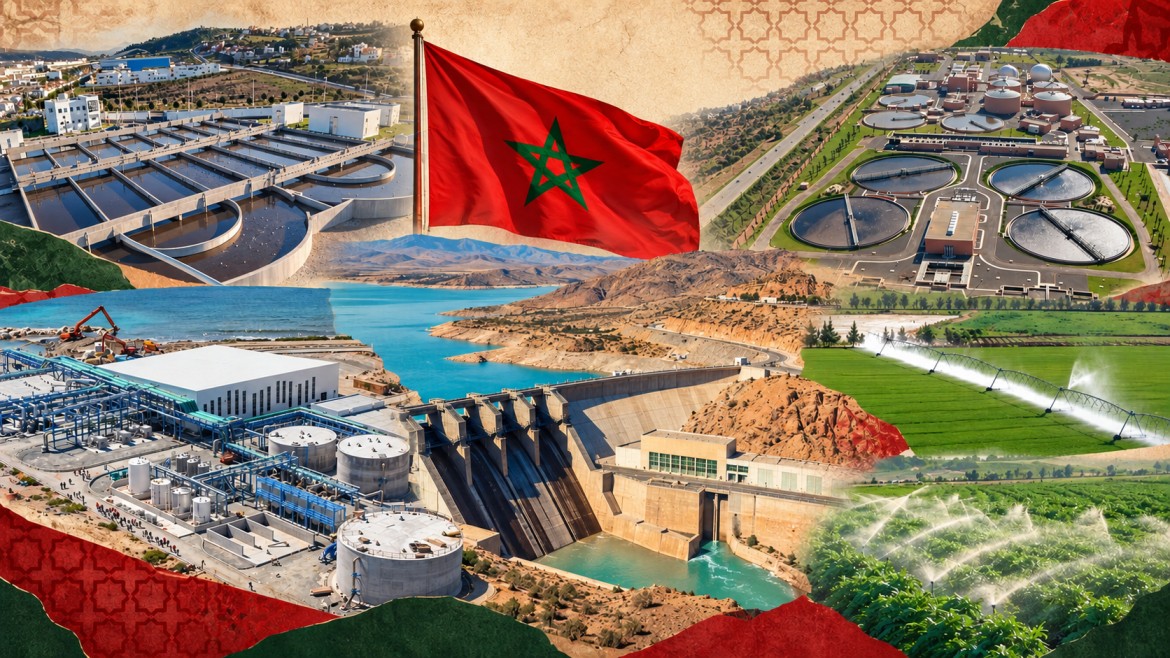
It forms part of wider efforts under the National Drinking Water and Irrigation Programme for 2020-2027, which has an allocation of more than $12 billion, or 115 billion dirhams. The programme includes building dams, expanding desalination and improving water distribution.
Desalination projects in Casablanca, Safi and Jorf Lasfar are among the efforts to reduce reliance on conventional water sources, which have been hit by drought. ONEE is also working to integrate renewable energy, including wind and solar power, into water-pumping operations.
The financing builds on the EU-Morocco Green Partnership launched in October 2022, which focuses on climate action, renewable energy and sustainable water management.
ONEE, the state-owned utility responsible for electricity and drinking water services, manages water treatment, bulk transport and supply to rural areas. Its investment needs have grown as it works to expand infrastructure, improve efficiency and address financial pressures linked to large capital projects, operating costs and debt.
The EIB’s proposed loan is therefore intended to do more than increase water production: it is also designed to help deliver water more efficiently, reduce waste and make supplies more resilient to climate pressures.