
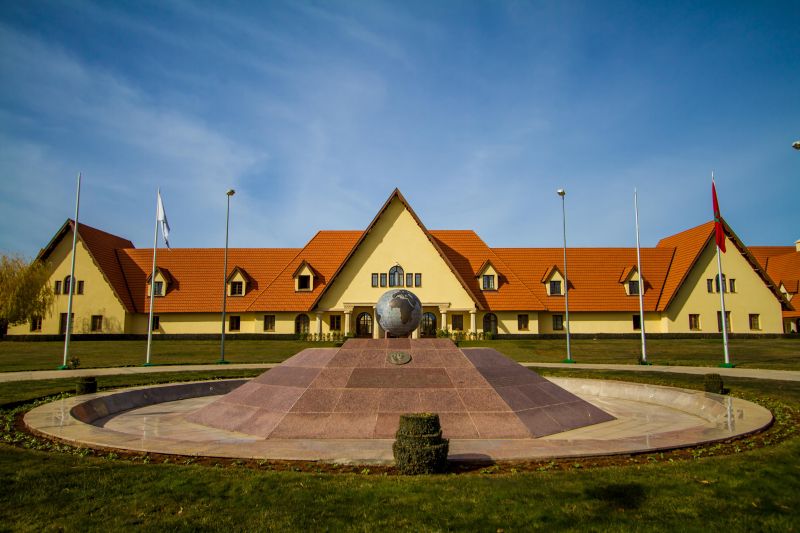
Al Akhawayn University could unlock millions of dirhams tied up in its buildings and campus facilities under a new investment fund approved by Morocco’s financial markets regulator. The Capital Market Authority (AMMC) granted its approval to the prospectus of OPCI Al Akhawayn University SPI on 11 November 2026. The fund, launched at the initiative of Africa Stone Management, will own and manage properties used exclusively by the university.
The approval allows the fund to move towards raising money from investors and putting its property investment strategy into operation. It comes more than four years after the vehicle received its initial regulatory authorisation on 31 May 2022 – a gap of 1,625 days, or four years, five months and 11 days.
The fund will invest in university buildings, schools, training centres, campuses, administrative offices, dining halls and sports and leisure facilities. These properties can be located anywhere in the country, as long as Al Akhawayn University operates them.
The arrangement separates property ownership from the university’s day-to-day activities. The fund can acquire buildings from the university, buy properties from other owners or finance new construction. It will then rent the properties to the university, which will remain their sole operator and tenant.
This model could allow the university to release money tied up in buildings while continuing to use them for teaching, administration and other activities.
How the fund will work
The fund can invest up to 90% of its total assets in real estate. At least 10% will therefore remain in liquid assets, such as cash or short-term financial instruments.
It can acquire properties directly, receive buildings as contributions from the university, finance construction and renovation projects, or buy shares in companies whose main activity is real estate.
The fund can also borrow money to finance acquisitions, construction and rehabilitation work. Its borrowing is capped at 40% of the value of its real estate assets.
If it invests the maximum 90% of its assets in property and borrows up to the permitted limit, debt could account for 36% of its total assets. The remaining structure would consist of 54% property equity and 10% liquid assets.
The fund has a recommended investment period of 10 years. It aims to generate rental income and benefit from potential increases in property values. However, investors are not guaranteed a return or the recovery of their initial investment.
The minimum initial investment is 5 million dirhams. Investors can make subsequent contributions by purchasing just one additional share.
The fund will calculate its net asset value twice a year, on 30 June and 31 December.
Risks for investors
The prospectus highlights several risks, including changes in property prices, difficulties selling real estate assets and dependence on a single tenant.
Al Akhawayn University will be the exclusive operator and tenant of all properties held by the fund. This means rental income will depend on the university’s ability to meet its financial commitments.
The fund’s performance could therefore be affected by the university’s financial health, student enrolment, tuition fee collection and any changes in institutional or state support.
The 10-year investment horizon and twice-yearly valuation schedule also reflect the difficulty of quickly selling specialised university buildings or finding alternative tenants.
A new way to finance university property
Al Akhawayn University was established by Royal Dahir in 1993 and opened in January 1995. It is an independent, non-profit university based in Ifrane, with a 75-hectare campus in the Middle Atlas.
The institution was initially supported by endowments from King Hassan II of Morocco and King Fahd of Saudi Arabia. It follows an American-style higher education model, with English as its language of instruction, and also runs executive education and training activities in Casablanca and Rabat.
The new fund is structured as a Société à Prépondérance Immobilière (SPI), a corporate form of real estate collective investment undertaking, known in French as an OPCI.
Unlike other OPCI structures organised as contractual investment funds, an SPI issues shares. This explains why investors can make additional subscriptions by purchasing a single share after meeting the initial investment requirement.
The fund is managed by Africa Stone Management, a company specialising in real estate investment vehicles. Under the regulatory framework, OPCIs must be managed by an authorised management company responsible for portfolio administration, regulatory reporting and investment oversight.
The wider OPCI market became operational in 2019 under Law No. 70-14. The framework allows companies and institutions to transfer property assets into regulated investment funds, supported by tax incentives and reduced registration duties on certain property contributions.
Banks, insurance companies, telecom operators and retail groups have used similar structures to transfer ownership of offices, headquarters and commercial properties while continuing to occupy them.
The model is also used internationally. French institutional OPCIs operate under a similar regulatory framework, while universities in the United States and the United Kingdom have used long-term leases and public-private partnerships to finance campus buildings, student accommodation and dining facilities.
The Al Akhawayn fund brings this approach to higher education property in Morocco, using institutional investment to finance assets that would otherwise remain tied to the university’s balance sheet.
What is still unknown?
Several important financial details have not been disclosed in the available information.
These include the fund’s total target size, the exact value of the properties that Al Akhawayn University will contribute, the duration of the lease agreements and the annual rent adjustment clauses.
The targeted annual dividend yield, Africa Stone Management’s fees and the identity of the initial institutional investors have also not been made public.
These details will help investors assess the fund’s potential returns and the university’s long-term rental commitments.
The fund’s regulatory history also stretches back several years. Its initial authorisation was granted on 31 May 2022, followed by a 53-month period before the prospectus received its visa on 11 November 2026. The available information does not explain the reasons for this delay.
The regulatory framework requires independent property valuations and sets rules for disclosure, governance and risk reporting. The AMMC’s approval confirms that the prospectus has received the regulator’s visa, but it does not amount to an endorsement of the investment or a guarantee of returns.
The fund’s first scheduled net asset value calculation after the approval is 31 December 2026, followed by the next valuation on 30 June 2027. Its recommended 10-year investment horizon points to November 2036 as the end of the initial holding period.