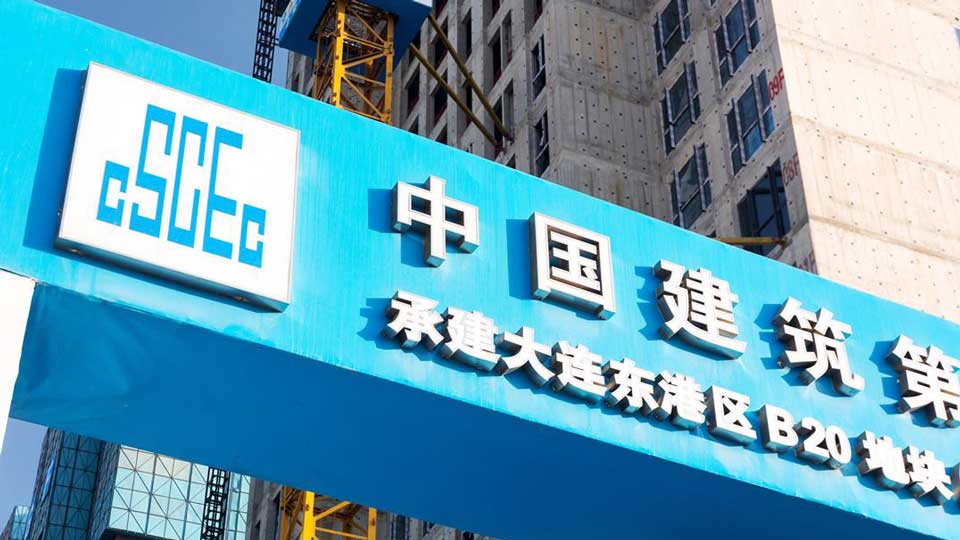
Chinese construction giant China State Construction Engineering Corporation (CSCEC) has secured four contracts in Morocco, including three factories producing automotive components, as the country attracts more suppliers seeking to serve European markets. The contracts were announced on 20 November by the Third Construction Company of China Construction Third Engineering Bureau, a subsidiary of CSCEC. The projects cover factories producing vehicle components and renovation work at Huawei’s North Africa regional headquarters in Casablanca.
Three of the contracts involve factories covering different parts of the automotive supply chain, from vehicle cooling systems to chassis components and safety equipment.
One factory will produce aluminium tubing for vehicle air-conditioning systems, heat-exchange equipment, piping and connectors. A second involves a 26,000-square-metre factory in Tangier’s automotive zone, which will manufacture chassis components, steering systems and suspension parts.
The Tangier project is linked to Chinese automotive supplier Bethel, which is expanding its production network to serve European carmakers. The company has already opened an overseas factory in Saltillo, Mexico, as part of its international expansion.
The third factory will produce electronic controllers, airbags and seatbelts. It will include reinforced-concrete administrative buildings and steel-structure production workshops.
CSCEC has not disclosed the clients behind the thermal-management and automotive safety factories, nor the contract values or construction deadlines.
The fourth contract involves fitting out meeting rooms on the fifth floor of Huawei’s North Africa regional headquarters in Casablanca Finance City.
The projects come as Morocco strengthens its position as a manufacturing base for automotive parts and vehicles destined for export markets.
The country produced 559,645 vehicles in 2024, up from 535,825 in 2023. Automotive exports reached 157.6bn dirhams ($15.7bn) that year, compared with 141.8bn dirhams in 2023, making the sector the country’s largest export earner.
Morocco has attracted Chinese companies producing battery materials, aluminium wheels and other automotive components. The latest projects point to a wider move into mechanical and electronic parts used in vehicle assembly.
Local suppliers accounted for an estimated 65% to 69% of automotive sourcing in 2024, with the government aiming to raise that share to 80%.
Vehicle assembly capacity at plants operated by Renault and Stellantis is estimated at between 750,000 and 800,000 vehicles a year, putting the country closer to its target of producing one million vehicles annually.
Tangier has become a key manufacturing centre, supported by its industrial zones and access to Tanger Med port. The port handled 10.24 million containers in 2024, strengthening its links with European markets.
Chinese suppliers are increasingly using Morocco as a manufacturing base to reach European customers amid rising trade barriers.
The European Union imposed additional duties of up to 35.3% on Chinese-made electric vehicles in October 2024, on top of its standard import tariff. Chinese manufacturers have since sought to expand production outside China to reduce exposure to trade restrictions.
Automotive components produced in Morocco can enter the EU duty-free if they meet the rules of origin under the EU-Morocco Association Agreement.
The investment shift has unfolded in stages. Earlier Chinese projects focused on aluminium wheels, wiring harnesses and vehicle interiors. A second wave brought major investments in battery materials and electric-vehicle supply chains. The latest projects extend into chassis, thermal-management systems and electronic safety components.
The construction contracts could generate between $25m and $65m in engineering and construction revenue across the three factories, according to estimates based on regional industrial-building costs. These figures are not disclosed contract values.
The 26,000-square-metre Tangier factory alone could cost between $11.7m and $22.1m to build, excluding production equipment, based on estimated construction costs of $450 to $850 per square metre.
The three factories could employ between 1,100 and 2,000 workers once fully operational, based on typical staffing levels at automotive component plants of similar size.
Construction dates and commissioning schedules have not been announced. The projects are at the contract-award and mobilisation stage, with factories of this type typically requiring 12 to 18 months from the start of construction to become operational.
The contracts add to Chinese investment in Morocco’s automotive industry, as manufacturers and suppliers seek to build production capacity closer to European customers.