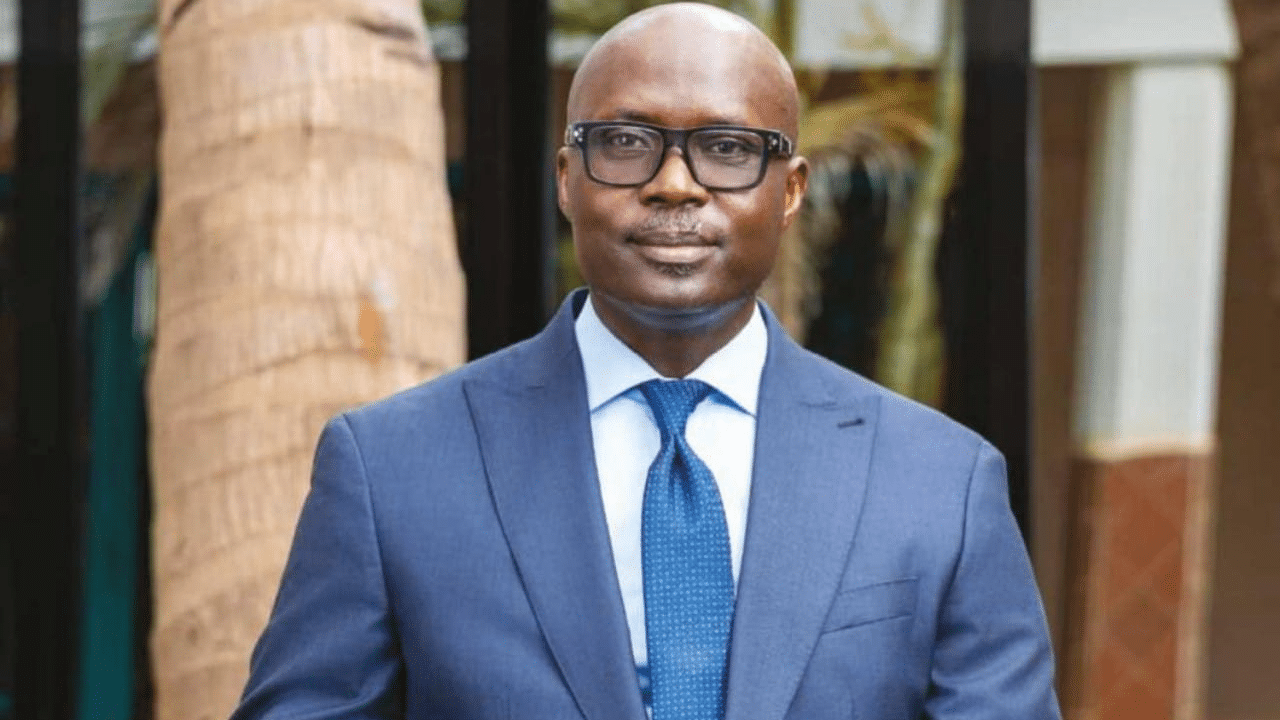
In a speech that came across more like a public vendetta than a reasoned response, Abdoulaye Fall, president of Senegal’s Football Federation, launched a surprising attack on Morocco following the 2025 Africa Cup of Nations final. Rather than providing clarity or accountability, Fall’s statements were riddled with contradictions, vague accusations, and factual inconsistencies. As the Confederation of African Football (CAF) investigates serious incidents involving the Senegalese team during the final, Fall’s sudden media appearance appears more like an attempt to shift attention away from potential disciplinary consequences.
Speaking to a sympathetic audience, Fall painted Senegal as the victim of a grand scheme allegedly orchestrated by Morocco. His grievances ranged from accommodations and security to training conditions, ticket allocation, refereeing, and even the overall organization of the tournament. He went as far as to suggest that Morocco holds undue influence over CAF. Yet documented facts systematically dismantle his narrative.
Throughout the tournament, Senegal’s squad was based at the Fairmont Tazi Palace in Tangier—an upscale hotel officially designated as a base camp. All their matches were held at the Grand Stade de Tanger, with CAF-approved conditions. At no point during the competition did Senegal lodge a public complaint. The Rabat hotel criticized by Fall was never even used by the team, which stayed at the Amphitrite Palace in Skhirat ahead of the final.
Similar discrepancies arise around the training facilities. Although Senegal was offered access to the world-renowned Mohammed VI Football Complex, the federation requested another option and received it without issue. They trained at the annex pitch of the Moulay Abdellah Complex, with no limitations. Claims of an imposed location don’t hold up under scrutiny.
Regarding security, Fall described a chaotic arrival in Rabat. However, official reports indicate that Senegal’s delegation was escorted by Moroccan national police, auxiliary forces, and a specialized security team. No disruptions or failures were recorded. These retrospective allegations appear tailored to support a narrative of mistreatment.
Fall’s remarks then shifted from logistics to direct accusations against CAF and, more pointedly, Morocco. He implied the continental body was under Moroccan control, singling out Fouzi Lekjaa, president of Morocco’s football federation and a prominent CAF official. But Fall’s own timeline undercuts this claim: he admits that once his concerns were raised, they were addressed swiftly. Lekjaa personally intervened, even taking late-night calls, to accommodate Senegal’s requests—changing the training venue and increasing ticket allocations. Far from a hostile environment, this shows a willingness to cooperate.
Then came the familiar fallback: refereeing. But even here, the credibility of his argument falters. Fall acknowledged that Senegal had submitted a letter objecting to the referee before the match, suggesting they entered the final with a combative mindset rather than a spirit of fair play. What followed—the players’ conduct, fan unrest, on-field clashes, and repeated match interruptions—suggested a team struggling to maintain composure, not one victimized by external forces.
By targeting the host nation and casting doubt on an organization widely praised by international observers, Fall appears to be playing a dangerous game. With CAF’s verdict looming, his approach seems less about justice and more about influencing public perception. But this strategy—rooted in blame and dramatics—could easily backfire.
Meanwhile, Morocco’s handling of the 2025 tournament has been broadly applauded. From logistical execution to security arrangements, the event set a new benchmark for African football. By trying to distort that reality, Fall risks not just his own reputation but also the standing of Senegalese football on the continental stage.