

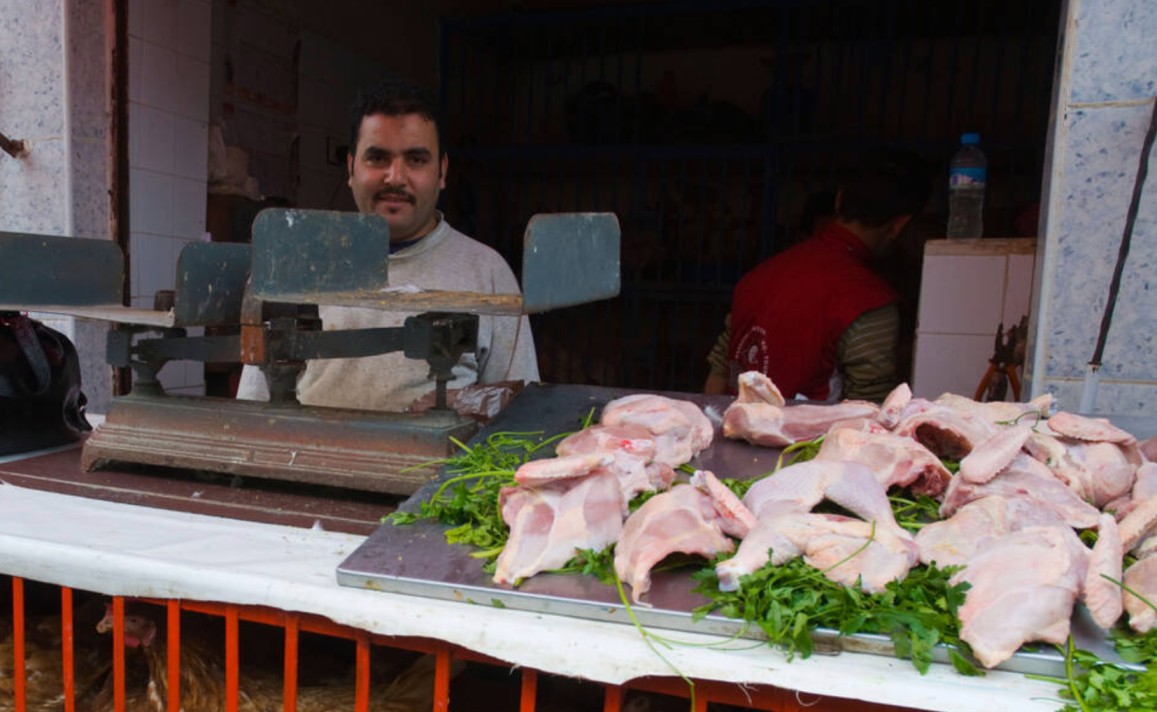
Morocco’s poultry industry is facing a serious crisis, with chicken overproduction, falling prices, and rising costs threatening the sector’s stability.
Despite an abundant supply of chicken, many farmers are reporting heavy financial losses, according to the Federation of the Poultry Industry (FISA). The organisation warned that without urgent reforms, several farms could close.
In 2025, weekly production of broiler chicks reached 10.4 million, up 11 percent from the previous year. Poultry meat output also grew by 14 percent.
The increase aimed to prevent shortages and keep chicken affordable. But the extra supply has pushed farm prices down, leaving producers struggling to cover costs for feed, energy, labour, and veterinary care. Broiler chicks now sell for just 0.5 dirham each, while live chicken costs 9 to 12 dirhams per kilogram.
Paradoxically, retail prices remain high. Consumers continue to pay more while farmers lose money. FISA blames multiple intermediaries, opaque distribution channels, and speculative practices for the price gap.
Shortages of animal feed worsened the crisis. Port delays in Casablanca and Jorf Lasfar have slowed imports of key ingredients, causing stock shortages, production delays, and rising costs.
Industry leaders are calling for urgent action. Suggested measures include securing port logistics, regulating production, monitoring distribution, fighting speculation, and improving transparency in pricing.
The white meat sector provides thousands of jobs and affordable protein to Moroccan households. Experts warn that without swift reforms, the industry could face long-term economic, social, and food security consequences.