
DHL has put Morocco among its priority markets as more companies move production closer to Europe and look for safer, more diverse supply chains. The German transport and logistics group announced the move during the Tangier Logistics Days. Morocco is now part of DHL’s “Geographic Tailwinds” strategy, which focuses on countries that are expected to benefit from changes in global trade, foreign investment and the movement of factories.
The decision does not mean DHL is announcing a new logistics centre or a fixed investment package in Morocco. It means the country now has a higher place in the group’s global plans. Future investment could include more vehicles, warehouse space and air cargo capacity as industrial exports grow.
DHL has operated in Morocco since 1987. The group now has more than 400 employees across DHL Express, DHL Global Forwarding and DHL Supply Chain.
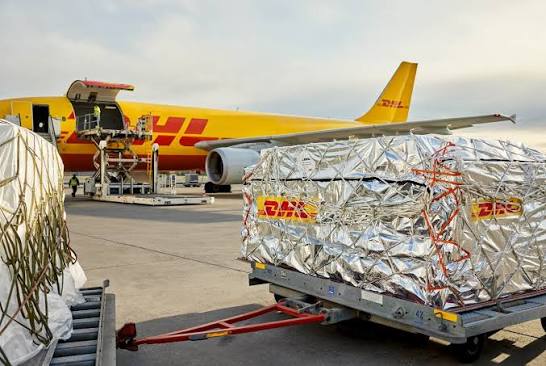
DHL Express has nine service centres, 23 retail locations and 147 vehicles in the country. Two dedicated cargo aircraft serve Casablanca Mohammed V International Airport and Tangier Ibn Battouta Airport, connecting Morocco with DHL’s wider European network.
The company also operates around major industrial and logistics areas, including the Tanger Med port ecosystem, Tanger Automotive City, Tanger Free Zone and Midparc in Casablanca.
The move comes as manufacturers change where they make and source their products.
Many companies are spreading production across several countries rather than relying on one supplier or one manufacturing base. Others are moving factories closer to their main customers, a trend known as nearshoring.
Morocco is well placed to benefit from this shift because of its location close to Europe, its links with Africa and its growing industrial base.
The automotive sector is a major part of that growth. The country has annual vehicle production capacity of more than 700,000 cars through Renault Group plants in Tangier and Casablanca and Stellantis in Kénitra. The target is to reach one million vehicles a year.
Car factories need a steady flow of parts and components. Delays can interrupt production, making fast and reliable transport an important part of the industry.
The aerospace sector has also grown. More than 140 companies operate in the sector, including Safran, Boeing and suppliers linked to Airbus and Hexcel. The industry depends on international air freight for precision parts, wiring, machinery and other time-sensitive goods.
Tangier Med has added another advantage. The port is the largest container port in the Mediterranean and Africa, with capacity to handle more than 8.6 million twenty-foot equivalent units, or TEUs, a year. Its connections by sea, road and air help move goods between North Africa and western Europe.
DHL’s “Geographic Tailwinds” strategy covers the wider changes taking place in global supply chains. The group is focusing on trends such as nearshoring, friendshoring and efforts by companies to make supply chains more resilient after recent global disruptions.
Several factors support Morocco’s position in that shift. They include trade agreements with the European Union and the United States, access to the African Continental Free Trade Area, and large investments in ports, railways and green energy.
DHL’s business in the country goes beyond express parcels.
The company moves automotive parts and components to factories in Tangier and Kénitra. It also transports aerospace parts and equipment to the industry around Midparc.
Its network handles textiles, leather goods, Moroccan handicrafts and fast-fashion products for international retailers and online customers. It also carries documents and personal shipments, including passports, legal papers, university applications and bank documents.
Cross-border e-commerce is another growing area. DHL connects Moroccan consumers with online retailers in Europe, Asia and the United States. It also helps Moroccan online businesses send orders abroad.
The main international routes connect Morocco with western Europe, North America and West and sub-Saharan Africa.
European markets include France, Spain, Germany, Belgium and Italy. These routes carry products such as clothing, automotive components, aerospace parts and business documents.
The North American network covers the United States and Canada and carries textiles, handicrafts, agricultural products and corporate documents.
Connections with countries such as Senegal, Ivory Coast and Gabon also support shipments of electronics, pharmaceutical products and financial documents.
DHL is also changing parts of its Moroccan operations to reduce emissions. DHL Express has started using electric vehicles for urban deliveries in Casablanca and Rabat. The company has also bought sustainable aviation fuel certificates for international shipments.
DHL Global Forwarding is expanding customs clearance and road-freight consolidation in northern Morocco. The aim is to support cross-border road transport into southern and western Europe, including TIR trucking.
E-commerce is another part of the group’s plans. DHL sees the country as a potential sorting and transit point linking European online retailers with customers across North and West Africa.
DHL’s presence in Morocco now covers almost four decades. The company began with express deliveries between Casablanca, Tangier and international markets. Its network has since expanded into freight, customs, warehousing and industrial logistics.
The new priority status does not come with a stated capital investment figure. It does, however, allow DHL to consider additional capacity as demand grows.
That could mean more cargo flights, larger warehouse operations and fleet upgrades as factories expand and more goods move through the country.