

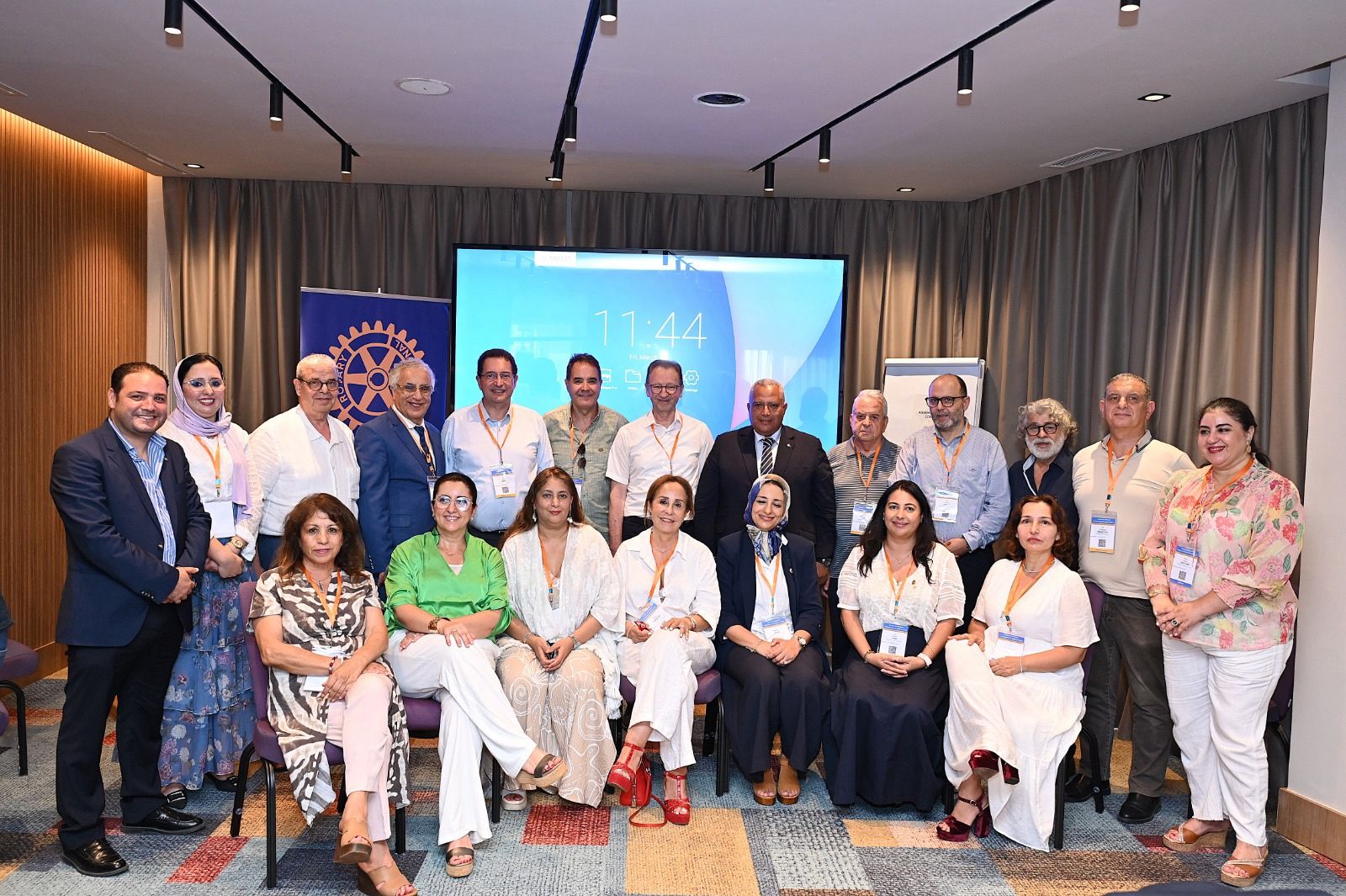
Healthcare professionals in Morocco have launched a new Rotary fellowship to support health projects, raise awareness about diseases and improve access to medical care. It is led by Prof. Bouchra Allali, a professor of ophthalmology at the Faculty of Medicine and Pharmacy in Casablanca.
The fellowship brings together doctors, nurses, pharmacists and other healthcare professionals who are members of Rotary. It aims to share knowledge, promote professional excellence and organise projects that benefit local communities.

The group will also encourage closer cooperation between different healthcare professions. It plans to support disease prevention campaigns, health awareness programmes and projects that improve access to healthcare in partnership with public institutions and non-profit organisations.
In a LinkedIn post, Allali said the fellowship “marks an important step in strengthening the commitment of healthcare professionals to serving our community.”
She added: “This initiative aims to bring together expertise, promote excellence, encourage the sharing of experience and develop humanitarian actions that have a meaningful impact on healthcare in Morocco.”
Allali also thanked the fellowship’s founding members, Rotary Governor Younes Saih, past governors Azzedine Kettani, Khalid Kabbaj, Saadia Aglif, Jilali Antari, Said Nejjar, Abdelfettah Sbai and Ahmed Mikou, as well as governor-elect Said Mezzour, for helping make the project a reality.
She concluded: “Together, let us continue to serve with excellence and make solidarity a driving force in the service of humanity.”
An official launch event will be held in the coming days to present the fellowship’s goals, roadmap and future projects.
The fellowship comes as Morocco continues efforts to improve its healthcare system.
The country has about 2.2 healthcare professionals for every 1,000 people, well below the World Health Organization’s benchmark of 4.45 per 1,000 people needed to achieve sustainable universal health coverage. Health authorities expect the shortage of medical staff to continue until at least 2029.
Access to healthcare also varies across the country. About 58% of healthcare spending is in the private sector, with most hospitals and clinics located in the Casablanca-Settat and Rabat-Salé-Kénitra regions. Rural areas often have fewer specialist services, making mobile clinics and charity health campaigns an important source of care.
The government is investing billions of dollars in healthcare reforms, including wider health insurance coverage, new university hospital centres (CHUs) and thousands of additional hospital beds.
Preventive care, cancer treatment, eye care and screening programmes also depend on partnerships between the public sector, private organisations and charities to reach more people.


