
Brussels is working on new rules for the car industry that aim to support production inside the European Union (EU) but could affect Morocco. . The plan is designed to strengthen the industry while avoiding major trade tensions.
The European Commission is discussing the proposals.
Under the draft rules, electric vehicles would need to have at least 70% of the value of their non-battery parts made inside the EU to qualify for subsidies.
There would also be a minimum level of EU content in battery packs, but battery cells would not be included in the calculation. China currently dominates battery cells.
The rules are still under discussion, but they could change how car parts move in and around Europe.
If adopted in their current form, only parts made in EU member states, plus Iceland, Liechtenstein and Norway, would fully count as local content.
Other close partners would not automatically receive the same status. This includes the United Kingdom, Turkey and Morocco, which are following the talks closely.
Car companies have raised concerns.
Some firms, including Ford Motor Company, depend on factories outside the EU to supply parts for their European operations. They say strict rules could upset long-standing supply chains.
Others argue that tighter rules are needed to compete with China, which has lower costs for materials and components.
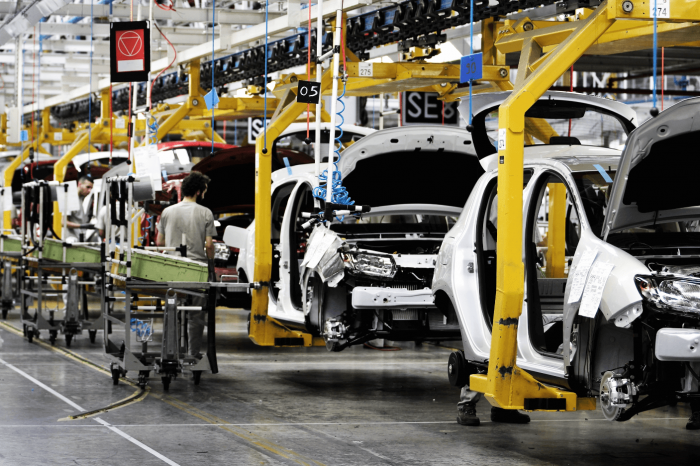
The example of the Renault 5 shows how complex the system is. Many suppliers are close to their assembly site in France. However, the share of European value changes depending on whether the battery is included. Modern supply chains are closely linked across borders.
Morocco has become an important production base for European carmakers.
Companies such as Renault and Stellantis run assembly plants in the country, supported by many local suppliers.
The country now produces more than 700,000 vehicles per year. Its factories are closely connected with plants in Spain and France.
Parts move daily across the Strait of Gibraltar to support production in Europe. Local integration levels in Morocco often exceed 65%.
If Moroccan components are not counted as local content, cars assembled in Europe using those parts could lose access to green subsidies. That could force companies to raise prices or buy more parts from other regions.
Batteries account for around 40% of the value of an electric vehicle. By excluding battery cells from the local content calculation, Brussels recognises its current dependence on Asia while trying to protect other parts of the car industry.
Morocco is investing in large battery projects to strengthen its position in the supply chain, regardless of how the final rules are written.