

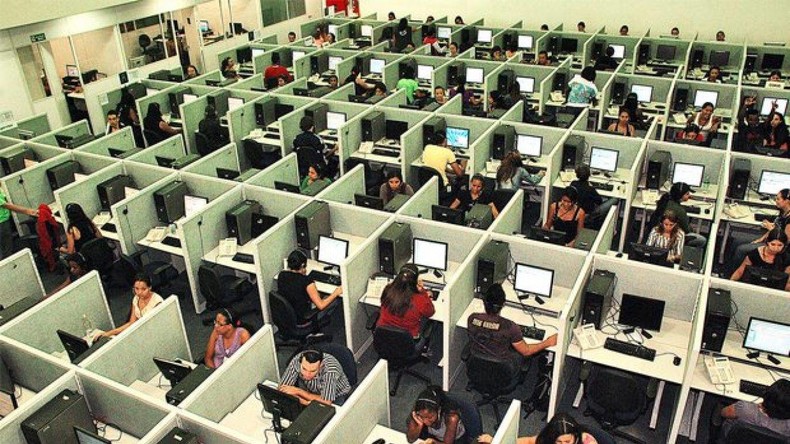
Up to 50,000 jobs in Morocco’s call centre industry could be at risk because of a new French law banning unsolicited sales calls from August 2026, the government has said.
Labour Minister Younes Sekkouri told parliament that between 40,000 and 50,000 jobs could be affected, especially in companies that rely heavily on telemarketing.
The new law in France will stop companies from calling people to sell products or services unless the person has agreed to be contacted.
The minister said the change could affect up to 80% of the activity of some call centres that mainly do telemarketing. Smaller companies may be hit hardest. They make up more than 60% of Morocco’s call centre businesses.
Call centres are an important part of Morocco’s offshoring industry. The sector attracted about 1.3bn dirhams in investment in 2023 and produces between 10bn and 12bn dirhams in value every year.
Around 120,000 people work directly in call centres in Morocco, many of them young graduates. Another 50,000 jobs depend on the sector indirectly, including transport and other support services.
The French market has long been the most important for Moroccan call centres, bringing in more than 80% of the sector’s revenue.
The government says it is preparing a plan to reduce the impact.
One idea is to help companies find new markets outside France, including other European countries such as Germany, Spain and Italy, as well as Africa and Latin America. Officials also want call centres to move into higher-value work, such as technical support, digital services, customer support and back-office work.
Training programmes may be expanded to help workers learn new digital skills. The government is also considering financial support for companies that are most exposed to the change. The plan also encourages companies to use more artificial intelligence and data tools in customer service.
Industry representatives say telemarketing already makes up a smaller share of the sector.
Youssef Chraïbi, head of the Fédération marocaine de l’externalisation des services and chief executive of Outsourcia, says sales calls now represent only 15–20% of the industry’s work.
Most business now comes from services such as customer support, technical help, back-office services and content moderation. But smaller centres that mainly focus on cold calling could face a sharp drop in business and may even close.
Mr Chraïbi says some job losses are possible in the short term, but the changes could also push the industry to move faster into more advanced services. He added that artificial intelligence could help the sector adapt, although companies will need to invest in training, technology and infrastructure.
With less than six months before the French law takes effect, the government and industry groups say there is little time left to prepare.


