

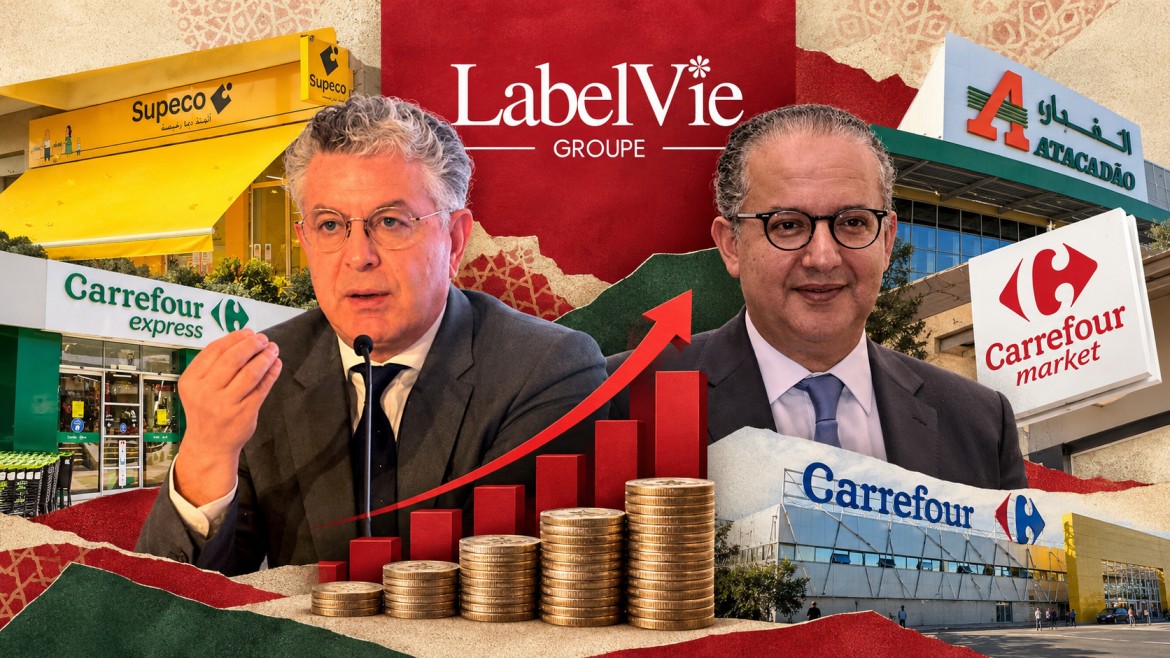
LabelVie made more than 10 billion dirhams in sales in the first half of the year. The retailer is growing quickly, but its operating profit is not rising at the same pace. The group posted consolidated revenue of 10.19 billion dirhams, up 16.8% from a year earlier. Its retail business generated 8.79 billion dirhams, an increase of 17.4%.
Existing stores also performed better. Sales at stores that were already part of the network increased by 5.4%. This means the growth did not come only from new stores.
LabelVie is also expanding its network quickly. The group expects its store space and revenue to increase by about 15% in 2026. New stores bring extra costs before they reach their full sales potential.
This is affecting the pace of margin growth. LabelVie’s latest outlook for 2026 calls for a stable EBITDA margin. Earlier plans had linked a 9.3% EBITDA margin to the group’s longer-term Vision 2028 strategy.
The change in the 2026 guidance does not mean that LabelVie has formally dropped the 9.3% target. The company has linked that target to Vision 2028, which also includes a goal of reaching close to 28 billion dirhams in revenue by 2028.
The two targets cover different periods. The 2026 guidance concerns the current financial year. Vision 2028 covers the longer-term strategy. A stable margin in 2026, during a period of rapid expansion, does not automatically mean that the 2028 target has been changed.
LabelVie has already operated above the 9.3% level. Its EBITDA margin stood at 9.5% in 2025, compared with 9.7% in 2024.
The main issue is whether the group can keep a high margin while opening stores at a fast pace. New stores need time to reach full activity, while their opening and operating costs can weigh on margins.
Net profit increased by 36% in the first half. The sale of the property assets of 22 stores helped this result.
The property sale gave the group a one-off boost to profit. It does not reflect the recurring performance of its stores and should therefore be separated from the underlying retail results.
The transaction also has a wider financial role. Selling the buildings releases money that was tied up in property. LabelVie can then use that capital to support the expansion of its store network.
The first-half results therefore show two different trends. Revenue growth reflects the retail business itself. New stores added sales, while existing stores grew by 5.4%. The increase in net profit was also helped by a property transaction that is not part of normal store operations.
LabelVie is now trying to manage the usual challenge that comes with rapid expansion: opening more stores while keeping costs and margins under control.
The first-half figures show a difference in pace between sales growth and operating profitability. They do not, by themselves, point to a slowdown in the business. Sales reached a new high, existing stores continued to grow and the group kept expanding its network.
The 9.3% margin target needs to be viewed against its original timeframe. LabelVie has not formally announced a change to its Vision 2028 target. The decision to target a stable margin in 2026 is therefore different from formally abandoning the 9.3% goal for 2028.


