European countries bought more than twice as much, by value, in Moroccan metal ores and scrap during the first eight months of 2026, with imports reaching €281.22m (3.04bn dirhams), according to the European Union’s statistics office, Eurostat. The total was up 110.59% from €133.54m (1.44bn dirhams) during the same period in 2025, an increase of €147.68m (1.6bn dirhams). The figures were updated on 16 October and cover purchases by all 27 EU member states.
But the rise in value was far greater than the increase in the amount of material imported. The weight of shipments grew by 14.23%, while their average declared value per unit of weight rose by about 84.36%.
August saw the biggest jump. EU imports in this category reached €40.03m (432.94m dirhams), compared with €5.61m (60.7m dirhams) in August 2025. That was an increase of 613.38%, or more than seven times the value recorded a year earlier.
The extra €34.42m (372.24m dirhams) imported in August accounted for 23.3% of the total increase recorded between January and August.
Imports had already risen sharply during the first seven months of 2026, reaching €241.19m (2.61bn dirhams), up 88.5% from €127.93m (1.38bn dirhams) in the same period of 2025.
On average, EU countries imported €35.15m (380.2m dirhams) worth of these products each month in the first eight months of 2026. The monthly average a year earlier was €16.69m (180.5m dirhams).
Higher values, but not necessarily more material
The figures suggest that higher prices or a change in the types of minerals being shipped may have helped drive the increase. Eurostat’s data does not establish the exact cause.
The category covers metalliferous ores and metal scrap under Division 28 of the Standard International Trade Classification. It includes different types of ores, mineral concentrates and scrap, so the figures do not show how much each product contributed to the increase.
International metal prices, the quality and composition of shipments, and the proportion of processed mineral products could all affect the average value of imports. Higher-value concentrates can be worth considerably more per tonne than less-processed ores.
The figures alone do not establish whether European demand for Moroccan minerals increased, whether international prices rose, or whether the mix of products changed. Nor do they provide a breakdown of imports by company or individual commodity.
The companies behind the trade
Morocco’s mining industry produces copper, cobalt, lead, zinc, silver and gold. Major operators include Managem Group, part of the Al Mada holding group, and Compagnie Minière de Touissit (CMT), alongside precious-metal producers and smaller mining companies.
Managem operates 13 industrial mining sites across Africa. In Morocco, its operations include cobalt extraction at Bou Azzer, copper production at Bleïda and Akka, silver mining at Imiter, and polymetallic deposits at Guemassa.
Bou Azzer is described as Africa’s only primary cobalt extraction site outside the Democratic Republic of Congo. Managem supplies cobalt products, chemical derivatives and copper concentrates to international customers. It has also launched a 3bn-dirham investment programme to expand capacity and increase the processing of battery-grade materials.
CMT specialises in lead and zinc concentrates, as well as silver. It holds more than 35 mining permits and operates underground mines, including at Tighza and Rehamna. Its processed concentrates are sold to European smelters and international commodity traders.
Other companies are also developing the sector. Aya Gold & Silver is expanding production at the Zgounder silver mine and advancing the Boumadine polymetallic project, which contains lead, zinc, silver and gold. Culico Metals, Kharrouba Copper, Falcon Energy Materials and other local operators are involved in projects related to copper, battery materials and industrial raw materials.
Where the minerals are used
Copper is used in electrical grids and renewable-energy infrastructure. Cobalt is an important material for some electric-vehicle batteries and energy-storage systems. Lead and zinc are used in industrial batteries, galvanisation and construction, while silver and other precious metals have applications in electronics, solar technology and investment products.
The Tizert copper project and specialised cobalt-processing facilities are among the developments intended to expand production and processing capacity in Morocco. Such projects could help the country capture more value before minerals are exported, although the trade figures do not measure the contribution of individual projects.
European efforts to diversify supplies of critical raw materials provide a broader context for the trade. The EU needs metals for its industrial base and energy transition, while Morocco’s proximity to European markets offers logistical advantages. Trade in these products takes place within the wider framework of the EU-Morocco Association Agreement.
Scrap metal and shipping routes
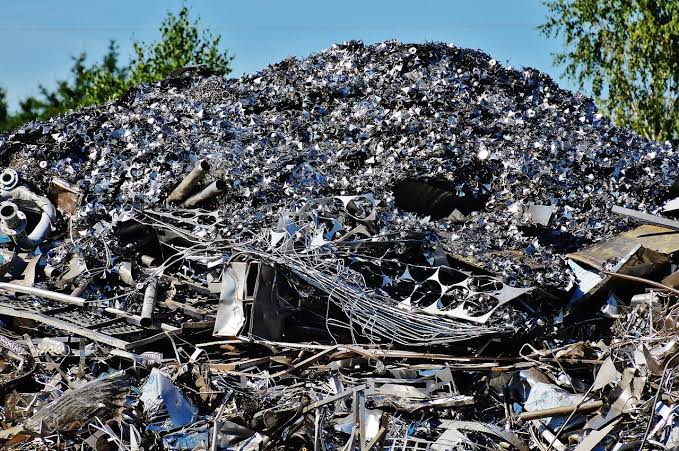
The Eurostat category combines mined ores and concentrates with metal scrap. The supplied sector information indicates that scrap exports are subject to domestic retention measures and export controls intended to preserve supplies for local steelmakers and foundries, including producers of reinforcing bars.
However, the published figures do not provide a product-level breakdown confirming how much of the increase came from mineral concentrates and how much came from scrap. It is therefore not possible to establish the contribution of each from these statistics alone.
Moroccan mineral shipments reach European buyers through established maritime routes. The port of Jorf Lasfar handles bulk industrial cargo, while Casablanca serves as a major port for containerised goods. Tanger Med connects shipping routes with European ports in Spain, France, Italy and Belgium.
Eurostat values imports at the EU border, including transport and insurance costs. Morocco’s Office des Changes records export revenues on a free-on-board basis, generally excluding freight and insurance beyond the port of shipment. The two sets of figures can therefore differ even when they describe the same trade.
The main finding remains clear: the value of EU imports in this category rose by 110.59% in the first eight months of 2026, while the weight of imported material increased by 14.23%. The difference points to a sharp rise in the average declared value of shipments, but further product-level data would be needed to explain why.